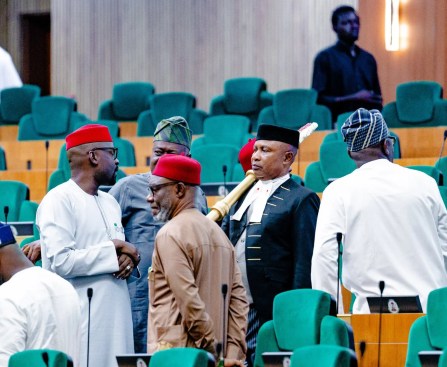
I Wasn’t Recognized Despite Giving Buhari Almost 2 Million Votes – Kwankwaso

Former Kano State Governor and prominent Nigerian politician, Rabiu Kwankwaso, has revealed that neither he nor his political supporters received recognition after contributing nearly two million votes to help the late former President Muhammadu Buhari during previous elections. Speaking during an interview on Arise Television Prime Time on Monday night, Kwankwaso explained that the sacrifices made by his political structure and loyalists were never acknowledged despite the risks they took during the election period. According to the chieftain of the Nigeria Democratic Congress (NDC), the experience became one of the reasons he started pushing for political transformation and reforms across the country. Kwankwaso stated that he and his political movement delivered approximately 1.9 million votes to Buhari’s camp during the election. However, he expressed disappointment that there was no appreciation or meaningful reward for the effort and dedication shown by his supporters. He explained that many members of his political base worked tirelessly and even exposed themselves to danger while mobilizing support at the grassroots level. Despite their commitment, he claimed that neither the individuals involved nor the communities they represented benefited from their contributions afterward. The former presidential candidate further stressed that many Nigerians are currently dissatisfied with the direction of the country under the administration of President Bola Tinubu. Kwankwaso noted that economic hardship, governance concerns, and public dissatisfaction have continued to increase calls for political adjustments and reforms across different levels of society. Speaking during the television interview, he said: “I worked extremely hard. We delivered about 1.9 million, nearly two million votes. But as politicians, we were not recognized. We even put our lives on the line during that period. “Sadly, we did not witness any meaningful benefit either personally or for the constituencies we represented.” He also maintained that challenges facing the current administration have strengthened the desire for change among ordinary Nigerians and political stakeholders alike. Kwankwaso added that many citizens at the grassroots level now believe the country requires a new direction capable of addressing pressing national issues and improving governance. The remarks have generated conversations across Nigeria’s political space, especially among supporters and observers monitoring developments ahead of future political realignments and elections. Political analysts believe statements like these may influence ongoing discussions about coalition-building, opposition movements, and electoral strategies in Nigeria. For more political news and updates, visit LMSINT MEDIA.

Yakubu Reaffirms INEC’s Commitment to Improving Voter Experience During 2025 Customer Service Week

The Chairman of the Independent National Electoral Commission (INEC), Professor Mahmood Yakubu, has once again assured Nigerians of the Commission’s unwavering dedication to enhancing voter experience, transparency, and efficiency in the electoral process. Speaking as INEC marked the 2025 Customer Service Week, Professor Yakubu emphasized that the Commission remains deeply committed to service excellence, transparency, and innovation in public service delivery. He stated that INEC’s operations are not only centered on conducting credible elections but also on providing a voter-friendly environment that upholds the integrity of Nigeria’s democratic system. According to Yakubu, INEC continues to introduce modern innovations aimed at simplifying electoral procedures and improving communication between the Commission and the electorate. He stressed that citizens deserve excellent service and prompt feedback in all their interactions with the Commission — whether in voter registration, election monitoring, or complaint resolution. He further noted that Customer Service Week 2025 offers INEC an opportunity to appreciate both staff and stakeholders for their resilience and commitment to ensuring credible elections across the nation. He reiterated that INEC’s service delivery model prioritizes inclusiveness, accessibility, and fairness for all Nigerians. Professor Yakubu also pointed out that the Commission’s long-term goal is to make voter interactions seamless through continuous voter education, technological upgrades, and improved customer engagement channels. This, he said, would strengthen public trust and deepen Nigeria’s democracy. He assured citizens that the Commission remains proactive in addressing challenges such as voter registration delays, logistics management, and election-day feedback mechanisms. The Chairman reaffirmed INEC’s resolve to deploy every available innovation to improve transparency and efficiency during elections. Yakubu further encouraged Nigerians to actively engage with INEC through its official website, social media platforms, and public communication channels to stay informed about ongoing reforms and upcoming election activities. He highlighted that sustained communication and cooperation between the electorate and the Commission are crucial to achieving credible, transparent, and inclusive elections. The 2025 Customer Service Week celebration, themed “Empowering Customer Experience for Democratic Growth,” also recognized INEC staff members who have demonstrated exceptional service delivery. Professor Yakubu commended their professionalism, integrity, and hard work, adding that their dedication plays a vital role in strengthening the nation’s democratic values. The event concluded with a renewed call to action for INEC officials to remain committed to public service principles and uphold transparency, accountability, and efficiency in all areas of electoral operations. Yakubu expressed optimism that the Commission’s continued reforms will deliver a more responsive, inclusive, and technology-driven electoral process in Nigeria.

Siminalayi Fubara Condemns Police for Dispersing Peaceful Protesters in Rivers State

Tensions continue to rise in Rivers State as suspended Governor Siminalayi Fubara has publicly criticized the Nigeria Police Force for what he describes as a “double standard” in handling peaceful protests. His comments follow the forceful disruption of a pro-Fubara rally in Ahoada East, where police reportedly used teargas on elderly women and peaceful demonstrators. Two Sides of the Same Protest: Peaceful in Port Harcourt, Chaotic in Ahoada On Monday, April 15, 2025, two simultaneous protests unfolded across Rivers State, exposing sharp divides in public sentiment: While the Port Harcourt protest proceeded peacefully, the Ahoada protest turned chaotic as security agents dispersed the crowd using teargas, despite the demonstrators being largely composed of elderly women and youths. “The police treated the two protests differently. That’s not justice—it’s oppression,” said Jerry Omatsogunwa, Special Adviser to Governor Fubara on Electronic Media. Disturbing Footage from Ahoada Videos from the Ahoada protest show women kneeling and crying as they chant: “We want Fubara, we want peace.” One distressed protester added, “We are hungry, suffering, and dying. Sim is our hope.” According to reports, an elderly woman fainted after being teargassed, further intensifying public outrage over the police response. Port Harcourt Protesters Applaud Emergency Rule In contrast, the Port Harcourt demonstrators marched from Garrison Junction to Isaac Boro Park, holding placards like: The protest was led by Mrs. Inime Aguma, a former Commissioner for Social Welfare, who applauded President Bola Tinubu’s decision to appoint Vice Admiral Ibok-Ette Ibas (retd.) as sole administrator of the state. “Our democratic institutions had collapsed. The emergency rule has restored peace and leadership,” Aguma stated. Governor’s Aide Slams Supporters of Emergency Rule Fubara’s media adviser, Omatsogunwa, dismissed the support for the state of emergency as “endorsement of illegality.” He also accused the sole administrator of nurturing political ambitions in Cross River State and called on both national and international stakeholders to closely monitor events in Rivers. “The whole world must watch what the state Commissioner of Police and the sole administrator are doing,” he warned. Constitutional Crisis: The Legal Battle Continues The political unrest in Rivers State intensified after President Tinubu suspended Governor Fubara, his deputy, and the State Assembly. In response, the National Assembly backed a declaration of emergency rule. However, 11 governors from the opposition People’s Democratic Party (PDP) are challenging the legality of this declaration. According to reports from Premium Times Nigeria, the governors have hired senior lawyers to escalate the matter to the Supreme Court. Meanwhile, the Attorney General of the Federation, Lateef Fagbemi (SAN), is preparing an official response on behalf of the Presidency. What This Means for Rivers State As Rivers State faces a political crossroad, citizens and leaders alike are calling for: The voices from both streets and courtrooms echo a shared sentiment: Rivers State deserves peace and legitimate governance. Read more about the impact of state of emergency declarations in Nigeria on governance and democracy. More on the national political climate at Premium Times Nigeria. READ ALSO: Follow the LMSINT MEDIA channel on WhatsApp: Join Our WhatsApp Group Hear: Chat on WhatsApp Join our Telegram Channel

Shinkafi Opposes State of Emergency in Zamfara, Defends Governor Lawal

Alhaji Sani Abdullahi Shinkafi, a former governorship aspirant in Zamfara State and a prominent member of the Bola Tinubu/Kashim Shettima Presidential Campaign Council 2023, has firmly rejected the growing calls for a state of emergency in the state. Speaking on behalf of the Patriots for the Advancement of Peace and Social Development, Shinkafi alleged that these calls are politically motivated and backed by unsuccessful politicians who are attempting to destabilize the current administration. Political Motives Behind Emergency Calls According to Shinkafi, the individuals pushing for emergency measures are doing so with the intention to grab power through unconstitutional means, driven by greed and desperation to loot state resources. “These expired politicians are hallucinating about power,” Shinkafi stated. “They have no regard for the Constitution and are attempting to mislead the public and disrupt progress in Zamfara.” Constitutional Misunderstanding and Democratic Norms Shinkafi emphasized that Nigeria’s Constitution clearly outlines the conditions required for removing an elected governor or imposing a state of emergency. He condemned any suggestion of appointing a sole administrator as an undemocratic practice. He further stated: “Zamfara does not qualify for any constitutional basis to impose a state of emergency. Calls for such action are merely attempts to overheat the polity and distract the public.” For reference, Nigeria’s constitutional guidelines regarding a state of emergency can be reviewed here. Support for Governor Dauda Lawal Shinkafi praised Governor Dauda Lawal’s leadership, highlighting improvements in security, economic activity, and infrastructure since he assumed office on May 29, 2023. “Governor Lawal has made remarkable strides in fighting banditry, supported by the President and our security forces,” Shinkafi noted. “Public safety has improved, and citizens now enjoy better services and a functioning economy.” Zamfara’s Progress under Lawal’s Administration The administration has also implemented the ₦70,000 minimum wage for civil servants and promised to address pending issues affecting senior civil service wages. These are key components of Governor Lawal’s Rescue Mission agenda, aimed at restoring dignity and prosperity to the people of Zamfara. If you’re curious about Governor Lawal’s Rescue Mission and governance strategy, check out our internal report: Governor Dauda Lawal’s Vision for a Secure and Prosperous Zamfara A Call for Political Maturity and Patriotism Shinkafi urged politicians in Zamfara to prioritize development and peace over politics, especially as the next general elections in 2027 are still years away. “This is not the time for politicking. It’s a time for unity, growth, and national interest,” he said. “Let’s build a better Zamfara and preserve our democracy.” Conclusion: Upholding Democracy and Rejecting Disruption Shinkafi’s firm stance reflects a broader call to uphold democratic values and protect constitutional integrity in Nigeria. He urges President Bola Tinubu and the Nigerian public to ignore those seeking to undermine peace and progress in Zamfara State. READ ALSO: Follow the LMSINT MEDIA channel on WhatsApp: Join Our WhatsApp Group Hear: Chat on WhatsApp Join our Telegram Channel

Rivers State Political Crisis: Eze Claims Plot to Prevent Fubara’s Return to Office

Prominent All Progressives Congress (APC) stalwart, Eze Chukwuemeka Eze, has raised serious allegations about an orchestrated effort to discredit suspended Rivers State Governor, Siminalayi Fubara, in what he calls a deliberate attempt to block the Governor’s reinstatement to the Brick House. According to Eze, credible evidence points to a coordinated plot involving falsehoods aimed at destroying Governor Fubara’s reputation and preventing his return to office. Eze Condemns Alleged Smear Campaign Against Fubara In a statement issued in Port Harcourt, Eze strongly criticized what he described as a “shameful campaign of blackmail” allegedly driven by loyalists of the Minister of the Federal Capital Territory, Nyesom Wike. Eze cited a controversial press briefing held by George Nwaeke, the former Head of Service of Rivers State, in which Nwaeke accused the Governor of orchestrating the fire incident at the Rivers State House of Assembly through his associates, Edison Ehie and Chijioke Ihunwo. ? Related Article: See how political tensions are reshaping governance in Nigeria Conflicting Accounts from Nwaeke’s Wife Interestingly, Nwaeke’s wife publicly refuted her husband’s press statement. She claimed that he was influenced during a trip to Abuja, arranged by Mr. Ogidi, a known associate of the FCT Minister and a Commissioner with the National Population Commission. She revealed that her husband had earlier resigned as Head of Service after refusing to sign a falsified document that implicated Governor Fubara in a fictitious $15 billion corruption scandal. ? Internal Link: Learn more about how misinformation affects Nigerian governance Allegations Against Wike and Political Vendettas Eze alleged that Wike is sabotaging reconciliation and democratic efforts in Rivers State, despite President Bola Tinubu’s directive for peace and stability. He emphasized that Wike’s main interest is to keep Fubara out of office permanently, which he believes is undemocratic and not in the interest of the Rivers people. Eze stated: “The unhealthy vendetta displayed by George Nwaeke shows a broader agenda. Nwaeke appears to have taken on a new role — fabricating damaging stories against Governor Fubara, with full media support. This, if allowed, would be a monumental disgrace.” Commendation for the Ex-HoS’s Wife and a Call to Tinubu Eze praised Mrs. Nwaeke for defending her husband’s integrity and for publicly disassociating him from the smear campaign. He called on President Tinubu to uphold the truth and reject the “cocktail of lies” being spread by those he described as “enemies of democracy.” Eze concluded by urging all well-meaning Nigerians to stand against these unjust tactics aimed at silencing political opponents. Conclusion The unfolding drama in Rivers State continues to stir national interest, as political stakeholders trade accusations and defend their integrity. The call for President Tinubu to intervene highlights the potential implications for Nigeria’s broader democratic stability. Stay updated with more insights from our Nigeria Politics section. READ ALSO: Follow the LMSINT MEDIA channel on WhatsApp: Join Our WhatsApp Group Hear: Chat on WhatsApp Join our Telegram Channel

Supreme Court’s Verdict on Abure: Labour Party’s Caretaker Chair, Usman, Calls It a Victory for Rule of Law

The Chairman of the Labour Party (LP) Caretaker Committee, Senator Nenadi Usman, has described the recent Supreme Court ruling that removed Julius Abure as the party’s National Chairman as a triumph for democracy and the rule of law. Supreme Court Nullifies Appeal Court’s Judgment According to reports from LMSINT MEDIA, the Supreme Court overturned the earlier ruling by the Court of Appeal in Abuja, which had upheld Abure’s leadership of the Labour Party. A five-member panel of justices ruled that the Court of Appeal had no jurisdiction to affirm Abure as the National Chairman, making the ruling void. This decision has further clarified the legal standing within the party’s leadership structure. Usman Urges Unity in Labour Party Reacting to the verdict, Senator Nenadi Usman emphasized that the ruling is not about personal victory but rather about upholding the principles of democracy. In a statement, she expressed the need for party members to unite and work towards a common goal. “The Supreme Court’s judgment, which ruled in favor of our appeal while dismissing the counter-appeal from the Abure-led faction, is a significant moment for democracy in Nigeria. It highlights the importance of legal processes in guiding political leadership.” She further stated: “This is not a time for division or celebration of winners and losers. The Labour Party remains committed to its vision of a New Nigeria built on justice, fairness, and governance that prioritizes the people.” A Call for Party Members to Remain Focused Usman reassured LP supporters that the party remains unified and committed to fostering democracy. She called on all members, stakeholders, and supporters to stay calm and uphold the party’s core values. “We urge all members of the Labour Party to remain focused and united in our shared vision for a better Nigeria. Let’s work together to strengthen the party and ensure that we continue advocating for policies that benefit the masses.” What This Means for Labour Party’s Future With this Supreme Court ruling, the Labour Party now has a clear leadership structure, allowing it to focus on party growth, strategic planning, and future elections. Political analysts believe this decision will shape the party’s trajectory ahead of the next electoral cycle. For further insights on the impact of Supreme Court rulings on Nigerian politics, you can read this analysis from a legal expert. Conclusion The Supreme Court’s decision has set a precedent for internal democracy within political parties in Nigeria. While Abure’s removal has sparked discussions within political circles, Labour Party members are urged to embrace unity and focus on their shared mission. A New Nigeria is Possible! Supreme Court of Nigeria Rulings READ ALSO: Follow the LMSINT MEDIA channel on WhatsApp: Join Our WhatsApp Group Hear: Chat on WhatsApp Join our Telegram Channel

Peter Obi: Nigeria Led by Individuals with Criminal Records and Forged Certificates

Lack of True Democracy in Nigeria Peter Obi, the 2023 presidential candidate of the Labour Party (LP), has openly criticized Nigeria’s leadership, claiming that individuals with criminal records and forged academic certificates are running the country. Speaking on Arise Television on Tuesday, Obi argued that democracy in Nigeria is non-existent due to an ineffective judicial system and a lack of freedom of speech. The Absence of a Democratic System According to Obi, democracy requires a functional and independent judiciary, which Nigeria currently lacks. He emphasized that even individuals like himself face daily harassment for speaking out against the government. “There is no democracy in Nigeria today; Nigeria is not a democratic country. Let’s stop deceiving ourselves,” Obi stated during the interview. “A democracy must have an effective legislature and an independent judiciary that defends the common citizen. But that’s not happening here.” Leadership Issues: Unverified Certificates and Criminal Records Obi also expressed concerns over the qualifications of many individuals holding political positions. He pointed out that Nigerian laws require candidates to meet specific educational standards, including primary, secondary, and university qualifications, yet this requirement is frequently ignored. “People with forged certificates and criminal histories are in leadership positions. How can we claim to have a democracy when those in charge do not meet basic eligibility criteria?” Obi questioned. He further cited the political crisis in Rivers State, arguing that such incidents highlight the absence of true democracy in Nigeria. The Need for Reform in Nigerian Governance Obi’s remarks reflect a growing sentiment among Nigerians who seek accountability, transparency, and genuine democracy. Without an independent judiciary and proper electoral reforms, he warns, Nigeria cannot truly claim to be democratic. Final Thoughts Peter Obi’s critique serves as a wake-up call for Nigerians demanding better governance and leadership accountability. His call for a stronger judiciary and electoral integrity underscores the urgent need for reform in the nation’s democratic process. What are your thoughts on Peter Obi’s statements? Share your views in the comments below! READ ALSO: Follow the LMSINT MEDIA channel on WhatsApp: Join Our WhatsApp Group Hear: Chat on WhatsApp Join our Telegram Channel

South-South Leaders Condemn Rivers State Emergency Rule Declared by President Tinubu

South-South Leaders Decry Emergency Rule in Rivers State The declaration of a state of emergency in Rivers State by President Bola Ahmed Tinubu has sparked widespread criticism from South-South leaders and political stakeholders. Many have labeled the move as unconstitutional and a direct attempt to take control of the oil-rich region, further fueling tensions. Former Akwa Ibom Attorney General Calls Move “Ill-Advised” Senior Advocate of Nigeria (SAN) Uwemedimo Nwoko, a former Attorney General of Akwa Ibom State, strongly opposed the emergency rule, stating it does not align with constitutional provisions. According to him, “The conditions required for a state of emergency have not been met. This decision appears to be a calculated political maneuver rather than a legitimate action.” Ijaw Youth Council Rejects Tinubu’s Decision Ex-President of the Ijaw Youth Council (IYC), Eric Omare, also condemned the decision, asserting that President Tinubu’s intervention has been biased. “Removing Governor Siminalayi Fubara will not resolve the crisis. Instead, it emboldens those fueling the conflict,” Omare stated. He further accused the administration of favoring the Federal Capital Territory (FCT) Minister, Nyesom Wike, who has been at the center of the controversy. PANDEF Monitoring the Situation The Pan Niger Delta Forum (PANDEF), the apex socio-political body for the South-South geopolitical zone, has expressed grave concern over the development. PANDEF spokesperson Chief Obiuwevbi Ominimini stated, “We are seriously alarmed by the state of emergency imposed in Rivers State. This crisis was avoidable, and we will soon release our official stance on the matter.” Ex-MOSIEND Spokesperson Questions Political Motives Amaebi Clarkson, former national spokesman of the Movement for the Survival of Ijaw Ethnic Nationality in the Niger Delta (MOSIEND), believes the move is politically motivated ahead of the 2027 elections. “The president’s actions suggest a well-orchestrated script to seize control of Rivers State,” Clarkson remarked. He further accused Wike of instigating the crisis and the federal government of turning a blind eye to his actions. Ijaw Youth Council Calls It “Oppression” The Ijaw Youth Council, represented by spokesman Amb. Binebai Princewill, labeled the emergency rule as “oppression and intimidation of Ijaw people.” According to Princewill, “There are states grappling with severe insurgencies from Boko Haram and herdsmen, yet no emergency rule was declared. This targeted action against Rivers State raises serious concerns.” APC Chieftain Urges Reconciliation Elder statesman and APC chieftain in Edo State, Hon. Charles Idahosa, sees the situation as an opportunity for resolution. “Fubara, lawmakers, and the FCT Minister must come together and find common ground. The presidency had previously tried to mediate, but the parties involved failed to cooperate. Now is the time to resolve their differences.” Conclusion The emergency rule in Rivers State has triggered national debate, with critics questioning the constitutional basis of the decision. While the Nigerian Bar Association and South-South stakeholders have spoken against the move, the federal government insists it is necessary to restore order. For a deeper understanding of the constitutional implications, read this analysis by a legal expert. The Guardian – Nigerian Political Crisis READ ALSO; Follow the LMSINT MEDIA channel on WhatsApp: Join Our WhatsApp Group Hear: Chat on WhatsApp Join our Telegram Channel

Nigeria Declares Emergency Rule in Oil-Rich Rivers State, Suspends Governor and Lawmakers

In an unprecedented move, Nigeria’s President, Bola Ahmed Tinubu, has declared a state of emergency in Rivers State, a key oil-producing region, leading to the suspension of Governor Siminalayi Fubara and the state’s lawmakers for six months. This decision follows escalating political tensions and increased pipeline vandalism affecting Nigeria’s oil output. Emergency Declared Over Political Crisis and Pipeline Vandalism The crisis in Rivers State has been intensifying for months due to a power struggle between the incumbent governor and state legislators, many of whom are loyal to his predecessor. This week, lawmakers initiated impeachment proceedings against Governor Fubara, accusing him of constitutional violations, including irregularities in the state budget presentation and the composition of the legislative chamber. Amidst these tensions, reports surfaced of multiple acts of pipeline vandalism, including an explosion on the Trans-Niger Pipeline, which contributes significantly to Nigeria’s crude oil exports. President Tinubu, in a national address, cited the governor’s failure to prevent these incidents as a key reason for imposing emergency rule. Military Administrator Appointed to Govern Rivers State Following the suspension of the governor and legislators, President Tinubu appointed retired Vice Admiral Ibokette Ibas, a former Chief of Naval Staff, as the military administrator of Rivers State. The judiciary will continue to function, ensuring the state maintains legal and institutional operations. Military trucks were swiftly deployed to the Rivers State Government House to enforce the emergency directives. Legal Concerns and Historical Context The Nigerian Bar Association (NBA) has strongly criticized the president’s decision, arguing that suspending elected officials is unconstitutional. NBA President Afam Osigwe stated, “A declaration of emergency does not automatically dissolve or suspend elected state governments.” This move marks the first state of emergency declaration in Nigeria in over a decade. The last such declaration was in 2013 under President Goodluck Jonathan in the northeastern states of Adamawa, Borno, and Yobe, during the peak of the Boko Haram insurgency. However, at that time, state governors remained in office. Implications for Nigeria’s Democracy and Oil Sector The suspension of elected officials has sparked concerns over democratic governance in Nigeria, a country with a history of military rule. Additionally, the escalating crisis in Rivers State threatens the stability of Nigeria’s oil sector, which is critical to the nation’s economy. For more updates on Nigeria’s political developments and the impact on the oil sector, visit BBC News. READ ALSO: Follow the LMSINT MEDIA channel on WhatsApp: Join Our WhatsApp Group Hear: Chat on WhatsApp Join our Telegram Channel

2027: The North Faces an Uphill Battle Against Tinubu (Part I)

As Nigeria inches closer to the second anniversary of the 2023 elections, the political landscape is already heating up with speculations and maneuvers for 2027. Politicians and citizens alike are beginning to shift their focus toward the next presidential race, a testament to the dynamic nature of democracy. Northern Political Divide Over Tinubu’s Second Term Recent statements from key Northern politicians and activists reveal a growing opposition to President Bola Tinubu’s potential re-election. However, the North, particularly its politically dominant Muslim bloc, remains deeply divided on the matter. In 2023, this same faction, alongside the South West, played a crucial role in Tinubu’s electoral victory. Now, discontent is brewing due to economic hardship, escalating insecurity, and perceived nepotism under his administration. Adding fuel to the fire, Tinubu’s ambitious tax reforms, especially the VAT derivation policy favoring revenue-generating states, have sparked tensions with many Northern leaders. The resistance is evident across party lines, with some openly threatening to use the North’s electoral power against Tinubu in 2027. Bala Mohammed: A Potential Challenger or a Deal Maker? Among those leading the charge is Governor Bala Mohammed of Bauchi State, the Chairman of the PDP Governors’ Forum. He recently warned that the North would show Tinubu their “hue” in the next election. Bala, who contested the PDP presidential primaries in 2022 before securing his second-term governorship ticket, is widely believed to be positioning himself as the North’s main contender against Tinubu. However, Bala’s political history suggests he is also a shrewd negotiator. As a former ANPP Senator, he played a pivotal role in the Doctrine of Necessity, which allowed Goodluck Jonathan to assume the presidency after Umaru Yar’Adua’s death. Jonathan later rewarded him with the FCT Ministerial position. Bala’s track record of party-switching and backdoor negotiations raises the possibility that he may yet strike a deal with Tinubu before 2027, especially if political survival demands it. Yerima Shettima: A Noisemaker Without Electoral Influence In stark contrast to Bala Mohammed, Yerima Shettima, leader of the Coalition of Northern Groups (CNG) and the Arewa Youths Consultative Forum (AYCF), lacks any real political influence but continues to stoke regional sentiments. His history of controversial outbursts, including the infamous 2017 “Igbo quit notice”, has earned him notoriety rather than respect. Despite sharing a last name with Vice President Kashim Shettima, Yerima has no significant political standing. His inflammatory rhetoric against the Igbo, including a leaked conversation with former Ogun Governor Ibikunle Amosun, has only fueled ethnic divisions rather than contributed to any meaningful national discourse. Unlike leaders who actively seek solutions to the North’s challenges—such as poverty, insecurity, and the almajiri crisis—Yerima thrives on regional antagonism and should not be taken seriously. The Reality of Power in Nigeria Contrary to claims that the North can singlehandedly unseat Tinubu, Nigerian democracy necessitates strategic alliances. Even during the military era, power transitions required broad-based support. Today, a Northern candidate must forge coalitions with major voting blocs, such as the South West, South East, or South-South, to pose a real challenge. Moreover, ousting an incumbent president in Nigeria’s political landscape is an uphill battle. Unless there is a national crisis or a widespread loss of confidence, the sitting president enjoys a significant advantage. Tinubu, despite his governance challenges, is unlikely to relinquish his second-term bid without a fierce fight. In the second part of this analysis, we will explore further political dynamics and conditions that could influence the 2027 elections. READ ALSO: Follow the LMSINT MEDIA channel on WhatsApp: Join Our WhatsApp Group Hear: Chat on WhatsApp Join our Telegram Chanel.