When a person passes away, death is not an instantaneous event. Different organs in the human body cease functioning at different times, depending on their resilience, oxygen needs, and overall physiological roles. Understanding which organ dies last can provide important insights for medical science, organ donation, and end-of-life care. Among all the organs, research and medical observations indicate that the heart, brain, and lungs are among the first to show irreversible failure. However, studies consistently reveal that the human eyes, particularly the cornea, and the skin often remain viable for several minutes to hours after clinical death, which is why organ donation sometimes utilizes these tissues. The Brain vs. Heart DebateWhile the brain is the control center for all bodily functions, it is highly sensitive to oxygen deprivation. Within 4-6 minutes without oxygen, brain cells start dying, often faster than other organs. The heart, while also sensitive, can sometimes continue beating briefly due to residual electrical activity. The Resilient Organ: The Lungs and SkinInterestingly, the skin and cornea are considered among the last structures to “die” in a functional sense. Medical reports show that the cornea remains usable for transplantation hours after cardiac arrest, making it one of the most resilient tissues in the human body. The skin can also retain certain physiological responses for minutes following clinical death. Medical and Scientific ImplicationsKnowing which organ or tissue dies last is critical in organ donation and transplantation medicine. It allows doctors to prioritize which organs are harvested first to save lives, such as kidneys, liver, and heart, while the cornea and skin provide additional restorative possibilities. Moreover, understanding organ resilience has implications in end-of-life care and palliative medicine. Families and medical practitioners can make informed decisions about care interventions when death is imminent, especially in critical care or life support situations. In summary, while major organs like the brain and heart fail quickly after death, more resilient tissues such as the cornea and skin die last. This knowledge not only informs medical practice but also emphasizes the complexity and gradual nature of human death.
Recent health statistics released by the Lagos State Ministry of Health in 2025 have revealed that an estimated six million people currently residing in Lagos are living with hypertension. Alarmingly, the majority of those affected are not aware they have the condition. The disclosure was made by the Lagos State Commissioner for Health, Professor Akin Abayomi, during a leadership dialogue focused on strengthening the state’s primary healthcare system. The event was organised by the Lagos State Primary Health Care Board in partnership with development organisations, including Nigeria Health Watch. The high-level dialogue convened senior government officials, health sector administrators, and leaders from local councils across the state. Discussions centred on assessing the current state of primary healthcare delivery in Lagos and identifying critical gaps that require immediate intervention. While addressing participants, Professor Abayomi highlighted the increasing burden of non-communicable diseases in Lagos, particularly hypertension, diabetes, and obesity. He described these conditions as “silent killers,” noting that they are responsible for a growing number of avoidable health complications being treated in hospitals across the state. According to the commissioner, approximately 20 percent of Lagos residents are currently affected by hypertension. With the state’s population estimated at around 30 million people, this percentage translates to about six million individuals living with high blood pressure. He further explained that the situation is worsened by widespread lack of awareness. Data available to the ministry show that nearly 70 percent of people living with hypertension in Lagos are unaware of their condition. This means roughly 4.2 million residents are hypertensive without knowing it and, as a result, are not receiving appropriate medical care or treatment. Professor Abayomi noted that this lack of diagnosis is a major factor contributing to severe and often life-threatening complications such as stroke, heart failure, and kidney failure. Many patients only discover their condition after significant organ damage has already occurred. The commissioner emphasised that hypertension and diabetes often develop quietly, without obvious early symptoms. Because of this, he stressed the importance of regular screening and early detection, particularly at the primary healthcare level. He explained that a large number of cases currently overwhelming secondary and tertiary healthcare facilities could be prevented if residents made better use of primary healthcare centres. According to him, simple and cost-effective measures — including routine blood pressure checks, blood sugar testing, weight monitoring, and lifestyle counselling — can significantly reduce the burden of non-communicable diseases when properly delivered through functional PHCs. Professor Abayomi concluded by reaffirming the state government’s commitment to strengthening primary healthcare services, noting that improved access to preventive care remains one of the most effective strategies for reducing avoidable illness and deaths linked to hypertension and related conditions in Lagos.
In several highly patronised markets across Lagos State, the line between sanitation and commerce appears dangerously blurred. In places meant for the sale of food and daily necessities, heaps of refuse sit uncomfortably close to items meant for human consumption. This troubling situation is particularly evident at Ojuwoye Market in Mushin and Oyingbo Market in Ebute Metta, where traders sell edible goods just a short distance from overflowing waste containers, raising serious concerns about hygiene, food safety, and public health. A Market Scene Marked by Refuse At the roadside section of Ojuwoye Market in Mushin, the trading environment is a mix of energy and disorder. Makeshift stalls line the road as vendors display food items for sale, while buyers move through the narrow spaces to make purchases. Right in the middle of this activity sits a large dark-orange refuse container, popularly referred to as a skip bin. Repeated visits to the market reveal that the container is rarely empty. On most occasions, it is either already overflowing or actively being filled with refuse brought in by traders and residents living nearby. The bin serves as a collection point for both commercial and household waste. Although the presence of the bin suggests an organised waste disposal effort, its proximity to traders dealing in perishable food items has become a major source of concern. The closeness of decomposing waste to exposed food raises questions about contamination and the possible health implications for consumers. Traders Adjusting to an Unhealthy Reality Many traders operating close to the refuse site appear to have grown accustomed to the situation. Despite the unpleasant odour and visible waste, daily trading continues as though the environment poses no risk. Interviews conducted with some vendors show a general sense of resignation. A frozen food seller, identified as Mrs Olapade (name changed), expressed helplessness when asked about the conditions. Speaking in Yoruba, she explained that there was little they could do to change the situation, adding that the smell and activities around the bin had become part of their daily routine. Similarly, a fruit seller whose stall is located next to the waste container said she no longer noticed the odour. Her response suggested that prolonged exposure had led to acceptance rather than concern. Food Displayed Beside Waste Observations by LMSINT MEDIA showed that several traders positioned extremely close to the refuse bin openly displayed food items such as dried fish, vegetables, plantains, cow skin (popularly known as ponmo), fruits, and tomatoes. These items were laid out without protective coverings, exposing them to flies, dust, and airborne particles from the waste. While some buyers appeared uneasy and occasionally glanced at the refuse container, many others continued shopping without hesitation. Price negotiations went on as usual, and customers selected food items with little visible concern about the surrounding environment. As vendors advertised their goods, waste collectors—mostly men of varying ages—were seen gathering, sorting, and packing refuse delivered continuously throughout the day. Waste Collection as a Daily Routine Almost every day, workers from the Lagos Waste Management Authority (LAWMA) arrive at the market to manage the growing pile of refuse. Their activities, which include sorting and arranging waste for evacuation, have become as regular as the market’s trading activities. Further findings indicate that the skip bin was strategically placed to serve both traders and residents within the area. During evenings and nighttime hours, nearby residents reportedly bring their household waste to the same spot, where it is received and added to the collection. Although some traders privately express discomfort with the situation, many believe relocating the bin or distancing it from food sections is beyond their control. As a result, business continues under conditions that many now see as unavoidable. Nearby Areas Show Slight Improvement A short distance away from Ojuwoye Market is the Idi-Oro plantain section, where plantains are sold in bulk. In this area, the LAWMA waste bin was observed outside the main trading point and positioned several steps away from the food items. While still within the market vicinity, the separation appeared slightly better managed. Oyingbo Market Faces Similar Concerns A visit to Oyingbo Market in Ebute Metta revealed a similar pattern. Despite the market’s relatively organised layout and structured buildings, refuse collection bins were also seen close to active trading zones. The presence of waste containers near food stalls detracts from the market’s modern appearance and raises the same concerns observed in Mushin. The combination of exposed food items and nearby refuse continues to pose potential risks to public health.
The Federal Government, through the Federal Ministry of Health and Social Welfare, has announced firm steps to halt the payment of salaries to health workers currently participating in an industrial action. According to an official directive, members of the Joint Health Sector Unions (JOHESU) and the Assembly of Health Care Professionals who embarked on a strike beginning Friday, November 14, 2025, will have their wages suspended in line with existing government policy. This decision was communicated in a circular dated January 8 and addressed to all Chief Medical Directors and Medical Directors overseeing federal health institutions across the country. The ministry emphasized that the measure aligns strictly with the Federal Government’s long-standing “No work, no pay” rule and will officially take effect from January 2026. The circular was signed by the Director of Hospital Services, Dr. Abisola Adegoke, acting on behalf of the Coordinating Minister of Health and Social Welfare. In the memo, hospital administrators were instructed to fully enforce the policy against all JOHESU members involved in the strike, as well as any additional staff who may choose to participate in the industrial action. The directive clearly stated that hospital managements must not only implement the salary stoppage but also ensure that essential medical services remain operational throughout the strike period. These services include accident and emergency units, labour wards, intensive care units, and other critical departments that directly affect patient survival. To maintain uninterrupted healthcare delivery, hospital heads were authorized to adopt all lawful measures necessary to keep these vital units functioning. This includes the engagement of locum or temporary medical personnel where required. The ministry reiterated that the “No work, no pay” provision remains legally binding and applicable in situations involving work stoppages. As such, strict compliance was demanded from all federal health institutions without exception. The Federal Ministry of Health and Social Welfare further warned that any group of staff who decides to join the ongoing strike would also be subjected to the same enforcement measures. Hospital administrators were urged to act decisively to protect public health while adhering to government regulations. This development underscores the Federal Government’s position on industrial actions within essential sectors, particularly healthcare, where service disruption poses serious risks to lives and public welfare.
A mental health survivor, Tony Ademiluyi, has officially launched a new website focused on addressing and reducing the stigma associated with mental illness across Africa. According to a statement made available to Sunday PUNCH, Ademiluyi disclosed that the platform, known as “Africa Mental Health,” was launched in December 2025. The initiative was created in response to increasing concerns about the worsening condition of mental health care, awareness, and understanding on the African continent. He explained that mental illness remains widely misunderstood in many African societies, where it is often wrongly interpreted as a spiritual affliction rather than a medical condition. In several cases, individuals living with mental health conditions are believed to be under spiritual attack or influenced by supernatural forces. As a result of these misconceptions, many patients face severe discrimination from their families and communities. They are frequently taken from one spiritual centre to another instead of receiving proper medical attention. In some extreme situations, individuals are subjected to degrading and inhumane treatment, including being restrained with chains or physically abused in an attempt to force perceived “demons” out of their bodies. Ademiluyi stated that the Africa Mental Health website was created to correct these harmful narratives and promote accurate information about mental health conditions. The platform aims to educate the public that mental illness is a medical condition, just like other chronic illnesses, and should be treated as such. He further explained that although mental illnesses may not always have a permanent cure, they are effectively manageable with the right medication, medical supervision, and supportive lifestyle. He compared mental health conditions to illnesses such as diabetes or hypertension, which also require lifelong treatment but still allow patients to live productive and fulfilling lives when properly managed. The website also provides a safe space for individuals affected by mental illness to share their experiences. These personal stories are published using pseudonyms to ensure confidentiality and protect the identities of contributors. In addition, the platform features opinion articles and insights from mental health professionals, advocates, and relevant stakeholders who are actively involved in mental health awareness and care. Through education, storytelling, and expert perspectives, Africa Mental Health seeks to shift public perception, encourage empathy, and promote dignity for people living with mental health conditions across Africa. Contact Information ? Email: [email protected] Stay Updated Stay informed and ahead of the curve.Follow LMSINT MEDIA on WhatsApp to receive real-time updates, breaking news, and exclusive content. Never miss an important headline—join today.
Lagos hotel room rates have soared to a record N205,534, highlighting the rapid resurgence of corporate and business travel in Nigeria’s commercial hub, even as the development of new hotel rooms lags behind demand. Insights from Estate Intel’s Lagos Real Estate Development Pipeline Report 2025/2026 reveal that the city’s hotel demand is outpacing the availability of new accommodation options. The report indicates that average daily rates (ADR) in Lagos more than doubled from N83,105 in 2023 to N205,534 by October 2025, marking the highest rates in the city’s history. Estate Intel attributes this spike to renewed corporate activities, improved connectivity to major business districts, and delays in the completion of high-quality hotel projects after years of construction setbacks. According to the research, the performance of Lagos’ hospitality sector illustrates how quickly demand has rebounded relative to supply, especially in key commercial areas. “Average daily rates in Lagos are currently at historic highs, supported by business and corporate travel amid constrained supply following multiple years of delayed hotel deliveries,” the report noted. Hotel Occupancy Trends Data from the report shows that hotel occupancy in Lagos, home to over 20 million residents, reached 66.7% in October 2025. Analysts expect occupancy rates to stabilize in the high-60% to low-70% range over the next few years. The steady recovery is largely driven by corporate travel, with proximity to Murtala Muhammed International Airport and improved accessibility across prime commercial hubs, including Victoria Island, Ikoyi, and Ikeja, strengthening the demand base. While leisure travel represents a smaller segment of the market, the resurgence of conferences, corporate meetings, and regional business travel has bolstered both occupancy rates and pricing power for Lagos hotels. Current Supply and Development Pipeline Currently, Lagos has an estimated 10,728 hotel keys, with an additional 3,709 keys under development, making it the largest hospitality pipeline market in West Africa by volume. However, the report indicates that over one-third of planned hotel projects are currently on hold, reflecting ongoing challenges such as: These delays mean that new hotel completions are slower than previously projected, helping to maintain a balanced market despite increasing demand. “An uncertain business environment in recent years has constrained the delivery of new hotel stock and pushed back completion timelines,” Estate Intel explained. “This dynamic has supported pricing as demand has returned more rapidly than supply.” Major Projects and Market Competition Several branded hotel projects are under development by global hotel chains, but only a handful are expected to be completed in the short term. In addition, Lagos is experiencing growing competition between traditional hotels and short-let apartments, particularly in prime districts. The influx of short-let units provides travellers and corporate clients with alternative accommodation options, placing some pressure on hotel operators. Early anecdotal reports from December 2025 suggest mixed performance across short-let units. While some operators experienced lower occupancy, others continued to witness stable demand. Despite this, traditional hotels have largely maintained strong performance due to their focus on corporate clients and branded services. This ongoing trend underscores Lagos’ resilience as a business and tourism destination, demonstrating how strategic location, premium services, and limited supply can drive pricing power in the hospitality sector.
The Enugu New Yam Festival 2025 (Iri Ji Grand Finale) recently concluded, marking the official end of the harvest season with a vibrant celebration that organisers described as a “world-class cultural spectacle”. This festival masterfully combined rich traditions, live music, and modern production techniques to highlight the beauty and diversity of African heritage. The event was meticulously curated by Heritage & Culture Africa, with BigSea Promotions serving as the official production partner. Heritage & Culture Africa shared that the festival was designed to promote unity, abundance, and cultural pride, while providing younger generations with opportunities to connect with, preserve, and reinterpret African traditions. In a statement, organisers explained, “NYMF 2025 demonstrated that culture thrives when it evolves in ways that resonate with today’s youth.” The festival was notable for its impressive stage architecture, high-definition LED visuals, immersive lighting, and premium sound engineering, all of which created a mesmerizing experience for attendees. Performances blended traditional storytelling with contemporary music, reflecting both heritage and modernity in a seamless fashion. Heritage & Culture Africa emphasized that this production has set a new benchmark for cultural festivals in eastern Nigeria and across the country. Adding to the excitement, BigSea Promotions delivered beyond expectations, transforming rich cultural narratives into a premium live show. The organisers highlighted that the festival not only celebrated Nigerian culture but also showcased its global potential, presenting local heritage on an international stage. The Enugu New Yam Festival 2025 has firmly positioned itself as a model for how cultural festivals can evolve, thrive, and captivate diverse audiences, ensuring that African heritage continues to inspire generations to come.
In a significant cultural shift, many Nigerian women are increasingly prioritizing their health and economic well-being over traditional and religious expectations by adopting modern contraceptive methods. According to PUNCH Healthwise, modern family planning has become a crucial lifeline for women seeking to break free from the cycle of unintended pregnancies, unsafe abortions, and financial instability. JANET OGUNDEPO reports. Transforming Lives Beyond Health For Mrs. Kehinde Alimi, a fruit vendor and mother of four, family planning was not just about health—it was about saving her business and securing a brighter future. After her second child, she was introduced to family planning services and began using the 13-week long-acting reversible injectable contraceptive, Depo-Provera. Later, influenced by other women in her community, she switched to the three-year etonogestrel implant, Implanon, another long-acting reversible contraceptive. However, when she experienced prolonged monthly bleeding for almost a month, she consulted her healthcare provider, who recommended the removal of the implant and transitioning back to the 13-week subcutaneous form of Depot Medroxyprogesterone Acetate (DMPA), also known as Sayana Press. Since switching to the DMPA injectable, Alimi reports no side effects and has been able to focus on her fruit business while maintaining her health. “I have been able to focus on my business, take care of myself, and ensure the well-being of my children without fear of unplanned pregnancies or the need for unsafe abortions,” she says. The Journey of Planned Parenthood After years of using injections, Alimi decided to expand her family. Following counselling at a Primary Health Centre in Sango-Ota, Ogun State, she discontinued the intramuscular contraceptive Depo-Provera. She subsequently became pregnant and welcomed her third child. “I had two children before I started using modern family planning. After spacing them, I have had two more children,” Alimi shares, emphasizing that modern contraceptives do not cause infertility. Even now, having completed her desired family size, she continues using DMPA injections to prevent unplanned pregnancies. Alimi’s journey was supported by Mrs. Abiola Adekoya, a local family planning and community health advocate. Global Perspective on Family Planning The World Health Organization (WHO) highlights that family planning empowers individuals to determine the number and spacing of their children while making informed reproductive health choices. Beyond health benefits, family planning enables women to pursue education and career opportunities, thereby contributing to family welfare, community development, and broader economic growth. As a public health intervention, modern contraceptives are a key tool in reducing maternal mortality. Increasing their uptake in Nigeria is gaining attention not merely as a population-control strategy but as a life-saving measure. Evidence consistently shows that countries with higher contraceptive usage enjoy lower maternal and infant mortality rates and improved health outcomes for women, children, and families. A Personal Success Story Another example is Mrs. Fatimah Jamiu, a hairstylist who started using modern contraceptives in 2013. After hearing about them in a public awareness program, she saved the N15,000 fee required for the service. Fortunately, a free outreach program in her community allowed her to access a five-year-long-lasting implant at no cost, fulfilling her long-held desire for family planning. These stories reflect a growing movement in Nigeria: women choosing survival, economic progress, and health over rigid traditional norms. Family planning is no longer just a personal choice; it is an investment in women’s empowerment, family stability, and societal advancement.
The age-old saying, “Don’t judge a book by its cover”, has found a new context in the lives of many Nigerians. As economic challenges persist, a growing number of women are finding creative and sometimes unconventional ways to maintain their hair, save money, and adapt to the rising cost of living. Gone are the days when visiting a salon, getting your hair washed, dried, and professionally styled was a routine part of life. The combination of skyrocketing prices and reduced purchasing power has gradually shifted these practices, compelling many women to explore low-cost alternatives for hair maintenance. Unconventional Hair Care Practices Recent observations by Economy&Lifestyle reveal that women are improvising with everyday household items to replace traditional hair products. In a bid to cut costs, some women with relaxed hair are now experimenting with detergent, liquid dish soap, and even mixtures of kerosene and canfur as substitutes for shampoo and chemical relaxers. Mrs. Theresa Kingsley, a small business owner, shared her experience: “Do you know the current price of quality shampoo and conditioner? Even the cost of relaxers has skyrocketed. A few years ago, you could get a good relaxer for N150 or N200. Today, a small bottle of good shampoo can cost anywhere from N3,000 to N20,000. If you buy one for N500, it often turns watery within two days. That’s why I decided to use detergent or liquid dish soap for my hair instead.” This trend reflects a broader socio-economic challenge faced by many Nigerians. Rising inflation, coupled with reduced household income, has pushed women to find creative ways to maintain their appearance while staying within a tight budget. Health and Safety Concerns While these practices may save money in the short term, experts warn of potential health risks. Hair care professionals advise against using detergents or harsh chemicals on the scalp and hair, as prolonged use can lead to scalp irritation, hair breakage, and long-term damage. For more professional guidance on safe hair care practices, readers can visit WebMD or Healthline for comprehensive advice on hair maintenance. Adapting to Economic Pressures The story of Mrs. Kingsley and others highlights the resilience and resourcefulness of Nigerian women navigating economic hardships. It also underscores the need for affordable, high-quality hair care solutions that do not compromise health or beauty. Some salons have started offering budget-friendly options and DIY home hair care kits to meet this growing demand. As the cost of living continues to rise, these adaptive strategies—though unconventional—represent a new form of innovation in everyday life, reflecting how necessity often drives creativity.
If you dream of wearing the nursing badge and serving at the frontlines of healthcare, you’re in the right place. This guide walks you through everything you need to know about School of Nursing admissions in Nigeria (2025/2026 update) official entry requirements, application timelines, step-by-step how to apply, the difference between programmes, document checklist, proven screening tips, common pitfalls and trustworthy school lists. Wherever possible I reference official sources so you can confirm details quickly. Quick snapshot what’s new and important Who can apply official entry requirements (explained) To avoid wasted time, first confirm you meet the NMCN-approved minimums: Types of nursing programmes pick the right path Step-by-step application process (universal checklist) Documents checklist (ready-to-upload) Screening exam & interview how to score higher Costs and fees what to expect Fees differ widely by institution: application fee, screening fee, acceptance fee, tuition and training levies. Check the school’s portal for exact figures and payment timelines. Always use the official payment instructions on the portal to avoid fraud. Avoid scams red flags Verified places to check first (official & reliable) Quick FAQs Q: Can I apply to multiple schools?A: Yes. Apply separately on each official portal; tailor documents per school instructions. Q: Do all schools require JAMB?A: No. Some require UTME; others accept direct applications. Check the specific school’s admission instruction page. Q: How long until classes start after admission?A: Resumption dates vary; check the admission offer letter and the school’s portal for the official resumption notice. Final checklist (before you submit)
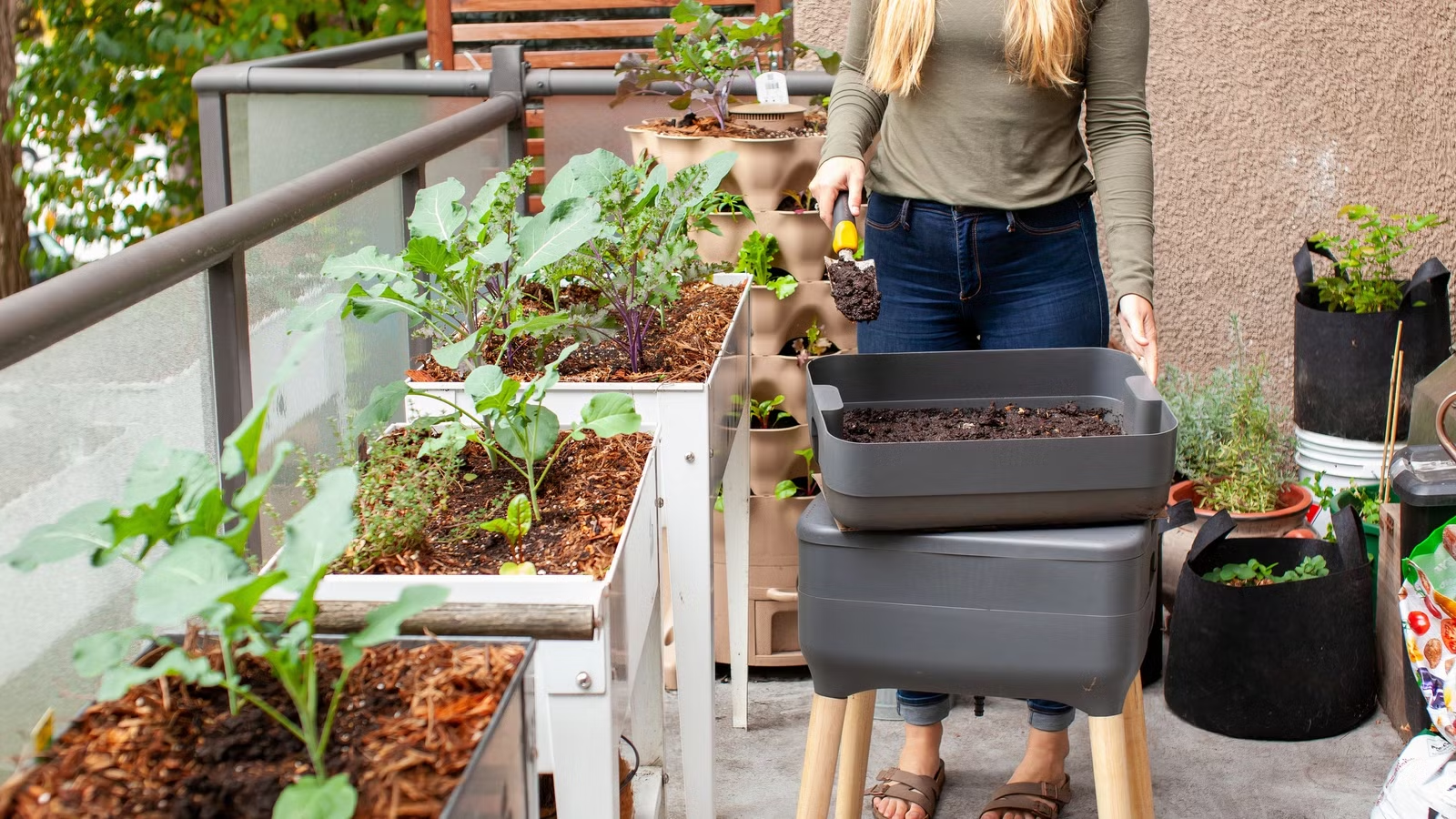
Urban living often means little space, lots of waste — but with the right approach, that waste becomes a goldmine for your garden. In this deep, engaging, and detailed guide I’ll walk you through how to take your city-garbage (organic waste, kitchen scraps, garden trimming) and turn it into rich, fertile soil that powerfully nourishes plants. It will be authentic, appealing, and crafted to engage blog readers and search engines (using best practices for SEO and readability). I’ll also include internal links (you can adapt to your site), external links to authoritative sources, and ensure it’s structured for AMP-friendly readability. 1. Why turn urban trash into garden soil? When we think of “trash” in a modern city — kitchen peels, coffee grounds, torn newspapers, yard trimmings we’re often ignoring the resource inside. By composting or re-using these materials we unlock multiple benefits: So when you frame your blog post around “waste-powered gardening”, you’re not just planting plants — you’re creating a closed-loop cycle in your city ecosystem. 2. Understanding the materials: What counts as “urban waste” for gardening? To make nutrient-rich soil from urban trash, you need to know what to collect and what to avoid. Here are key categories and best practices: 2.1 What you can compost or reuse: 2.2 What to avoid, with caution: By focusing on clean organic waste streams, you raise the quality of your final soil amendment and avoid future issues of contamination or poor breakdown. Studies of municipal organic-waste composting emphasise the importance of feed-stock 3. The process: From bin to bed — step-by-step composting in the city Here’s a detailed workflow tailored for urban or suburban gardeners, including tips specific to limited spaces (balcony, small yard, shared building). Each step is explained deeply. Step 1: Collect and segregate Step 2: Build your compost pile or bin with correct ratio Step 3: Monitor decomposition → aerate → maturity Step 4: Screen and apply to garden Step 5: Maintain and repeat 4. Why the soil becomes nutrient-rich and how you benefit Let’s dig into the science behind what’s happening — not just “put waste in and plants grow”, but why it improves soil so profoundly. 4.1 Physical improvements 4.2 Chemical benefits 4.3 Biological & ecological gains 4.4 Circular economy & sustainability 5. Urban-specific tips and challenges (especially relevant in Nigeria / African cities) Since you’re in Nigeria and possibly dealing with urban constraints, here are tailored considerations. 5.1 Space constraints 5.2 Waste segregation & contamination 5.3 Heat, humidity and climate 5.4 Awareness & social engagement 5.5 Safety & quality control 6. How to integrate waste-powered gardening on your blog (and for your audience) Since you publish general articles and you’re interested in affiliate links/monetisation, here are some ways to turn this theme into a compelling blog post: 7. Common FAQs and troubleshooting Why is my compost still smelly? Usually because there’s too much “green” material (nitrogen) and insufficient aeration. Add shredded paper or dry leaves (carbon), mix in and turn the pile. Can I use this compost for edible plants? Yes — once compost is fully mature (dark, crumbly, no identifiable scraps). In urban settings ensure your feed-stock was free of heavy-metal-rich waste. How long will it take? In a well-managed bin you might get usable compost in 6-10 weeks (warm climate helps). Slower (3-6 months) if you’re in a cooler or less-turned pile scenario. What about worms / vermicomposting? Absolutely — using worms (eg red wigglers) accelerates breakdown especially in smaller setups (indoor/balcony). You’ll get rich vermicompost which is especially high-value. How much compost should I apply? As a general rule: mix about 10-20% compost into garden soil (or top-dress ~1-2 cm and lightly work it in). Overuse (100%) may lead to imbalance; compost is a soil amendment, not the sole medium. 8. Closing: Your urban garden’s transformation When you look at your day-to-day urban life — cooking, drinking coffee, trimming plants, disposing of waste imagine this loop:waste → compost → soil amendment → thriving plants → food/greenery → you.This isn’t just gardening. It’s waste-powered gardening, a mindset shift for the urban gardener. With commitment, you turn what was once ending up in landfill (or worse-fly-infested dump) into nutrient-rich soil that grows life, restores health to the city soil beneath your feet, and reduces your ecological footprint. By adopting the steps above, you not only strengthen your own garden and plants but become part of a living movement — reinforcing circular living in cities like Abuja, Lagos and beyond.
In cities around the world, those modest slices of land at the centre of intersections and roundabouts — the road islands or traffic circles — are often treated as mere decorative spaces or, at worst, neglected green patches. But imagine if instead of just flowers or shrubs, they became mini farms — patches of productive urban agriculture sprouting fresh vegetables, herbs, native plants, and pollinator-friendly flowers. Welcome to the vision of traffic circle gardens: converting road islands into thriving, functional green spaces that feed communities, enhance traffic safety, and elevate urban aesthetics. This article dives deep into how traffic circle gardens operate, why they matter, the benefits, the practical steps you’ll need to implement them, and most importantly how you (or local communities) can replicate the concept. The content is optimized for search with the long-tail focus keyword “traffic circle gardens transforming road islands into mini farms” and also includes internal links and an external authority link for additional credibility. Why Traffic Circle Gardens Matter 1. Maximising Under-used Urban Land Traffic islands are often idle spaces. According to the definition, a traffic island is a solid or painted object in the middle of a road designed to channel traffic. When these islands are repurposed into mini farms, every square metre of urban land contributes positively — producing food, increasing biodiversity, and enhancing community engagement. 2. Enhancing Urban Aesthetics and Safety Well-planted roundabouts catch the eye, signalling to drivers that this space is managed and cared for. The guide by Roundabouts: An Informational Guide – Second Edition notes that landscaping on central islands helps make roundabouts more conspicuous and thus can improve safety. In other words, lush greenery does double duty: beauty and traffic calming. 3. Promoting Urban Agriculture & Sustainability Turning a traffic circle into a mini-farm aligns with sustainable urban design. Urban agriculture boosts food resilience in cities, reduces supply chain distance, and can engage local residents in growing their own produce. The concept of mobility-related gardens in urban infrastructure further emphasises how planting can link with transport and streetscape design. 4. Community Empowerment and Engagement Community organisations in cities like Vancouver have taken up traffic circle gardens enthusiastically; their “Green Streets” programme encourages volunteers to adopt and maintain traffic-circle gardens. This creates local ownership, pride, and a direct link between residents and public space. How to Transform a Road Island into a Mini Farm Below is a detailed step-by-step guide for turning a traffic circle or road island into a productive, safe and sustainable mini farm. Step 1: Site Assessment & Planning Step 2: Design for Productivity and Safety Step 3: Implementation & Planting Step 4: Maintenance & Community Involvement Step 5: Monitoring, Adaptation & Storytelling Key Benefits: Deep Dive Food Security & Local Production Urban mini farms in traffic circles contribute small-scale food production right where people live. Especially in Nigeria cities, this can mean fresh herbs, leafy greens and produce that would otherwise need transport. Biodiversity & Pollinator Support By incorporating flowering plants and shrubs, these spaces attract bees, butterflies and birds — enhancing urban biodiversity. Traffic Calming & Visual Identity The transition from a bare concrete island to a green, living space changes the driving experience: drivers naturally slow down when they perceive something cared for. In the guide to roundabouts, it is noted: “Landscaping … can enhance the safety of the intersection by making the intersection a focal point.” Community Pride and Engagement Residents taking ownership of these small farms develop stronger attachment to their streetscape. It fosters volunteerism and social cohesion. For example, the Bedford Garden Club in Massachusetts transformed traffic island gardens and this became a community hallmark. Environmental Impact Less heat absorption (green vs concrete), better rainwater infiltration, lower dust and improved air quality. As the article on traffic circles in Polish towns showed, traffic-calming design reduces fuel consumption and air pollution. Challenges & Mitigation Case Example In Vancouver’s West End, traffic circles became gardens under the “Green Streets” programme volunteers maintain them, turning simple roundabouts into lush planting zones. Another study from Poland found traffic circles effectively reduced speeds and improved sustainability when well-designed. While these aren’t explicitly mini farms, they show the feasibility of transforming road islands into green productive spaces. Why This Matters in Nigeria (And Other Developing Countries) Conclusion Traffic circle gardens — the transformation of road islands into mini farms — offer a compelling blend of urban agriculture, traffic-calming, community building and environmental benefit. By following the steps: assessing the site, designing for productivity and safety, planting thoughtfully, engaging community maintenance and monitoring the outcomes, any neighbourhood can adopt this model.
Imagine a city sidewalk, driveway or abandoned courtyard—flat, grey, lifeless. Now imagine lush green creeping vines, flowering plants, even shrubs growing directly on the concrete pavement, no traditional garden bed required. This is concrete gardening: the art and science of cultivating vegetation on hard pavement surfaces without relying on a full soil replacement underneath. It’s a bold concept: gardening on pavement, skipping large excavations, soil high-cost imports and heavy landscaping. And yes—it can work, with careful planning. This article takes you deep into the details: why it works, how to do it, and what to watch out for. With this method you’ll transform hardscape into living green space—and appeal to urban gardeners, patios, rooftops, or even driveways in Lagos, Abuja or anywhere. Why Concrete Gardening Works – and Why It’s Challenging 1. The potential of impervious surfaces Hard surfaces like concrete dominate many urban spaces. But hard-scape doesn’t have to mean lifeless. By adapting strategy, you can convert pavement into green patches. 2. The challenges: drainage, alkalinity, root space Growing plants on pavement means facing big hurdles: 3. The advantages: reuse unused space, cooler surfaces, urban greening Despite the challenges, there are persuasive advantages: Concrete Gardening Step by Step – Detailed Guide Here is a comprehensive how-to, explained in-depth, with each major point fully detailed for success. Step 1: Assess your pavement area & pick your zone Step 2: Choose planting strategy You essentially have three major approaches: For the purpose of this article (growing directly on pavement without soil underneath), we focus on a hybrid: using a thin fill/soil medium on top of existing pavement, or cut pockets, rather than full soil excavation. Step 3: Prepare for drainage & barrier Step 4: Select your substrate/growing medium Since you’re not using deep soil beneath, your substrate is crucial: Step 5: Choose plants suitable for the environment Step 6: Planting & installation Step 7: Regular care & monitoring Practical Tips & Visual Appeal for Urban Nigeria (Contextualised for Abuja/Lagos) Common Mistakes to Avoid Why It Matters – Bigger Picture By turning bare pavement into lush planting zones you contribute not just to aesthetic benefit but to urban resilience, biodiversity, and well-being. Studies show urban greenery positively influences well-being in adults. arXiv Also, permeable or vegetated surfaces help reduce stormwater runoff and ease heat-island effects. Conclusion Concrete gardening growing plants directly on pavement without digging traditional soil beds—is entirely feasible when done with care. From assessing your surface, choosing the right strategy, ensuring drainage and pH balance, selecting suitable plants, to ongoing maintenance—all steps matter. The reward? A transformation of bland grey space into vibrant green life. If you follow this deep guide closely, your project will not only flourish—but your blog post will reflect authority, practical insight, and SEO-friendly structure (image keyphrase, long-tail focus keyword, meta description, tags, internal/external links) to help it rank well.