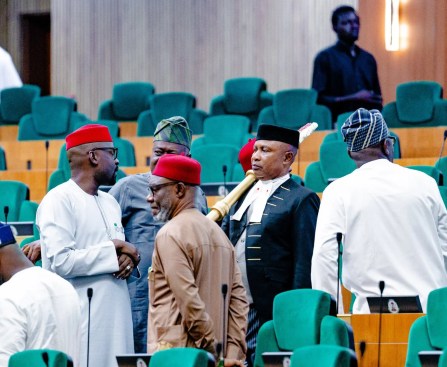
In a significant update to Nigeria’s Democracy Day 2025 celebrations, President Bola Ahmed Tinubu has cancelled his earlier scheduled national broadcast. Instead, the President will now deliver his official address during a joint session of the National Assembly on June 12, aligning with the 26th anniversary of Nigeria’s return to democratic rule. According to a press release from Segun Imohiosen, Director of Information and Public Relations at the presidency, the change in plan is directly linked to the President’s confirmed attendance at the National Assembly’s joint sitting, where he will share his message with the nation. “All other plans remain unchanged as previously announced,” the statement emphasized. Democracy Day 2025 Theme: Focus on Enduring Reforms This year’s theme — “Consolidating on the Gains of Nigeria’s Democracy: Necessity of Enduring Reforms” — underlines the Federal Government’s push to solidify democratic milestones through long-term reforms in governance and national institutions. President Tinubu is expected to use this platform to: June 12: A Historic Symbol of Democracy in Nigeria Nigeria marks 26 years of uninterrupted democracy in 2025, following the country’s return to civilian rule in 1999. June 12 was designated as Democracy Day to honor the 1993 presidential election, widely regarded as the fairest in the country’s history. This shift from a public broadcast to a legislative address adds gravitas to the day’s proceedings, aligning with the symbolism of participatory democracy that the National Assembly represents. Why This Matters President Tinubu’s decision to address lawmakers instead of the nation through a broadcast reflects a deeper commitment to democratic values and reforms. As Nigeria navigates complex socio-political challenges, this move highlights the importance of institution-led governance and the role of elected representatives in shaping national discourse.
The National Assembly has postponed plenary resumption from January 28 to February 4, 2025, to conclude ongoing budget defence sessions. Learn more here. The National Assembly has officially rescheduled its plenary sessions from January 28 to Tuesday, February 4, 2025. This decision was taken to accommodate ongoing budget defence engagements. Senate Resumption Postponed In a statement released on Saturday in Abuja, the Clerk of the Senate, Andrew Nwoba, announced the change, titled “Change in Resumption Date.” The statement read: “Dear Distinguished Senators, please be informed that there is a change in the resumption date due to the ongoing budget defence. “It has been rescheduled from Tuesday, 28th January 2025, to Tuesday, 4th February 2025, at 11 a.m. prompt. “Thank you for your understanding and cooperation.” House of Representatives Confirms New Date Similarly, the House of Representatives has also postponed its plenary resumption to February 4. Akin Rotimi, the spokesman for the House, confirmed this in a statement quoting Yahaya Danzaria, Clerk of the House. According to Rotimi: “The House of Representatives has announced the postponement of its plenary resumption, previously scheduled for Tuesday, January 28, 2025. “The new date for resumption is now set for Tuesday, February 4, 2025. “This development was communicated to Honourable Members through an internal memorandum issued by the Clerk of the House of Representatives, Dr. Yahaya Danzaria, Esq., on the directive of the House Leadership.” Reason for the Delay The postponement aims to provide legislative committees more time to finalize budget defence sessions with Ministries, Departments, and Agencies (MDAs). This is part of an effort to ensure a detailed and thorough budgetary review. The House reaffirmed its commitment to delivering on its legislative mandate, emphasizing that the decision reflects a dedication to serving the interests of Nigerians. Conclusion The rescheduling of plenary sessions underscores the importance of a comprehensive approach to the 2025 budget process. Stakeholders have been urged to remain patient and supportive as the National Assembly continues its work to ensure effective governance. Recommendations for Google Indexing READ ALSO: Follow the LMSINT MEDIA channel on WhatsApp: Join Our WhatsApp Group Hear: Chat on WhatsApp Join our Telegram Chanel.
The National Assembly has expressed deep dissatisfaction with the poor execution of capital projects in the 2024 budget, calling the current state disappointing. Lawmakers voiced concern over the significant gap between recurrent and capital expenditures, highlighting the low capital funding releases for ministries, departments, and agencies (MDAs). Both the Senate and House of Representatives urged the federal economic team to release more funds for capital projects immediately to ensure citizens benefit from government initiatives. This resolution followed a joint session involving the chairpersons of the Senate and House Committees on Appropriations and the Presidential Economic Team, where Senator Olamilekan Adeola (APC, Ogun West) and Abubakar Bichi presided over the budget review for 2025. The Finance Minister, Wale Edun, presented a report showing that only 25% of capital expenditure had been implemented compared to 43% for recurrent spending. Senator Adeola emphasized the need to shift budget allocations from the current 80% recurrent and 20% capital ratio to at least 60% recurrent and 40% capital, stressing that capital projects drive economic growth and directly impact citizens’ welfare. Adeola noted that withholding capital funds could hinder project completion and the success of President Tinubu’s Renewed Hope Agenda. He warned that MDAs defending their 2025 budget without significant 2024 performance would face accountability challenges. Supporting these points, House Committee Chairman Bichi called for prioritizing capital projects, including schools, roads, hospitals, and other infrastructure, instead of focusing heavily on debt repayment. He argued that excessive recurrent expenditure primarily benefits only about 10% of the population, while capital projects impact over 200 million Nigerians. Finance Minister Wale Edun acknowledged the concerns and confirmed the pending release of capital funds but emphasized fiscal responsibility to avoid financial crises similar to those in France and Germany. Minister of Budget and Planning, Abubakar Bagudu, added that the large recurrent spending was linked to development challenges, such as security operations supporting agriculture and economic stability. Dr. Tanimu Yakubu, Director General of the Budget Office, attributed part of the recurrent spending to inherited financial burdens, including unpaid pensions, which the Tinubu administration had addressed. He suggested the possibility of legislative action to cap recurrent spending in future budgets. The meeting, attended by Minister of State for Finance Dr. Doris Uzoka-Anite and senior ministry officials, also discussed tax waivers and holidays, which were noted to affect government revenue collection. READ ALSO: Follow the LMSINT MEDIA channel on WhatsApp: Join Our WhatsApp Group Hear: Chat on WhatsApp Join our Telegram Chanel.
Tinubu Acknowledges National Assembly’s Role in Nation-Building President Bola Ahmed Tinubu has praised the unwavering support of the National Assembly over the past 19 months, describing it as a driving force behind his administration’s determination to lead Nigeria toward greater development and prosperity. Speaking on Wednesday in Lagos during a meeting with Vice President Kashim Shettima, the leadership of the National Assembly, and its former principal officers, Tinubu expressed his gratitude for their collaboration and commitment. “Nigerians are the core of our mission. We have embarked on this transformative journey to serve, to secure a better tomorrow, and to build a brighter future for the generations to come. Your dedication to progress and value creation will bear fruit for the unborn,” Tinubu stated. The President also reaffirmed his resolve to make bold and innovative decisions that drive national growth, emphasizing that courageous actions are essential for achieving substantial change. Drawing from a Yoruba proverb, he remarked, “It is only a courageous dog that will capture the animal in the bush.” National Assembly Leaders Express Support Senate President Godswill Akpabio lauded Tinubu’s courage and commitment to reforms, pledging the legislature’s unwavering backing. “On this journey of restoration, transformation, and nation-building, you are not alone. The National Assembly stands with you every step of the way,” Akpabio said. Highlighting the administration’s economic strides, Akpabio noted achievements such as the oversubscription of Nigeria’s Eurobond, improved ease of doing business, and growing investor confidence. “Your bold reforms and leadership have drawn investors to Nigeria, and we are optimistic about the benefits that will continue to unfold,” he added. Similarly, Speaker of the House of Representatives, Rep. Tajudeen Abbas, commended the President for his respect and collaboration with the legislature. Abbas pointed out that several key figures in Tinubu’s administration, including the President, Vice President, and other top officials, were former members of the National Assembly. “The National Assembly is more united and fulfilled than ever before. We appreciate your responsiveness to our needs and your dedication to alleviating poverty. This historic collaboration brings hope to Nigerians,” Abbas noted. A Unified Vision for National Growth The meeting underscored a shared commitment to advancing Nigeria’s development agenda. Tinubu’s administration and the National Assembly continue to work hand-in-hand, fostering an environment of collaboration and innovation for the nation’s progress. READ ALSO: Follow the LMSINT MEDIA channel on WhatsApp: Join Our WhatsApp Group Hear: Chat on WhatsApp Join our Telegram Chanel.
The newly established Ministry of Steel Development has allocated N2.6 billion for the mobilization of Ajaokuta Steel Company Limited as part of its N24 billion total budget for 2025. This funding was presented by President Bola Tinubu to the National Assembly in the proposed budget. In addition, the Ministry has set aside N250 million for the revitalization of both Ajaokuta Steel Company Limited and the National Iron Ore Mining Company (NIOMCO) located in Itakpe. Ajaokuta Steel Company itself has received a total budget of N6.8 billion, with N6.3 billion earmarked for personnel costs. The company also allocated N2.4 million for overheads, while recurrent expenditures amounted to N6.4 billion, and N3.9 million was set aside for capital investments. READ ALSO: Follow the LMSINT MEDIA channel on WhatsApp: Join Our WhatsApp Group Hear: Chat on WhatsApp Join our Telegram Chanel.
The League of Northern Democrats (LND), led by its Chairman and former Kano State Governor, Senator Ibrahim Shekarau, has outlined specific conditions for supporting President Bola Tinubu’s Tax Reform Bills, which are currently being reviewed in the National Assembly. Speaking at an event in Abuja, Shekarau stressed that the technical committee established to assess the bills had raised critical socio-cultural and governance concerns. He warned that ignoring these issues could lead to significant challenges. According to Shekarau, the LND sees the tax reform initiative as a pivotal opportunity to strengthen Nigeria’s economic framework while addressing broader constitutional and societal challenges. “The League views these tax reforms as a chance to promote economic stability while resolving vital issues related to governance, constitutional inclusivity, and socio-cultural harmony,” Shekarau noted. The group has called for comprehensive amendments to the bills to foster national unity, inclusivity, and equitable distribution of resources. As discussions on the proposed reforms unfold, the recommendations made by the LND are expected to significantly influence the national tax reform debate. READ ALSO: Follow the LMSINT MEDIA channel on WhatsApp: Join Our WhatsApp Group Hear: Chat on WhatsApp Join our Telegram Chanel.
A federal lawmaker from Bauchi State, Mansur Soro, has raised concerns about the transmission of tax reform bills to the National Assembly by President Bola Tinubu in September 2024. Soro claims the process bypassed established procedures, sparking opposition from various quarters, including the 36 state governors. Background on the Tax Reform BillsOn September 3, 2024, President Tinubu submitted four tax reform bills to the National Assembly, following the recommendations of the Taiwo Oyedele-led Presidential Committee on Fiscal and Tax Reforms. The bills aim to address fiscal challenges and streamline tax administration. However, the move has met resistance, particularly from state governors, who argue for broader consultations before proceeding. Governors Demand Broader ConsultationThe 36 governors have requested the withdrawal of the bills to allow more comprehensive discussions. The House of Representatives, anticipating debates next week, is expanding consultations to navigate the growing tensions. Lawmaker’s Criticism of the ProcessMansur Soro, representing Darazo/Ganjuwa Federal Constituency, expressed dissatisfaction with the handling of the bills. Drawing comparisons with past legislative practices, he highlighted that previous finance-related bills, such as the 2020 Finance Act, underwent approval by the National Economic Council (NEC) before reaching the National Assembly. He stated, “In the 9th Assembly, we ensured that sub-nationals had a voice through NEC’s input before passing related bills. Skipping NEC this time has created unnecessary friction and suspicion.” Potential Risks of Overlooking Due ProcessSoro warned that bypassing NEC could jeopardize the proposed reforms. He emphasized, “The lack of consultation with NEC has fueled doubts that may hinder the bills’ successful implementation. To avoid losing the critical provisions within these reforms, the President should recall the bills and engage NEC fully.” Conclusion: Calls for CollaborationAs the National Assembly prepares for plenary debates, stakeholders are calling for a more inclusive approach to ensure the reforms address Nigeria’s economic challenges without alienating key players. Mansur Soro’s stance underscores the importance of adherence to due process in fostering trust and cooperation among federal and state authorities.