Israelis observed their annual Memorial Day on Tuesday, a solemn occasion dedicated to honoring those who lost their lives in service to the nation. Across the country, commemorations took place at military cemeteries, while a two-minute siren brought daily activity to a standstill as citizens paused in unified remembrance. In central Tel Aviv, crowds gathered at a grassroots memorial site that formed near a bright, circular fountain in the aftermath of the October 7, 2023 হামাস-led attack, an incident that resulted in the deaths of over 1,200 individuals. The location has since become a symbolic space for reflection, drawing visitors who come to pay their respects and connect with the collective grief. As evening falls, the national mood undergoes a dramatic transition. The quiet reflection of the day gives way to vibrant celebration as Independence Day begins. The shift is marked by festive sounds—trumpets, music, and public events—signaling a return to national pride and resilience. Although Israel officially declared independence on May 14, 1948, the commemoration follows the Hebrew lunar calendar, meaning the date changes each year. This dual observance—mourning followed immediately by celebration—captures a defining aspect of the nation’s identity, blending remembrance with renewal.
Ukrainian President Volodymyr Zelenskyy has confirmed that the critical Druzhba oil pipeline is now fully repaired and ready to resume operations after suffering damage during a Russian strike. The Druzhba pipeline, one of the largest oil transport networks in Europe, plays a vital role in delivering Russian crude oil to several European nations, including Hungary and Slovakia. Its temporary shutdown created significant tension across the region, particularly among countries that continue to depend heavily on Russian energy supplies. According to Zelenskyy’s statement shared on X (formerly Twitter), Ukrainian engineers have successfully completed restoration work on the affected section of the pipeline. He emphasized that the infrastructure is now operational again, allowing oil transportation to restart without further delay. The disruption had broader economic and political consequences beyond energy supply. Notably, it became a major obstacle in discussions surrounding a €90 billion financial assistance package proposed by the European Union. Some EU member states raised concerns about energy stability, which contributed to delays in finalizing the aid agreement. Both Hungary and Slovakia had expressed frustration during the outage, pointing to the urgency of restoring oil flow due to their continued reliance on Russian imports. Their governments had also criticized Kyiv for what they perceived as a slow repair response, intensifying diplomatic pressure on Ukraine. With the pipeline now restored, the situation is expected to ease, potentially unlocking progress in EU financial negotiations and stabilizing energy distribution across affected regions. Further updates are anticipated as more information emerges regarding operational timelines and geopolitical developments.
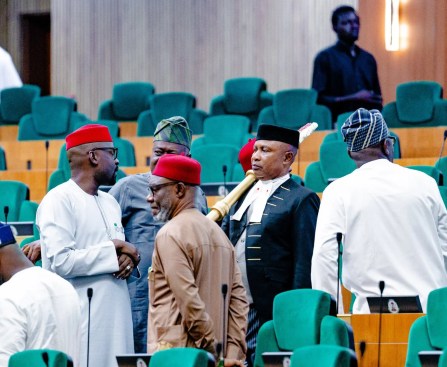
The political atmosphere surrounding the 2027 Lagos State governorship race continues to intensify, as Abdulazeez Adediran, widely known as Jandor, has firmly refuted circulating claims that President Bola Ahmed Tinubu has chosen Deputy Governor Obafemi Hamzat as the preferred candidate of the All Progressives Congress (APC). Jandor clarified that no official endorsement has been issued by the President, nor has Hamzat publicly declared his intention to contest the gubernatorial seat. Speaking during a recent appearance on Politics Today aired by Channels Television, Jandor addressed the growing speculation suggesting that the contest had already been decided in favour of the current deputy governor. According to him, such assumptions lack any verified foundation. He pointed out that while Hamzat remains a seasoned political figure with more than two decades of experience and currently serves as Lagos State’s deputy governor, he has yet to formally announce his ambition. Jandor stressed that if any endorsement had truly been made at the presidential level, aspirants within the party would have been officially informed. As an active contender in the race, he emphasized that no such communication has reached him or other hopefuls. He further explained that the APC has not indicated any move toward adopting a consensus candidate. Instead, the party’s current stance suggests that the selection process will be conducted through direct primaries, allowing party members to determine the flagbearer. According to him, the party structure remains supreme, and all aspirants are expected to align with its decisions once officially declared. Jandor also disclosed that he had a personal meeting with President Tinubu. During that interaction, he noted that the President neither discouraged his ambition nor guaranteed him the party’s ticket. He described the encounter as neutral but encouraging enough to remain actively involved in the race. Explaining the rationale behind his early declaration, Jandor highlighted the importance of confidence in leadership pursuits. He drew comparisons to President Tinubu’s own political journey, noting that ambition must first be declared before it can gain traction. In discussing the broader political landscape in Lagos, he argued that the dominance of the APC has significantly weakened opposition influence in the state. Despite this, he reiterated his commitment to party unity, promising to support whichever candidate eventually emerges as the APC flagbearer if he does not secure the nomination. As Governor Babajide Sanwo-Olu approaches the end of his second term, interest in the upcoming election continues to grow. Several prominent figures have been linked to the race, including Obafemi Hamzat, former Governor Akinwunmi Ambode, Senator Tokunbo Abiru, presidential aide Hakeem Muri-Okunola, Chief of Staff Femi Gbajabiamila, and Minister of Education Tunji Alausa. The unfolding developments indicate that the 2027 Lagos governorship contest will remain highly competitive, with multiple influential stakeholders positioning themselves ahead of party primaries.
Former U.S. President Donald Trump stated on Monday night that efforts by the United States to recover uranium from Iran would be both prolonged and challenging, following last year’s military strikes targeting Tehran’s nuclear infrastructure. In a post shared on his Truth Social platform, Trump described “Operation Midnight Hammer” as a decisive and overwhelming success, claiming it resulted in the complete destruction of Iran’s nuclear-related sites. He emphasized that extracting any remaining materials from those locations would not be straightforward, noting that the process would require significant time and effort. Trump frequently uses the phrase “nuclear dust” when referring to Iran’s reserves of enriched uranium. According to him, these materials are being stockpiled with the intention of developing nuclear weapons, a claim that has been consistently disputed by Iranian authorities. At times, he has also used the same term to describe the remnants left behind after U.S. airstrikes on Iranian nuclear facilities carried out in June of the previous year. The 79-year-old political figure has continued to insist that Iran’s enriched uranium stockpile could eventually be relocated to the United States. However, Iran’s foreign ministry has firmly rejected such assertions, denying that any agreement or plan exists to transfer nuclear materials out of the country. Tensions escalated further earlier this year when the United States and Israel conducted coordinated military operations against Iran on February 28. The strikes were aimed at dismantling what Israeli officials described as a serious and immediate threat stemming from Iran’s nuclear ambitions. According to Israeli sources, Iran has intensified its pursuit of nuclear capabilities since the conclusion of a brief but intense 12-day conflict last June. That confrontation, initiated by Israel, involved targeted attacks on multiple Iranian nuclear facilities, including a major uranium enrichment site. U.S. forces also participated in the operation, reinforcing concerns about the region’s growing instability and the ongoing dispute over nuclear development. The situation remains complex, with conflicting narratives from all sides. While the United States and its allies maintain that Iran’s nuclear activities pose a global security risk, Iran continues to assert that its program is intended solely for peaceful purposes. As geopolitical tensions persist, the question of uranium recovery and nuclear oversight is likely to remain a significant international issue.
Nigeria’s Permanent Representative to the United Nations, Jimoh Ibrahim, has emphasized that President Bola Ahmed Tinubu is focused on resolving long-standing issues that have fueled insecurity both within the country and across the broader West African region. This position was shared shortly after Ambassador Ibrahim formally presented his Letter of Credence to António Guterres at the United Nations headquarters in New York City. Tinubu’s Commitment to Ending Persistent Conflicts According to Ibrahim, President Tinubu sees the resolution of deeply rooted grievances as essential to achieving lasting peace and national stability. These challenges, which include religious tensions and prolonged socio-political disputes, have contributed significantly to unrest in Nigeria. He explained that the President believes Nigeria’s strengthened presence at the United Nations will play a strategic role in addressing both domestic and global security concerns. By leveraging international cooperation, the administration aims to create sustainable solutions to long-standing crises. The envoy further noted that addressing these underlying issues is not just a national priority but a necessary step toward ensuring safety and harmony across the region. Strengthening Regional and International Security Efforts Nigeria is also intensifying efforts to build global partnerships in tackling security threats, particularly those affecting the Sahel and the wider West African sub-region. Ibrahim highlighted that instability within neighboring regions continues to impact Nigeria, making collaborative solutions increasingly important. He stressed that resolving internal conflicts while addressing regional instability forms the backbone of long-term security strategies. At a time when global diplomacy is evolving, Nigeria is repositioning itself as an active participant in multilateral engagement. Ibrahim described his appointment as a significant step toward restoring the country’s diplomatic influence after over two years without a fully appointed permanent representative at the UN. Renewed Diplomatic Leadership at the United Nations Ambassador Ibrahim expressed confidence in his role, stating that he would work closely with the UN leadership to address shared global challenges. His appointment signals Nigeria’s renewed commitment to playing a leading role in international diplomacy. He also reiterated Nigeria’s support for reforms within the United Nations, particularly advocating for stronger African representation on the Security Council. According to him, securing a permanent seat for Africa would mark a historic milestone and significantly improve global security cooperation. Economic Reforms and Their Long-Term Impact Highlighting domestic policies, Ibrahim pointed out that President Tinubu’s economic reforms are designed to lay a strong foundation for sustainable growth. While acknowledging the short-term difficulties associated with these changes, he noted that early outcomes have been encouraging. He added that Nigeria remains committed to advancing global initiatives such as international tax reforms, climate action, and multilateral collaboration aimed at fostering peace and development. The Link Between Peace and Economic Stability The ambassador also underscored the importance of peace in driving economic progress. He referenced critical global trade routes like the Strait of Hormuz, noting their significance to the global economy and the need for stability in such regions. Nigeria’s Role in Global Peace and Development Nigeria continues to position itself as a key player in achieving the core objectives of the United Nations. The country remains actively involved in peacekeeping missions and consistently advocates for reforms that reflect Africa’s growing influence on the global stage. During the event, the UN Secretary-General highlighted Nigeria’s importance in strengthening multilateral cooperation, while Deputy Secretary-General Amina Mohammed welcomed the renewed Nigerian representation, noting that the country’s absence had been noticeable. Historical Context of Nigeria’s UN Membership Nigeria became the 99th member of the United Nations on October 7, 1960, shortly after gaining independence on October 1 of the same year. Since then, the nation has grown into a major contributor to UN peacekeeping missions and a strong advocate for Africa’s inclusion in global decision-making processes, particularly regarding the push for a permanent seat on the Security Council.
Tensions between the United States and Iran continue to escalate as both nations signal readiness for potential military confrontation, while uncertainty clouds the future of ongoing diplomatic negotiations. With a ceasefire deadline approaching, doubts remain over whether talks—previously announced by Donald Trump—will resume in Pakistan. Officials in Washington revealed that Vice President JD Vance was prepared to return to Islamabad for a second phase of negotiations aimed at resolving the conflict that has destabilized the Middle East and disrupted global economic systems. However, authorities in Tehran have not confirmed their participation and have instead accused the United States of breaching the truce by enforcing a naval blockade and seizing Iranian vessels. Iran’s parliamentary speaker, Mohammad Bagher Ghalibaf, criticized Washington’s approach, stating that such actions undermine diplomatic efforts and transform negotiations into coercive measures. He emphasized that Iran rejects dialogue conducted under pressure and indicated that the country has been strengthening its military readiness over recent weeks. Further heightening tensions, Iran’s Revolutionary Guard issued warnings that any unauthorized vessels attempting to pass through the strategically critical Strait of Hormuz could become targets. This waterway is essential to global energy supply, facilitating the transit of approximately 20% of the world’s oil shipments. Disruptions in this region have historically triggered volatility in international markets. On the other hand, Trump accused Iran of violating the ceasefire by interfering with maritime operations in the same corridor. Reports from Lloyd’s List indicated that over 20 Iranian-linked vessels had navigated through the blockade, raising concerns over enforcement effectiveness and maritime security. In a series of statements shared on his social media platform, Trump maintained that the blockade was significantly weakening Iran’s economy and insisted it would remain in place until a comprehensive agreement is reached. Central to U.S. demands are concessions regarding Iran’s controversial nuclear activities. Trump further stated in an interview that Iran had initially agreed to participate in talks hosted in Pakistan but warned of severe consequences if the ceasefire lapses. He suggested that renewed conflict could escalate rapidly, indicating a low likelihood of extending the temporary truce. Despite the tense environment, financial markets showed cautious optimism. Oil prices declined slightly while global equities rose, reflecting hopes that diplomatic efforts might still succeed in reopening the Strait of Hormuz and stabilizing energy supply chains. Within Iran, daily life has seen limited normalization during the ceasefire period, but many citizens remain uncertain about the future. Residents have expressed concern over economic hardship and instability, noting that inflation and restricted access to resources continue to strain livelihoods. Meanwhile, a separate ceasefire involving Israel and Lebanon has introduced another dimension to the regional situation. This agreement includes Hezbollah, whose involvement in support of Iran contributed to the expansion of the conflict. Diplomatic discussions between Israel and Lebanon are set to continue in Washington, even as sporadic clashes persist. Israel has cautioned civilians against returning to certain areas in southern Lebanon, citing ongoing security risks linked to Hezbollah activities. The United Nations Security Council recently condemned the killing of a French peacekeeper in Lebanon, an incident attributed by France to Hezbollah forces. The attack highlights the fragile nature of ceasefires in the region and the ongoing risks faced by international peacekeeping missions such as UNIFIL. Casualty figures continue to rise, with thousands reported dead in Lebanon since the conflict began. At the same time, another critical issue in U.S.–Iran negotiations remains Iran’s stockpile of enriched uranium. Although Trump previously suggested that Iran might relinquish its nuclear materials, he later acknowledged that such a process would be complex and time-consuming, particularly following earlier U.S. strikes on Iranian nuclear facilities. Trump described those operations as highly effective, claiming they significantly degraded Iran’s nuclear capabilities. However, Iranian officials have firmly rejected any suggestion of transferring their uranium stockpile, stating that the matter has not been part of formal negotiations and remains non-negotiable. As diplomatic efforts hang in the balance, the coming days will be crucial in determining whether dialogue prevails or tensions escalate into broader conflict with global implications
Pope Leo XIV’s final stop on his African journey draws global attention as he heads into one of the continent’s most tightly controlled nations. The visit to Equatorial Guinea marks a significant moment in a tour already defined by stronger rhetoric on justice, governance, and human dignity. After spending three days in Angola, the American-born pontiff is scheduled to arrive around midday (1100 GMT). His visit places him in a country led since 1979 by Teodoro Obiang Nguema Mbasogo, widely recognized as the world’s longest-serving non-monarchical head of state. The timing and setting of this stop heighten expectations, especially given the pope’s evolving tone on leadership accountability throughout his trip. This journey also echoes history. Four decades ago, Pope John Paul II became the first pontiff to step onto Equatorial Guinean soil. Today, the predominantly Catholic population—estimated at around 80 percent due to Spanish colonial influence—prepares once again to host the leader of the global Church. The legacy of faith remains deeply woven into the country’s identity, despite its complex political environment. Throughout his African tour, Pope Leo XIV has adopted a noticeably firmer stance. His messages have increasingly challenged systems of oppression and exploitation while advocating for peace, unity, and social justice. This shift from a previously more reserved approach signals a deliberate effort to engage more directly with pressing societal issues. Attention now turns to whether this assertive tone will continue in Equatorial Guinea. The nation has long faced criticism from international observers for governance practices often described as restrictive. Many opposition leaders and independent journalists have relocated to Spain, citing pressure and limited freedom of expression within their homeland. Global organizations frequently highlight concerns such as systemic corruption, political repression, and limitations on civil liberties. Reports of arbitrary detentions and restrictions on public discourse have contributed to the country’s reputation as one of the more closed political systems in Africa. Against this backdrop, the pope’s words and actions during his stay are expected to carry considerable weight. In the former capital, Malabo, located on the island of Bioko in the Gulf of Guinea, preparations reflect both excitement and reverence. Streets are adorned with large images of the pontiff, alongside banners and flags representing both the Vatican and Equatorial Guinea. Church choirs across the nation are set to perform a hymn specially composed in his honor. For many residents, the visit symbolizes hope. A local citizen expressed that the pope’s presence could inspire unity and renew spiritual commitment among the population. Such sentiments highlight the broader social impact religious leadership can have beyond formal ceremonies. During his stay, Pope Leo XIV will address key figures including government officials, members of the diplomatic community, civil society representatives, and cultural leaders. His itinerary continues the following day with a visit to Mongomo, a political stronghold of President Obiang, where he will celebrate mass and engage with students and educators at a technology institution named after Pope Francis. The journey proceeds to the economic hub of Bata, where the pope will honor victims of the 2021 military camp explosion that claimed over 100 lives. He is also expected to visit inmates at a local prison, reinforcing his ongoing emphasis on compassion, justice, and inclusion for marginalized groups. The tour concludes on Thursday with a large-scale mass at Malabo Stadium, bringing to a close an intense 11-day, 18,000-kilometre journey across Africa. This final gathering is anticipated to draw significant attendance, marking the culmination of a visit that blends spiritual leadership with broader social commentary.
Lamine Yamal, the exciting winger for FC Barcelona, has publicly declared Lionel Messi, captain of Inter Miami CF, as the greatest football player of all time. The young Spain international emphasized that Messi’s extraordinary achievements have earned him universal admiration and respect across the football world. Yamal made this statement after receiving the Best Young Athlete honor at the Laureus World Sports Awards held in Madrid on Monday. Speaking after the ceremony, Yamal expressed deep admiration for the Argentine legend: “Leo Messi stands as the greatest footballer in history. Even beyond football, he ranks among the finest athletes ever,” he said. He further noted that Messi’s accomplishments have earned widespread respect globally, adding that he hopes to build a career that mirrors the legendary forward’s journey. Widely regarded as the most decorated player in football history, Messi has secured more than 45 major trophies, including the prestigious FIFA World Cup. Now aged 38, the Argentine forward is approaching the final phase of his illustrious career. Reports suggest that the upcoming summer tournament could mark his final appearance on the World Cup stage.
Nigeria is intensifying its response to livestock diseases, and the latest move signals a stronger push toward improving vaccine availability and animal health management nationwide. The Federal Government has stepped up actions aimed at tackling diseases that continue to disrupt livestock productivity and threaten food security. This renewed commitment also focuses on building strategic partnerships to expand access to vaccines for farmers across the country. Details of this development were shared through an official statement published by the Federal Ministry of Livestock Development. According to the release, the Minister of Livestock Development, Idi Mukhtar Maiha, held a high-level meeting on April 20, 2026, in Abuja with representatives from Ambuvets Konsult and MCI Santé Animale. The discussions centered on the growing impact of livestock diseases such as Peste des Petits Ruminants, Foot-and-Mouth Disease, and Contagious Bovine Pleuropneumonia. These illnesses continue to reduce farm output and negatively affect farmers’ earnings across Nigeria. During the meeting, Maiha emphasized that maintaining strong animal health systems is critical to national growth. He highlighted that disease prevention, monitoring, and control are core components of the government’s ongoing livestock sector reforms. According to him, the transformation agenda places a strong focus on minimizing disease outbreaks and improving livestock productivity through sustainable practices. He further explained that collaboration with private sector players will play a key role in strengthening Nigeria’s ability to manage transboundary animal diseases. Expanding vaccine access, especially in rural farming communities, remains a top priority in achieving this goal. The partnership framework involves Ambuvets Konsult and MCI Santé Animale working together to enhance both vaccine production and distribution systems. This joint effort is expected to bridge existing gaps in vaccine supply chains. Speaking on the initiative, the Chief Executive Officer of Ambuvets Konsult, Shehu Shamsudeen, stated that the collaboration is designed to improve vaccine availability by integrating manufacturing capacity with efficient distribution networks. This approach aims to ensure that farmers can access essential vaccines when needed. Similarly, the Chief Executive Officer of MCI Santé Animale, Tadlaoui Omari Khalid, stressed the importance of developing locally driven solutions to livestock health challenges across Africa. He noted that collective efforts among stakeholders are necessary to address the continent’s unique agricultural needs effectively. In addition, the initiative includes collaboration with the National Veterinary Research Institute. The institute will support vaccine trials and help ensure that solutions are tested and optimized for local environmental conditions, improving their effectiveness and reliability. Overall, this coordinated effort reflects a broader strategy to strengthen Nigeria’s livestock sector, improve farmer livelihoods, and enhance food production through better disease control and expanded vaccine distribution.
The race for the English Premier League crown has intensified following Manchester City’s narrow 2-1 triumph over Arsenal on Sunday. The outcome has not only shifted momentum but also sparked differing opinions from two iconic football figures, Roy Keane and Patrick Vieira, during their analysis on Sky Sports. Former Arsenal captain Patrick Vieira expressed strong confidence in Manchester City’s ability to secure the title. According to him, Pep Guardiola’s squad currently holds a psychological and competitive edge that could prove decisive in the closing stages of the campaign. Vieira emphasized that momentum is now clearly favoring Manchester City, especially after their crucial win against Arsenal. He noted that Arsenal may struggle to bounce back emotionally from such a disappointing result, as the pressure intensifies with each remaining fixture. In his view, the shift in energy and confidence within City’s camp places them in a strong position to finish at the top of the table. Vieira suggested that maintaining consistency under pressure is something Guardiola’s team has mastered over recent seasons, making them formidable contenders once again. On the other hand, Roy Keane remained firm in his original stance. The former Manchester United midfielder chose not to be swayed by recent developments and instead reaffirmed his belief in Arsenal’s title chances. Keane made it clear that he would stand by his pre-season prediction, backing Arsenal to overcome the setback and emerge as champions. His confidence reflects a belief in the team’s resilience and ability to respond positively despite adversity. The contrasting viewpoints from Patrick Vieira and Roy Keane highlight just how unpredictable and competitive this season’s title race has become. As the Premier League campaign approaches its final stretch, all eyes remain on both teams to see who will ultimately rise above the pressure and claim the coveted trophy.
Alex Iwobi, a key figure for Fulham and Nigeria’s national team, has shared a candid perspective on the intense competitive nature of his Super Eagles colleague, Victor Osimhen. Speaking during an appearance on the Best Mode On podcast, Iwobi highlighted the striker’s extreme determination and relentless hunger for victory. According to Iwobi, Osimhen’s approach to football is defined by an almost obsessive desire to win, regardless of the circumstances. He described the forward’s mentality as unusually fierce, noting that the striker is willing to push boundaries in both training and competitive matches to come out on top. Osimhen, widely regarded as one of the finest strikers in modern football, has delivered an impressive record for Nigeria, scoring 35 goals in 52 international appearances. His rise to global recognition has been driven not only by talent but also by his relentless work ethic and fearless style of play. Iwobi explained that during training sessions, Osimhen frequently puts himself in physically demanding and sometimes risky situations. Whether it involves challenging aggressively for aerial balls or stretching into tight spaces, the striker consistently demonstrates a willingness to sacrifice his body in pursuit of success. He further emphasized that Osimhen’s journey to the top is no coincidence. While some critics may argue that his playing style lacks refinement or appears unpolished, Iwobi believes those traits are overshadowed by his unmatched determination. The forward is capable of generating multiple scoring opportunities in a single match purely through persistence, pressing, and intelligent movement. Another standout aspect of Osimhen’s character, according to Iwobi, is his disregard for reputation or status. Whether facing elite defenders like Virgil van Dijk or competing against lesser-known opponents, the Nigerian striker maintains the same level of intensity. He approaches every match with equal seriousness, treating high-profile fixtures like the UEFA Champions League with the same mindset as casual or grassroots games. Iwobi pointed out that this mindset fuels Osimhen’s consistency and effectiveness. His desire to win remains constant, regardless of the stage or opponent, which sets him apart from many players at the top level. However, Iwobi also admitted that this aggressive competitiveness can sometimes become excessive. In training environments, Osimhen’s drive to win may lead to overly intense moments, including confrontations or bending the rules slightly to secure victory. Despite this, Iwobi described it as part of a “unique” and “extreme” mentality that ultimately contributes to his success. In essence, Osimhen’s approach reflects a player who thrives on intensity, resilience, and an unwavering focus on winning. While his methods may occasionally raise eyebrows, they underline the mentality required to compete at the highest level of global football.
Popular Afrobeats star Davido has revealed that he would prefer his children to build their careers outside the entertainment space, specifically within his family’s business empire. During a widely circulated interview on The Breakfast Club, the award-winning artist shared that his kids are more likely to work in the companies owned by his father, Deji Adeleke, rather than pursue music or show business. According to Davido, this preference is influenced by his own early experiences in the music industry. He explained that before achieving success, he faced resistance and a lack of support from his father, which made his journey more difficult and emotionally challenging. He suggested that working within the family’s established business structure would offer his children a more stable and comfortable path in life. Reflecting on those early struggles, the singer recounted how his father’s initial disapproval of his music ambitions affected him deeply, even diminishing his enthusiasm at the time. However, he acknowledged that his persistence eventually convinced his father to accept his chosen career. When asked directly whether he would want his children to follow in his footsteps or join their grandfather’s business ventures, Davido responded candidly that he would rather see them work with his father. He described how his father finds genuine happiness in spending time with his grandchildren, especially during family gatherings like Christmas. He also highlighted that despite his father’s vast wealth and achievements, including ownership of private jets, his greatest joy comes from family connections. Observing this, Davido expressed that such moments reshaped his understanding of what truly matters in life. Nonetheless, the singer made it clear that he would not impose restrictions on his children’s choices. While he may have a preferred path for them, he emphasized that he would still support any of his kids if they decide to pursue a career in entertainment. He even noted that his daughter is already showing interest in music through singing and dancing.