
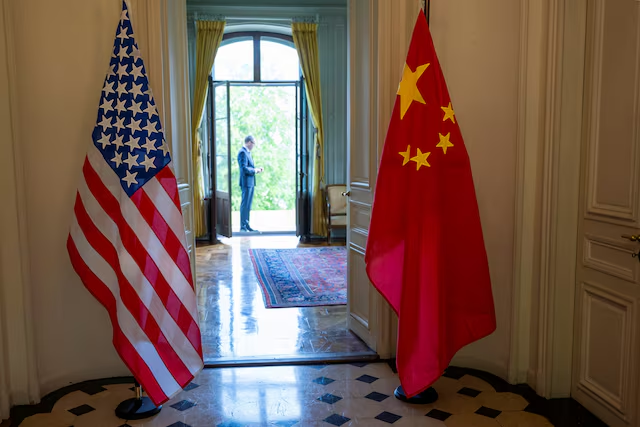

Tensions between the United States and China are once again drawing global attention as Donald Trump prepares for a highly anticipated meeting with Xi Jinping in May. This marks Trump’s first official trip to China in eight years and comes amid a complex backdrop of trade friction and economic rivalry between the world’s two largest economies.
Over the past year, Washington introduced sweeping tariffs that were at times unpredictable, significantly impacting global trade dynamics. What began as a cycle of retaliatory tariff increases between both nations has gradually shifted toward efforts to stabilize relations through negotiations, high-level discussions, and diplomatic engagement. These efforts included multiple rounds of trade talks, direct communication via phone calls, and a prior meeting between the two leaders.
Major Developments This Year
In March, the United States initiated fresh investigations under Section 301 into what it described as unfair trade practices across several Chinese industries. In response, China launched similar probes targeting U.S. sectors. Plans for a summit between Trump and Xi were initially progressing, but the visit to Beijing was postponed until mid-May due to the ongoing Iran conflict.
During the same period, U.S. Treasury Secretary Scott Bessent and Trade Representative Jamieson Greer met with Chinese Vice Premier He Lifeng and senior trade negotiator Li Chenggang in Paris. This sixth round of discussions was described by both parties as constructive, signaling cautious optimism.
In February, the U.S. Supreme Court ruled against Trump’s global tariff framework. Despite the ruling, Trump indicated his intention to continue leveraging tariffs as a strategic tool.
Earlier in January, China closed out 2025 with a historic trade surplus. This outcome was largely attributed to a strategic shift in exports toward regions such as Southeast Asia, Africa, and Latin America, compensating for declining exports to the United States.
Key Trade Developments in 2025
In October, China reinforced its control over critical minerals by expanding export restrictions to additional rare earth elements and tightening oversight on semiconductor-related usage. In response, the United States imposed an additional 100% tariff on Chinese imports and introduced restrictions on key software exports. Both nations also took aim at each other’s shipping sectors.
Subsequently, Trump and Xi met in Busan, South Korea, where they agreed on a renewed trade truce. Under this agreement, the United States committed to reducing tariffs, while China pledged to address illicit fentanyl trade, resume purchases of U.S. soybeans, and temporarily halt restrictions on rare earth exports.
In September, discussions between the two countries included the potential divestiture of TikTok and broader trade negotiations involving chemicals, aircraft engines, and industrial components.
Between June and August, Trump indicated that the trade truce was regaining momentum after select Chinese rare earth producers were granted export licenses. Concurrently, the U.S. began issuing licenses to Nvidia, allowing the export of advanced AI chips to China. Trump also encouraged China to significantly increase imports of U.S. soybeans. The tariff truce was extended by an additional 90 days.
In May, the first round of trade discussions took place in Geneva, resulting in a temporary 90-day reduction in tariffs. However, just weeks later, Trump accused China of breaching the agreement by failing to roll back tariffs and ease restrictions on critical mineral exports. China countered by accusing the United States of implementing discriminatory trade measures.
In April, following his return to office, Trump imposed a 10% tariff on Chinese goods and later introduced broad “Liberation Day” tariffs affecting all imports. These measures further strained relations, prompting China to retaliate with increased tariffs. The escalating exchange pushed levies on both sides beyond 100%, while China also began restricting exports of certain rare earth materials.
Kindly Share:

Discover more from LMSINT MEDIA
Subscribe to get the latest posts sent to your email.