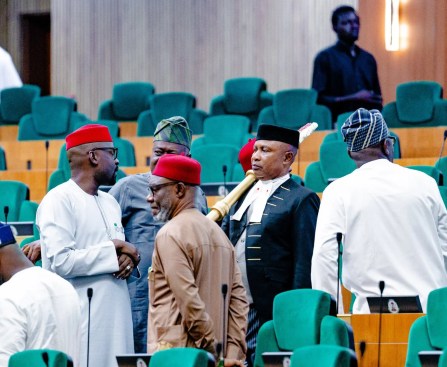
The political landscape in Nigeria is witnessing a transformative shift as more state governors are reportedly preparing to defect to the All Progressives Congress (APC), the nation’s ruling party. Recently, the Governor of Delta State, Rt. Hon. Sheriff Oborevwori, captured national attention after announcing his departure from the opposition Peoples Democratic Party (PDP) to join the APC. His move has intensified political conversations and forecasts ahead of the anticipated 2027 general elections. In a recent interview on Channels Television’s Politics Today, Governor Abdullahi Sule of Nasarawa State confirmed that Governor Oborevwori’s defection is not an isolated case. He hinted that a number of other governors are also in advanced stages of negotiation and may soon declare their support for the APC. Governor Sule noted that the increasing number of political defections is largely due to the visionary reforms and governance style of President Bola Ahmed Tinubu. According to him, many political actors admire the president’s commitment to inclusion, stability, and reform. He stated that these qualities are drawing influential leaders from various political parties to the APC. “During high-level meetings with President Tinubu, the energy among attendees is palpable. The governors feel a sense of appreciation and recognition that’s been missing elsewhere,” Governor Sule remarked. Although the exact figure of governors expected to cross over remains uncertain, insider sources suggest a significant number of state leaders are contemplating the move. Political analysts believe that this trend could lead to a dramatic realignment in Nigeria’s party politics as the 2027 elections approach. This ongoing political shift underscores the APC’s growing dominance and could potentially reshape power dynamics across the federation. Related Articles: BUY ANYTHING ON KONG BUY NOW Follow the LMSINT MEDIA channel on WhatsApp: Join Our WhatsApp Group Hear: Chat on WhatsApp Join our Telegram Channel
The National Chairman of the Social Democratic Party (SDP), Shehu Gabam, has issued a strong statement, asserting that the 2027 presidential election is open for any party to win. Gabam emphasized that election victories are not solely determined by individual brilliance or strategic planning but by the will of the people. During an interview on Channels Television, he disclosed that key political figures are defecting to the SDP in large numbers across Nigeria. He also reassured that the party remains open to welcoming more influential personalities. High-Profile Politicians Defecting to SDP According to DAILY POST, former Kaduna State Governor, Mallam Nasir El-Rufai, recently resigned from the ruling All Progressives Congress (APC) to join the SDP. Gabam noted that the party has been witnessing a continuous influx of former senators, ministers, and other dignitaries. “We receive decampees into SDP almost every day, covering every state in the federation. Today alone, I welcomed some top figures into my office. If you search online, you will see that over 300 VIPs have submitted resignation letters from their former parties to join us,” Gabam stated. SDP Confident of Victory in 2027 Shehu Gabam made it clear that the SDP’s goal is to take over the Nigerian government in 2027. He stressed that the current administration is failing to address the concerns of citizens, which could lead to their downfall in the next election. “The APC’s mission is to retain power, while the PDP wants to reclaim power. But as SDP, our objective is to form the next government,” Gabam said. He further argued that the Nigerian government lacks effective leadership, and many untapped talents can offer better governance. “No single individual or party has a monopoly on leadership. If there were real efficiency in power, we wouldn’t be seeing repeated governance failures,” he added. Could SDP Emerge as a Strong Alternative? With more influential politicians defecting and growing public dissatisfaction with the APC-led government, political analysts believe that SDP might emerge as a serious contender in the 2027 elections. The coming months will determine whether the party can consolidate its momentum and challenge the dominance of APC and PDP. Read more about Nigeria’s 2027 election landscape on Channels TV READ ALSO: Follow the LMSINT MEDIA channel on WhatsApp: Join Our WhatsApp Group Hear: Chat on WhatsApp Join our Telegram Channel
Explore the growing trend of political defections in Nigeria, its impact on democracy, and expert insights on addressing this divisive issue. The political landscape in Nigeria continues to witness upheaval as opposition parties grapple with a wave of defections to the ruling All Progressives Congress (APC). Since the conclusion of the 2023 general elections, numerous elected representatives from opposition parties have shifted allegiance, sparking concerns about the health of the nation’s democracy. Stakeholders remain divided on the reasons behind this trend. Some attribute it to selfish interests and the abandonment of party ideology, while others justify defections as a response to political marginalization or the pursuit of personal aspirations. A Surge in Defections Following the 2023 elections, opposition parties like the Labour Party (LP) and the Peoples Democratic Party (PDP) have faced significant losses. The LP, hailed as the Third Force during the elections, has lost at least 18 lawmakers to the APC. Similarly, the PDP has seen defections from senators, House of Representatives members, and 27 Rivers State Assembly members. This trend is expected to intensify before the 2027 elections. Judiciary’s Role in Addressing Defections Former Akwa Ibom State Deputy Governor, Senator Chris Ekpenyong, emphasized the judiciary’s responsibility in curbing defections. He criticized the failure to uphold constitutional provisions that prohibit elected officials from changing parties post-election. “The judiciary must strictly interpret the constitution to deter defections. Allowing such actions tilts the political system towards a one-party state, undermining democracy,” he said. The Crisis in Political Integrity Elder Wole Oyelese, a PDP chieftain, lamented the erosion of political values. He noted that defections often stem from a desire for power and financial benefits, which compromise democratic principles. “When politicians prioritize personal gain over ethical leadership, they betray their constituents and weaken democracy,” Oyelese added. Labour Party Alleges Misuse of State Resources Labour Party spokesperson, Obiora Ifoh, accused the ruling APC of leveraging state resources to lure opposition members. He highlighted the need for stricter laws and enforcement mechanisms to protect opposition parties from such tactics. “Strengthening laws and enforcing accountability are vital to safeguarding democratic principles,” Ifoh asserted. Defections as a Political Strategy Contrarily, Edo APC chieftain Hon. Charles Idahosa defended defections, arguing that politics is driven by interest and circumstances. “If a party no longer aligns with your values, moving to another party is a valid choice. Politics is a dynamic field with no permanent friends or enemies,” Idahosa explained. Challenges to Nigeria’s Multi-Party Democracy Peter Ameh, National Secretary of the Coalition of United Political Parties (CUPP), described defections as a threat to Nigeria’s multi-party system. He warned that the continuous weakening of opposition parties diminishes their ability to hold the ruling party accountable. “The trend of defecting politicians undermines democracy and consolidates power in the ruling party,” Ameh cautioned. Judiciary and Legislative Reforms Needed Experts like Surv. Furoebi Akene called for judicial reforms to address loopholes that enable defections. Akene emphasized that without credible judicial processes, the cycle of defections will persist, eroding trust in democratic institutions. APC’s Growing Influence Chief Ominimini Obiuwebwi, an APC chieftain, attributed the wave of defections to the party’s perceived dominance and President Bola Tinubu’s inclusive leadership style. “Politicians are joining APC because they see brighter prospects and a leader who embraces all,” Obiuwebwi stated. Reinforcing Party Loyalty Rivers State APC Chairman, Chief Emeka Bekee, urged politicians to prioritize party loyalty over personal interests. “Defections often stem from selfish motives. Politicians must remain steadfast in their parties to build a robust democratic system,” Bekee advised. ConclusionPolitical defections remain a divisive issue in Nigeria, highlighting the need for stronger laws, judicial reforms, and a renewed commitment to party ideologies. While some view defections as a strategic move, others see them as a threat to democratic stability. The future of Nigeria’s multi-party democracy depends on addressing these challenges and fostering accountability among political leaders. READ ALSO: Follow the LMSINT MEDIA channel on WhatsApp: Join Our WhatsApp Group Hear: Chat on WhatsApp Join our Telegram Chanel.

