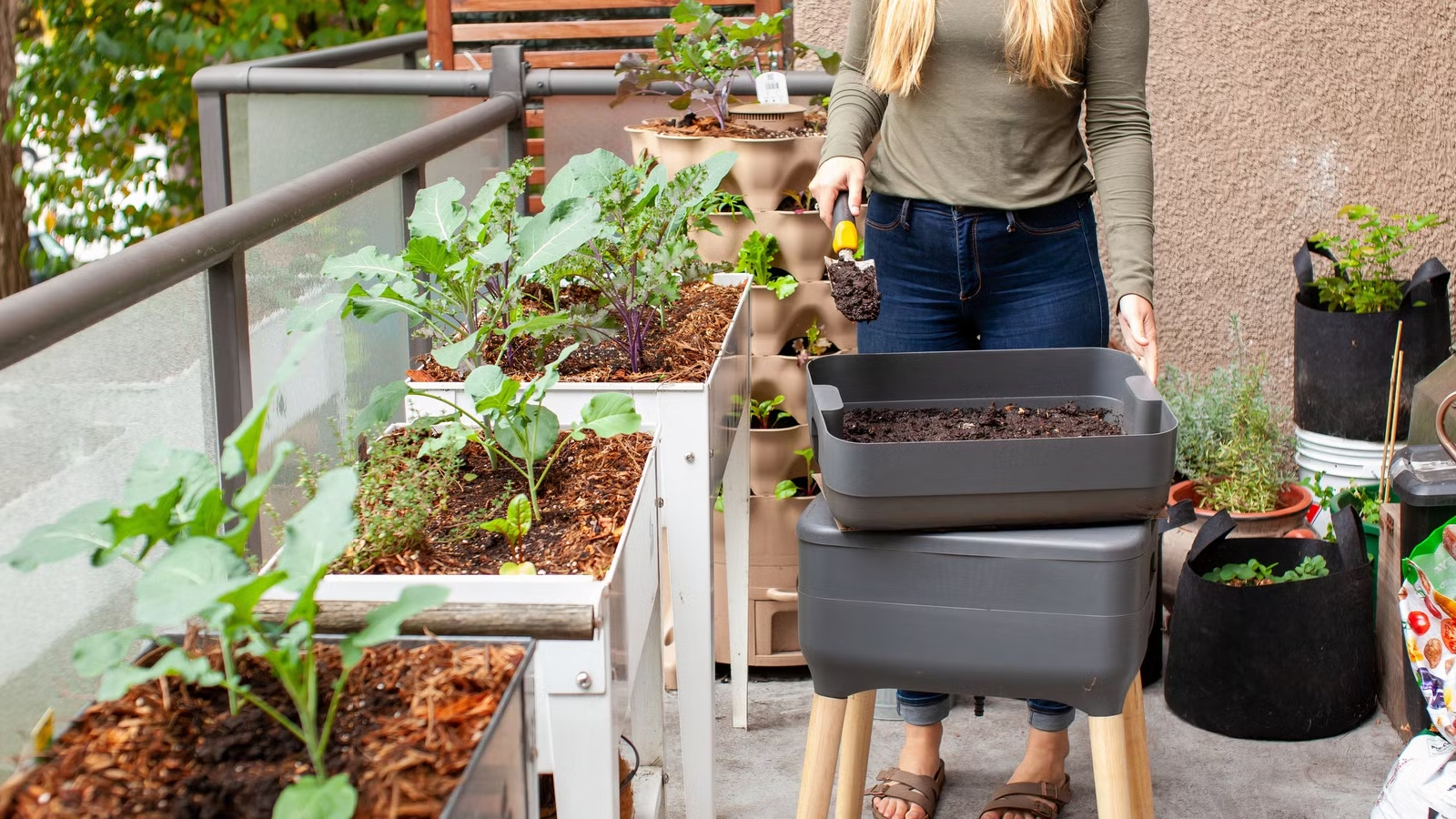
Urban living often means little space, lots of waste — but with the right approach, that waste becomes a goldmine for your garden. In this deep, engaging, and detailed guide I’ll walk you through how to take your city-garbage (organic waste, kitchen scraps, garden trimming) and turn it into rich, fertile soil that powerfully nourishes plants. It will be authentic, appealing, and crafted to engage blog readers and search engines (using best practices for SEO and readability). I’ll also include internal links (you can adapt to your site), external links to authoritative sources, and ensure it’s structured for AMP-friendly readability. 1. Why turn urban trash into garden soil? When we think of “trash” in a modern city — kitchen peels, coffee grounds, torn newspapers, yard trimmings we’re often ignoring the resource inside. By composting or re-using these materials we unlock multiple benefits: So when you frame your blog post around “waste-powered gardening”, you’re not just planting plants — you’re creating a closed-loop cycle in your city ecosystem. 2. Understanding the materials: What counts as “urban waste” for gardening? To make nutrient-rich soil from urban trash, you need to know what to collect and what to avoid. Here are key categories and best practices: 2.1 What you can compost or reuse: 2.2 What to avoid, with caution: By focusing on clean organic waste streams, you raise the quality of your final soil amendment and avoid future issues of contamination or poor breakdown. Studies of municipal organic-waste composting emphasise the importance of feed-stock 3. The process: From bin to bed — step-by-step composting in the city Here’s a detailed workflow tailored for urban or suburban gardeners, including tips specific to limited spaces (balcony, small yard, shared building). Each step is explained deeply. Step 1: Collect and segregate Step 2: Build your compost pile or bin with correct ratio Step 3: Monitor decomposition → aerate → maturity Step 4: Screen and apply to garden Step 5: Maintain and repeat 4. Why the soil becomes nutrient-rich and how you benefit Let’s dig into the science behind what’s happening — not just “put waste in and plants grow”, but why it improves soil so profoundly. 4.1 Physical improvements 4.2 Chemical benefits 4.3 Biological & ecological gains 4.4 Circular economy & sustainability 5. Urban-specific tips and challenges (especially relevant in Nigeria / African cities) Since you’re in Nigeria and possibly dealing with urban constraints, here are tailored considerations. 5.1 Space constraints 5.2 Waste segregation & contamination 5.3 Heat, humidity and climate 5.4 Awareness & social engagement 5.5 Safety & quality control 6. How to integrate waste-powered gardening on your blog (and for your audience) Since you publish general articles and you’re interested in affiliate links/monetisation, here are some ways to turn this theme into a compelling blog post: 7. Common FAQs and troubleshooting Why is my compost still smelly? Usually because there’s too much “green” material (nitrogen) and insufficient aeration. Add shredded paper or dry leaves (carbon), mix in and turn the pile. Can I use this compost for edible plants? Yes — once compost is fully mature (dark, crumbly, no identifiable scraps). In urban settings ensure your feed-stock was free of heavy-metal-rich waste. How long will it take? In a well-managed bin you might get usable compost in 6-10 weeks (warm climate helps). Slower (3-6 months) if you’re in a cooler or less-turned pile scenario. What about worms / vermicomposting? Absolutely — using worms (eg red wigglers) accelerates breakdown especially in smaller setups (indoor/balcony). You’ll get rich vermicompost which is especially high-value. How much compost should I apply? As a general rule: mix about 10-20% compost into garden soil (or top-dress ~1-2 cm and lightly work it in). Overuse (100%) may lead to imbalance; compost is a soil amendment, not the sole medium. 8. Closing: Your urban garden’s transformation When you look at your day-to-day urban life — cooking, drinking coffee, trimming plants, disposing of waste imagine this loop:waste → compost → soil amendment → thriving plants → food/greenery → you.This isn’t just gardening. It’s waste-powered gardening, a mindset shift for the urban gardener. With commitment, you turn what was once ending up in landfill (or worse-fly-infested dump) into nutrient-rich soil that grows life, restores health to the city soil beneath your feet, and reduces your ecological footprint. By adopting the steps above, you not only strengthen your own garden and plants but become part of a living movement — reinforcing circular living in cities like Abuja, Lagos and beyond.

