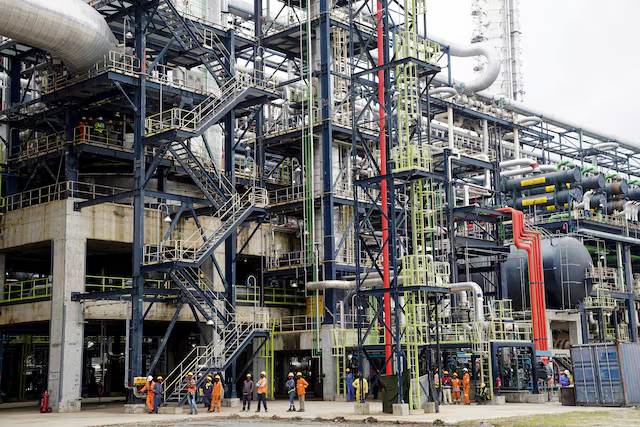
Dangote Refinery Seeks to Halt Fuel Imports Amid Legal Dispute A Nigerian Federal High Court has dismissed an objection from state-owned NNPC Ltd regarding its inclusion in a lawsuit filed by Dangote Oil Refinery. The case, initiated by Africa’s largest refinery, seeks to prevent fuel imports into Nigeria, arguing that its production capacity is sufficient to meet the nation’s gasoline demand. Background: Dangote Refinery’s Push for Energy Independence The 650,000-barrel-per-day Dangote Refinery, commissioned in Lagos, aims to reduce Nigeria’s dependence on imported refined petroleum. Despite being an oil-producing nation, Nigeria has historically relied on fuel imports due to limited refining capacity. The refinery, owned by billionaire Aliko Dangote, has positioned itself as a solution to the country’s energy crisis. Lawsuit Challenges Fuel Importation In its legal filing, Dangote Refinery contends that the Nigerian Midstream and Downstream Petroleum Regulatory Agency (NMDPRA) is breaching the law by continuing to issue fuel import permits. The lawsuit demands ₦100 billion ($65 million) in damages from NMDPRA, NNPC, and several smaller fuel marketers, citing that imports should only be allowed if there’s a supply shortfall. The refinery argues that it began producing gasoline in September last year and is capable of supplying the country’s needs. NNPC’s Argument and Court’s Ruling NNPC opposed the lawsuit, asserting that domestic fuel consumption still surpasses Dangote’s production capacity, necessitating imports. It also pointed out that the lawsuit erroneously named Nigeria National Petroleum Corporation, a non-existent entity, as the company had been rebranded as Nigeria National Petroleum Company Limited (NNPC Ltd) in 2022. However, presiding Judge Inyang Ekwo dismissed NNPC’s objections, allowing the case to proceed. A final ruling is expected on May 6, when the court will evaluate NNPC and NMDPRA’s motion to dismiss the case on grounds of insufficient merit. Fuel Market Implications & Government Response Nigeria, home to one of Africa’s largest gasoline markets, spent ₦15.42 trillion ($10 billion) on fuel imports in 2023, according to the National Bureau of Statistics. This lawsuit marks yet another confrontation between Dangote Group and Nigerian regulators, with the refinery previously accusing NMDPRA of permitting substandard fuel imports and failing to enforce domestic crude supply laws. Regulatory bodies have denied these claims. What’s Next? As the legal battle continues, stakeholders within Nigeria’s petroleum industry are closely watching how the decision will impact the country’s fuel supply policies. With the government’s push for economic diversification and self-sufficiency in oil refining, the outcome of this lawsuit could set a precedent for fuel regulation and refinery operations in Nigeria. Read more about Nigeria’s fuel importation policies on Reuters. READ ALSO: Follow the LMSINT MEDIA channel on WhatsApp: Join Our WhatsApp Group Hear: Chat on WhatsApp Join our Telegram Channel
The Growing Threat of Misinformation in the Digital Age In today’s digital era, misinformation has taken on an alarming form, fueled by the widespread availability of advanced communication technology. False narratives can now spread rapidly through text messages, videos, and online links, creating unwarranted panic. A recent viral video, falsely claiming that Premium Motor Spirit (PMS) from the Nigerian National Petroleum Company Limited (NNPCL) burns faster than other brands, exemplifies the destructive impact of unchecked disinformation. This misinformation campaign aims to undermine public confidence in NNPC’s fuel quality and tarnish the company’s reputation. NNPC’s Strong Rebuttal Against False Claims In response to the misleading video, Olufemi Soneye, NNPCL’s Chief Communications Officer, issued an official statement debunking the claims. He emphasized that the video lacks credibility, being based on unverified and amateur research. “This misleading video represents yet another desperate attempt by economic saboteurs to misinform the public and damage NNPCL’s reputation. We will not tolerate deliberate misinformation designed to undermine our operations and mislead Nigerians,” said Soneye. NNPC also warned that it would take legal action against individuals or groups spreading falsehoods about the company’s operations, reinforcing its commitment to transparency and credibility. Independent Validation of NNPC’s Fuel Quality Backing NNPC’s position, the Petroleum Products Retail Outlets Owners Association of Nigeria (PETROAN) dismissed the claims about NNPC’s fuel quality. PETROAN conducted independent tests on NNPC’s PMS, confirming that it meets all regulatory and industry standards. According to PETROAN, the tests showed: The Economic Impact of False Narratives on NNPC Misinformation campaigns targeting NNPC are not just about damaging its reputation—they threaten Nigeria’s economic stability. Since its establishment in 1977, NNPC has remained the backbone of the nation’s economy. It plays a pivotal role in Nigeria’s GDP growth, particularly as the country relies heavily on the oil sector. Under the leadership of Mele Kyari, NNPC has made significant strides in the industry. According to the National Bureau of Statistics (NBS), the oil sector recorded a 10.15% growth in the second quarter of 2024, an increase of 23.58 percentage points from the previous year. This contributed 5.70% to Nigeria’s total real GDP, reinforcing the company’s role in national economic development. NNPC’s Role in Energy Security and Economic Growth NNPC has long been responsible for ensuring Nigeria’s energy security. Its transformation into a fully independent and commercially driven entity in 2022 was a strategic move to enhance efficiency and competitiveness. At the company’s unveiling, a former Nigerian president emphasized its role in sustaining energy security while delivering value to shareholders and the global energy community. Under the current leadership, NNPC is expanding gas infrastructure and investing in cleaner energy options such as Liquefied Natural Gas (LNG) and Compressed Natural Gas (CNG) to drive sustainable energy solutions. These efforts position NNPC as a key player in Nigeria’s economic transformation and energy diversification. Fighting the Spread of Fake News in the Oil Industry The targeted misinformation campaign against NNPC is a dangerous precedent that could undermine national economic growth. The 2024 World Economic Forum ranks misinformation as one of the world’s most severe short-term risks, highlighting its potential to destabilize economies. Fake news and propaganda can erode investor confidence, disrupt fuel supply chains, and create unnecessary panic among consumers. Call to Action: Protecting National Interests It is in the national interest for Nigerians to reject efforts to de-market NNPC. The company is mandated by the Petroleum Industry Act (PIA) as the supplier of last resort, ensuring fuel availability during supply chain disruptions. If misinformation campaigns against NNPC continue unchecked, they could weaken the company’s ability to stabilize fuel prices and ultimately plunge Nigeria into an economic downturn. Conclusion: Supporting NNPC’s Commitment to Transparency NNPC has demonstrated its resilience against misinformation by exposing false claims and pursuing legal actions where necessary. As a nation, safeguarding the integrity of the oil sector is crucial to sustaining economic growth and energy security. Industry stakeholders, regulatory bodies, and the public must work together to combat fake news, ensuring accurate and transparent information prevails. For more insights into the risks of misinformation and economic stability, refer to the World Economic Forum’s Report on Global Risks 2024. READ ALSO: Follow the LMSINT MEDIA channel on WhatsApp: Join Our WhatsApp Group Hear: Chat on WhatsApp Join our Telegram Channel
Africa’s wealthiest individual, Nigerian tycoon Aliko Dangote, is in negotiations to secure billions of dollars in additional funding to expand operations at his $20 billion oil refinery located near Lagos. The refinery, one of the continent’s most ambitious infrastructure projects, aims to transform Nigeria’s energy sector and reduce the nation’s dependence on imported petroleum products. According to Financial Times reports, Dangote is in discussions with a mix of commercial lenders, development banks, oil traders, and other key industry players to raise the funds necessary for ensuring a consistent crude oil supply to the refinery, which has the capacity to process 650,000 barrels per day (bpd) once fully operational. Dangote Industries has already sourced crude from international suppliers in the U.S. and Brazil, and is exploring partnerships with African countries like Libya and Angola to meet the refinery’s growing demand. The refinery began production earlier this year and is already processing 420,000 bpd, with Dangote aiming to reach full capacity by mid-2025, despite setbacks in meeting earlier targets. In September, the refinery began producing jet fuel and naphtha, followed by petrol in October, fuelling hopes that Nigeria could finally end its long-standing reliance on fuel imports. However, Dangote’s efforts to secure a stable flow of crude have been complicated by challenges with the Nigerian National Petroleum Company (NNPC), the state-owned oil corporation that was supposed to supply a significant portion of the crude required. In recent discussions, Dangote sought guarantees from President Bola Tinubu and NNPC CEO Mele Kyari for a steady supply of 365,000 bpd of crude, which would be paid for in Nigeria’s depreciating currency, the naira. In December, the Africa Finance Corporation (AFC), a pan-African development bank that is already invested in the refinery, led a financing round to help get the project off the ground. As production increases, Dangote now faces the challenge of securing additional funds to cover both crude procurement and the refinery’s operating expenses, which could amount to about $2 billion every 90 days for a minimum supply of 300,000 bpd. Several financiers have expressed concerns over the naira’s significant devaluation, which has made financing and crude imports more expensive. Some analysts are skeptical that the refinery will achieve profitability under these financial pressures. One source told the Financial Times, “The refinery was built over budget, and the naira, which will be a major source of revenue, has devalued massively.” Additionally, NNPC’s stake in the refinery has been reduced to 7.2% after it failed to meet the payment schedule for a deal valued at $2.7 billion. NNPC made an initial payment of $1 billion in 2021 but has not been able to cover the remaining $1.76 billion, which was supposed to be paid in crude supplies. This situation has raised doubts about NNPC’s ability to meet Dangote’s needs, especially given the significant crude quantities it has already committed to in forward contracts. Despite these challenges, Dangote remains determined to use the refinery to meet Nigeria’s entire daily demand for petrol, which he estimates at 30 to 35 million liters. Once fully operational, the refinery could dramatically reduce Nigeria’s need for imported fuel, which costs the government billions annually. A report by Knightsbridge Strategic Group (KSG), a geopolitical intelligence firm, suggests that Dangote’s refinery could eventually help lower fuel costs in Nigeria and increase competition in the European fuel market. Once the refinery reaches full capacity, Nigeria could become a major exporter of refined oil products, providing an alternative to European nations seeking to reduce their reliance on Russian oil. However, KSG cautions that persistent crude shortages and the weak naira could delay the refinery’s progress towards full capacity. The report warns that if NNPC continues to delay its crude supply, the refinery will face financial strain due to its massive debt commitments. It projects that the refinery may not reach full capacity until at least mid-2025, which would prolong Nigeria’s dependence on expensive foreign crude imports, further straining the nation’s economy. KSG also highlights the political implications of Nigeria’s refinery challenges. The government’s inability to resolve fuel supply issues could fuel rising inflation, higher fuel prices, and social unrest. The removal of fuel subsidies earlier this year has already led to protests, and ongoing issues with Dangote’s refinery could intensify public dissatisfaction. READ ALSO: 13 more trafficking girls were saved from Ghana.

