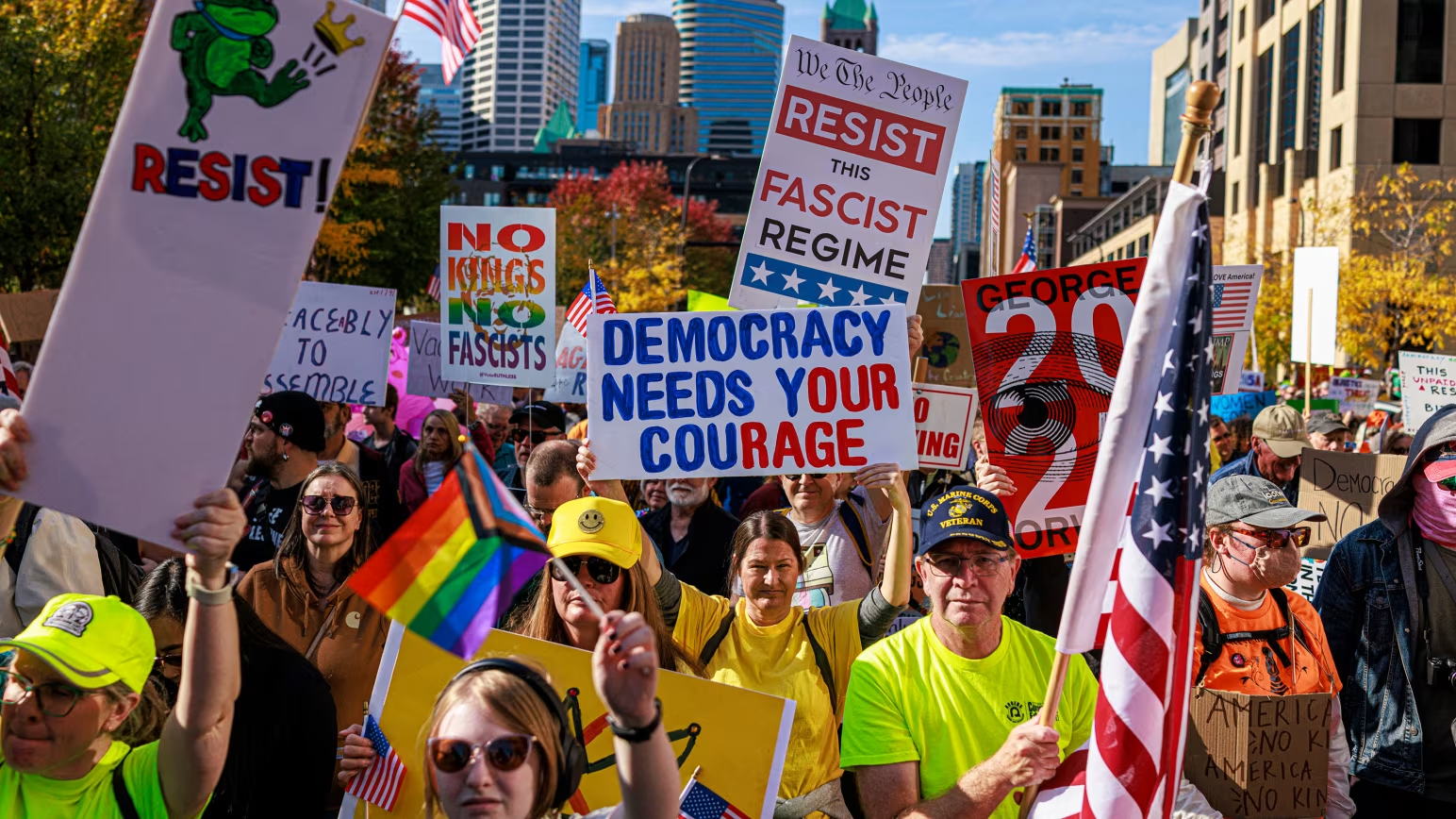
When retired public servant Peggy Cole turned 70, she didn’t plan a quiet celebration instead, she and a friend drove nearly ten hours from Flint, Michigan, to take part in a massive protest in Washington, D.C. on Saturday. She says she felt this momentous birthday deserved a bold act — one that reflects her fears for the country’s future. Cole described the current moment as deeply unsettling: “It feels as if (Trump) is gradually dismantling our government, our democracy piece by piece,” she said. “If we just sit and do nothing, we’ll lose it.” This sentiment echoed across the protest grounds, where millions gathered in cities nationwide under the banner of No Kings. Organizers billed it as a show of unity against authoritarian impulses in the White House, and many participants said they came because they felt democracy itself was under threat. For Cole, jumping into the streets was the way to mark her milestone: by standing up when she believed the stakes could not be higher. Why So Many Showed Up These sprawling demonstrations were more than symbolic. Beyond personal stories like Cole’s, protesters pointed to patterns: the growing consolidation of power in executive hands, claims of overreach in policing and immigration, and a general sense that institutional checks are being eroded. Many insisted that silence now would be complicity. Months earlier, No Kings protests made national headlines when tens of thousands marched on June 14, drawing parallels to massive protest waves in U.S. history. This October wave — coordinated across all 50 states — aimed to deepen that narrative and sustain momentum. In many cities, the rallies looked more like colorful street festivals than tense confrontations: marching bands, giant banners of the U.S. Constitution’s “We the People,” inflatable costumes, and creative protest art abounded. Despite the critical messages, most of the events remained peaceful. Across major hubs like New York, Chicago, and Washington, D.C., law enforcement reported minimal disruptions. Voices from the Frontlines For people like Cole, the decision to join was deeply personal. She viewed the protest as marking her belief that inaction would allow power to accumulate unchecked. Others echoed similar themes: defense of civil liberties, fears about the increasing militarization of policy enforcement, and skepticism about authority without accountability. Many described their participation as a form of civic duty — a last stand for democratic norms. In media interviews, numerous attendees said they’d never joined a major protest before — but that they felt compelled now. A Moment of National Reckoning The scale of the demonstrations suggests this is not a fleeting moment. Analysts and news outlets pointed out that the October wave of No Kings may become one of the largest coordinated protest efforts in U.S. history. Still, the movement faces challenges. Republican critics called the protests “hate rallies” and warned of destabilizing effects. Others questioned how the energy on the streets might convert to lasting political change. Yet as people like Cole showed, many regard this as neither spectacle nor protest — but a powerful statement: when democracy feels fragile, citizens must show up.

