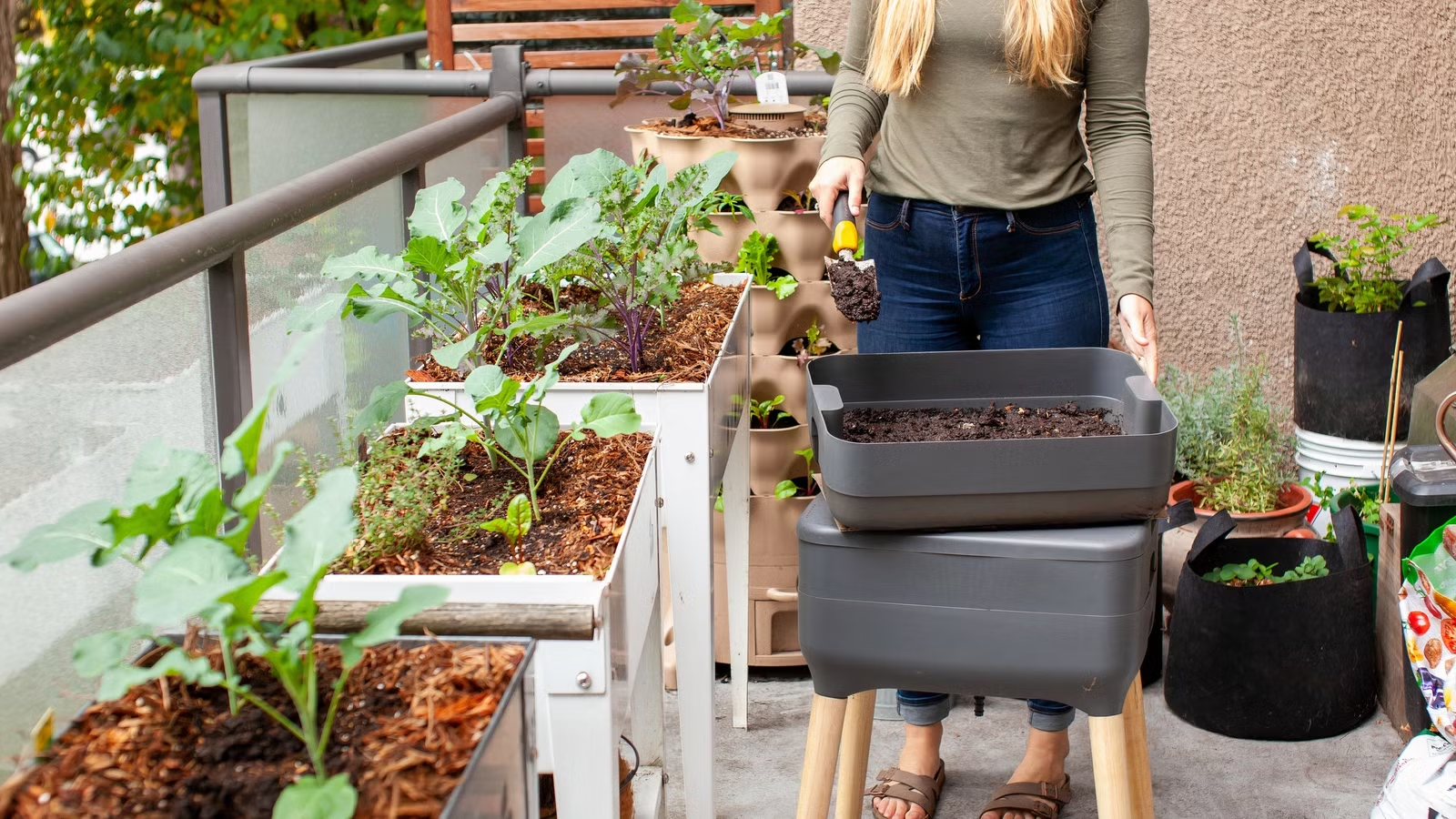
Urban living often means little space, lots of waste — but with the right approach, that waste becomes a goldmine for your garden. In this deep, engaging, and detailed guide I’ll walk you through how to take your city-garbage (organic waste, kitchen scraps, garden trimming) and turn it into rich, fertile soil that powerfully nourishes plants. It will be authentic, appealing, and crafted to engage blog readers and search engines (using best practices for SEO and readability). I’ll also include internal links (you can adapt to your site), external links to authoritative sources, and ensure it’s structured for AMP-friendly readability.
1. Why turn urban trash into garden soil?
When we think of “trash” in a modern city — kitchen peels, coffee grounds, torn newspapers, yard trimmings we’re often ignoring the resource inside. By composting or re-using these materials we unlock multiple benefits:

- Waste diversion & climate benefits: According to the United States Environmental Protection Agency (EPA), composting food scraps and yard waste reduces methane emissions from landfills.
- Soil health improvements: Compost-amended soils have increased organic matter, better water retention, improved nutrient levels (N, P, K) and stronger microbial life.
- Cost savings & circular economy: Instead of importing soil amendments or chemical fertilisers you locally reuse waste. Many developing-country studies emphasise this value.
- Urban gardening empowerment: In cities, small gardens, rooftop planters or balcony containers benefit hugely from homemade compost rather than relying purely on bought soil. It closes the loop between urban consumption → waste → garden growth.
So when you frame your blog post around “waste-powered gardening”, you’re not just planting plants — you’re creating a closed-loop cycle in your city ecosystem.
2. Understanding the materials: What counts as “urban waste” for gardening?
To make nutrient-rich soil from urban trash, you need to know what to collect and what to avoid. Here are key categories and best practices:
2.1 What you can compost or reuse:
- Kitchen vegetable/fruit scraps (peelings, cores, leftover salad)
- Coffee grounds and tea bags (ensure they’re free of staples if bags contain them)
- Eggs shells (crushed) for added calcium
- Yard waste/trimmings: grass clippings, leaves, light brush (small pieces)
- Shredded paper/newspaper (in moderation, as “brown” carbon source)
- Cardboard scraps (plain, not heavily inked or laminated)
- Certain wood ashes (tree wood only, in small amounts) — optional.
2.2 What to avoid, with caution:
- Meat scraps, bones, dairy — they attract pests, can cause odours and may harbour pathogens.
- Oils, greases, large plastics, synthetic materials — they don’t break down easily.
- Diseased plants or plants treated with systemic chemical pesticides — risk of persistent residues in your compost.
- Heavy cardboard with glossy finishes or laminates — may contain chemicals.
- Large quantities of contaminated soil or waste with unknown heavy-metal origin (especially urban industrial zones) could taint your compost.
By focusing on clean organic waste streams, you raise the quality of your final soil amendment and avoid future issues of contamination or poor breakdown. Studies of municipal organic-waste composting emphasise the importance of feed-stock
3. The process: From bin to bed — step-by-step composting in the city

Here’s a detailed workflow tailored for urban or suburban gardeners, including tips specific to limited spaces (balcony, small yard, shared building). Each step is explained deeply.
Step 1: Collect and segregate
- Place a small kitchen caddy or container for your food scraps. Ensure it has a lid and is emptied regularly to prevent odours.
- Set up a separate “brown” materials container: shredded cardboard, paper, leaves. These provide carbon for the compost.
- If you have outdoor space: designate a compost bin, tumbler or simply a heap in a corner (if permitted).
- For apartment dwellers: use small worm-bins or bokashi bins (fermenting scraps) which you then transfer to compost or soil.
Step 2: Build your compost pile or bin with correct ratio
- Aim for a carbon:nitrogen (C:N) ratio of roughly 25-30:1. “Green” materials (food scraps, grass clippings) supply nitrogen; “brown” materials provide carbon. Too much green (nitrogen) and you’ll get odour; too much brown and decomposition will be very slow.
- Example mix: 2 parts kitchen scraps to 1 part shredded paper + leaves.
- Ensure the pile is aerated: turn it every few days or once weekly to supply oxygen to microbes.
- Maintain moisture: the pile should feel like a wrung-out sponge — damp but not soggy.
Step 3: Monitor decomposition → aerate → maturity
- Initially the pile goes through a thermophilic phase (heat-generating). Microbes break down the fastest materials.
- After the temperature drops (and remains stable) you enter a maturation phase where humus forms, nutrients stabilise.
- Compost is “ready” when it’s dark, crumbly, smells earthy (not rotten), and original materials are no longer recognisable.
Step 4: Screen and apply to garden
- If desired, use a mesh screen to remove larger un-decomposed materials (twigs, shells).
- Apply the finished compost to garden beds, containers or soil as a top-dressing or mixed into the soil. For example: mix ~1-2 cm of compost into the top 10 cm of garden soil before planting.
- For container plants: mix one part compost to two parts potting/soil medium for richer nutrition.
Step 5: Maintain and repeat
- Keep adding kitchen scraps and shredded brown materials continuously (this turns the process into an ongoing system rather than a one-off).
- Monitor your plants: healthy green growth, good soil moisture retention, fewer synthetic fertilisers needed suggest your compost is working.
4. Why the soil becomes nutrient-rich and how you benefit
Let’s dig into the science behind what’s happening — not just “put waste in and plants grow”, but why it improves soil so profoundly.
4.1 Physical improvements
- Compost adds organic matter to soil which improves structure: easier root penetration, better aeration, less compaction.
- Water-holding capacity increases: soils amended with compost can retain more moisture, meaning plants are more drought-resilient.
4.2 Chemical benefits
- Compost contains macro-nutrients (nitrogen, phosphorus, potassium) and micro-nutrients (iron, manganese, zinc) in more balanced and bio-available forms.
- It can reduce the need for synthetic fertilisers — saving cost and reducing environmental runoff/pollution. EPA
4.3 Biological & ecological gains
- Microbial life flourishes in compost-amended soils: beneficial bacteria, fungi, earthworms all work to cycle nutrients, suppress disease and support healthy plant growth.
- It supports urban biodiversity: even small garden beds become mini-ecosystems rather than inert plant containers.
4.4 Circular economy & sustainability
- By turning your urban waste into garden resource you are participating in a circular system: consumption → waste → resource. This is especially meaningful in dense urban settings, reducing landfill pressure, transport emissions, and dependence on external inputs.
5. Urban-specific tips and challenges (especially relevant in Nigeria / African cities)
Since you’re in Nigeria and possibly dealing with urban constraints, here are tailored considerations.
5.1 Space constraints
- Use vertical containers, stackable worm-bins, balcony planters integrated with composting units.
- For multi-unit dwellings: form a co-op with neighbours a shared compost bin at the base of the building (as done in European urban gardens).
5.2 Waste segregation & contamination
- In many Nigerian cities organic waste forms a large portion of municipal waste streams — up to ~50-70%. Cleaning this and segregating early increases compost quality.
- Avoid mixing plastics, heavy metals, industrial residues into your compost feed-stock — these degrade quality or can pose risk.
5.3 Heat, humidity and climate
- In tropical environments high temperatures may speed decomposition — good — but also bring risks of odour or pests. Ensure adequate aeration and cover to manage moisture fluctuations.
- During rainy seasons: ensure bin has good drainage and is protected from heavy runoff to avoid leachate problems.
5.4 Awareness & social engagement
- Consider community workshops or blog posts promoting composting to apartment dwellers. This creates social momentum and shared responsibility.
- You could include a downloadable infographic / template for local use (which can also drive traffic to your blog).
5.5 Safety & quality control
- Monitor heavy-metal levels if you are using waste from unknown sources (important in industrial urban zones). Some research highlights the risk of microplastics or heavy-metal accumulation in compost from mixed waste.
- Always allow the compost to mature fully before planting edible crops, especially in urban settings.
6. How to integrate waste-powered gardening on your blog (and for your audience)
Since you publish general articles and you’re interested in affiliate links/monetisation, here are some ways to turn this theme into a compelling blog post:
- Include step-by-step visuals: e.g., kitchen scrap collection, bin setup, harvested compost, leafy vegetables thriving in amended soil. Use the image keyphrase “urban composting garden” for SEO.
- Offer a downloadable checklist or PDF for “Urban Waste to Soil: 10-Step Guide” — promotes engagement and potential lead capture.
- Link internally on your blog to a previous post about “sustainable e-commerce in Nigeria” or “green living tips for Nigerian urban dwellers” to strengthen site-wide SEO. For example: [Insert internal link to your earlier article]
- Provide affiliate links for resources such as compost bins, worm-composting kits, biodegradable kitchen caddies (choose trusted brands).
- Encourage reader-action: “Start your bin this week – take a photo and tag us on Instagram using #WastePoweredGarden”.
- Use external authoritative link(s) to support your data — for example the EPA page on compost benefits.
- Write an engaging narrative voice: e.g., “Imagine tossing your banana peel and coffee grounds into a bin — and six weeks later harvesting rich soil for your tomato plant.”
- End with a call to action: “Start today, share your journey, turn your city waste into garden treasure.”
7. Common FAQs and troubleshooting
Why is my compost still smelly?
Usually because there’s too much “green” material (nitrogen) and insufficient aeration. Add shredded paper or dry leaves (carbon), mix in and turn the pile.
Can I use this compost for edible plants?
Yes — once compost is fully mature (dark, crumbly, no identifiable scraps). In urban settings ensure your feed-stock was free of heavy-metal-rich waste.
How long will it take?
In a well-managed bin you might get usable compost in 6-10 weeks (warm climate helps). Slower (3-6 months) if you’re in a cooler or less-turned pile scenario.
What about worms / vermicomposting?
Absolutely — using worms (eg red wigglers) accelerates breakdown especially in smaller setups (indoor/balcony). You’ll get rich vermicompost which is especially high-value.
How much compost should I apply?
As a general rule: mix about 10-20% compost into garden soil (or top-dress ~1-2 cm and lightly work it in). Overuse (100%) may lead to imbalance; compost is a soil amendment, not the sole medium.
8. Closing: Your urban garden’s transformation
When you look at your day-to-day urban life — cooking, drinking coffee, trimming plants, disposing of waste imagine this loop:
waste → compost → soil amendment → thriving plants → food/greenery → you.
This isn’t just gardening. It’s waste-powered gardening, a mindset shift for the urban gardener. With commitment, you turn what was once ending up in landfill (or worse-fly-infested dump) into nutrient-rich soil that grows life, restores health to the city soil beneath your feet, and reduces your ecological footprint.
By adopting the steps above, you not only strengthen your own garden and plants but become part of a living movement — reinforcing circular living in cities like Abuja, Lagos and beyond.
Kindly Share:

Discover more from LMSINT STORE
Subscribe to get the latest posts sent to your email.


