Kano Government to Train 50,000 Youths in 2026 Skills Acquisition Drive

The Kano State Government has unveiled a comprehensive plan to train no fewer than 50,000 youths across the state in 2026, as part of a broader strategy aimed at reducing unemployment and fostering economic independence among young people. The announcement was made by Governor Abba Kabir Yusuf on Sunday during the official distribution of empowerment tools and support packages to 2,260 graduates who completed training at eight state-owned entrepreneurship and skills acquisition institutes. The ceremony took place at the Government House in Kano. According to an official statement released by the governor’s spokesperson, Sunusi Dawakin Tofa, the programme is designed to provide youths with practical, income-generating skills that will enable them to become economically productive and self-reliant members of society. While addressing beneficiaries at the event, Governor Yusuf explained that the initiative reflects his administration’s commitment to building a skilled youth population capable of contributing to sustainable development and long-term economic growth within Kano State. “Our objective is to equip young people with relevant skills and real opportunities that will allow them to stand independently, earn a decent livelihood, and contribute meaningfully to the development of Kano State,” the governor stated. He further noted that the skills acquisition programme aligns with his government’s broader agenda to tackle poverty, youth unemployment, and social unrest, which have continued to pose challenges in many communities across the state. Governor Yusuf reaffirmed that his administration would continue to prioritize youth empowerment through sustained investments, describing it as a long-term solution for securing the future of the next generation. “We remain committed to investing in our youths because they represent the backbone of our development plans and the future of this state,” he added. The governor also emphasized that the planned training of 50,000 youths in 2026 would complement existing empowerment and entrepreneurship initiatives already being implemented by the state government to promote inclusive economic participation and social development. It is worth noting that LMSINT MEDIA previously reported in August that the Kano State Information Technology Development Agency (KASITDA) is set to collaborate with the KALM Community Initiative, a non-governmental organization, to empower 1.5 million youths with digital literacy and technology-based skills. The partnership aims to further reduce unemployment while unlocking new economic opportunities through digital innovation.

Tinubu Arrives in UAE Ahead of Abu Dhabi Sustainability Week Summit

President Bola Ahmed Tinubu has arrived in the United Arab Emirates in preparation for the 2026 Abu Dhabi Sustainability Week (ADSW) summit, a globally recognized forum focused on sustainable development and innovation. The Nigerian leader landed in the UAE at approximately 11:00 p.m. local time, where he was formally welcomed by the UAE Minister of Foreign Affairs, marking the beginning of his official participation in the high-level international gathering. Confirming the development, the President’s Special Adviser on Information and Strategy, Bayo Onanuga, stated that President Tinubu is attending the sustainability summit following an official invitation extended by the President of the United Arab Emirates, Sheikh Mohamed bin Zayed Al Nahyan. According to the presidential aide, the Abu Dhabi Sustainability Week is an annual global platform that convenes world leaders, policymakers, investors, and business executives to deliberate on strategies for sustainable growth, renewable energy, climate resilience, and economic transformation. This year’s summit carries the theme “The Nexus of Next: All Systems Go,” highlighting the urgent need for integrated solutions across energy, technology, infrastructure, and governance systems to drive long-term sustainability. LMSINT MEDIA reports that President Tinubu’s participation underscores Nigeria’s growing interest in global sustainability discussions, particularly in areas relating to energy transition, environmental responsibility, and international partnerships. It will be recalled that President Tinubu departed Nigeria on December 28, leaving Lagos as part of what the Presidency described as an end-of-year working break in Europe. During the trip, he was spotted in France, where he held diplomatic engagements, including a meeting with Rwanda’s President, further strengthening bilateral relations. The Nigerian President is expected to return to the country after the conclusion of the week-long summit, following the completion of scheduled meetings and discussions at the event.

Rivers in 2027: Wike Tells Tinubu to Sleep Peacefully as Rivers State Remains Supportive

Minister of the Federal Capital Territory, Nyesom Wike, has assured that President Bola Ahmed Tinubu can “go home and sleep with his two eyes closed” regarding the 2027 presidential election in Rivers State. Wike emphasized that neither he nor his supporters will allow anyone to disrupt their unwavering backing of Tinubu’s reelection in the state. “These are the dedicated foot soldiers of the Renewed Hope Family. If there is one state where the President can rest assured and sleep peacefully, it is Rivers State,” Wike stated during his address. Wike Thanks Supporters and Reaffirms Loyalty During a “thank you” visit to Port Harcourt City Local Government Area on Saturday, Wike addressed both supporters of the All Progressives Congress (APC) and the Peoples Democratic Party (PDP). He recalled the pivotal role Rivers State played in ensuring Tinubu’s victory in 2023, despite the challenges faced. Wike highlighted that the benefits of their support were now evident, and he would not allow latecomers to claim undeserved credit. “In 2023, we led the charge here. We were part of the Renewed Hope Agenda from the very beginning when we decided to support Tinubu.Now, some who were absent then and backed Atiku Abubakar — failing to secure even 10% of votes — are suddenly stepping in to lead the Renewed Hope Agenda. Is that even possible?They did not buy the pepper, the salt, or the oil. They didn’t contribute at the start. Suddenly, the feast is ready, and they want to be first in line. It’s impossible. No one can push us out of this state.” Unity Against Distractors Wike urged his supporters to remain fearless, united, and focused on ensuring Tinubu’s reelection. He explained that the purpose of the visit was to express gratitude for their support in 2023 and to encourage continued cooperation, assuring them that 2026 would surpass 2025 in achievements and progress. Support from Port Harcourt Leadership Earlier, Port Harcourt Mayor Sir Allwell Ihunda praised Tinubu for enabling democratically elected council chairmen in Rivers State. Ihunda also lauded Wike’s eight-year tenure as governor for delivering impactful projects that have improved residents’ quality of life. “We are ready for your directives regarding 2027. Once your instructions come, we will act immediately,” Ihunda said. Additionally, Mrs Blessing Amadi, representing Port Harcourt II Federal Constituency, commended Wike for empowering women in local governance by appointing women as vice chairpersons across all LGAs. “Rivers State is the only state in Nigeria giving women such recognition, and we applaud these efforts,” she added. Continued Support from State Assembly Mr. Smart Adoki, the State Assembly representative for Port Harcourt II, also expressed gratitude to Wike for taking the bold step to back Tinubu in 2023. He noted that the people of Rivers were now benefiting from that support and pledged continued loyalty to Wike, confident that he still has much more to offer the state.

2026 Ahead of 2027: Fate of Defected Governors and Allied Lawmakers in APC Hangs in the Balance

As Nigeria approaches the 2027 general elections, the political terrain is experiencing significant upheaval. Barely 13 months to the polls, a wave of high-profile defections into the ruling All Progressives Congress (APC) is reshaping state-level politics across the country. The influx of sitting Peoples Democratic Party (PDP) governors into the APC has certainly strengthened the party’s numerical edge. However, this consolidation of power has simultaneously exposed internal tensions, setting the stage for intense contests over leadership roles, party structures, and the allocation of election tickets. States like Akwa Ibom, Delta, Bayelsa, Rivers, Plateau, and Enugu are now focal points of political speculation. The critical question remains: Can the APC translate elite agreements into broad-based grassroots support, or will unresolved rivalries erupt during the primaries, potentially undermining party unity? Ticket-Sharing Challenges in Akwa Ibom: Akpabio-Eno Alliance Under Scrutiny In Akwa Ibom State, the APC faces a real risk of internal discord following Governor Umo Eno’s defection from the PDP in June 2025. At the heart of this emerging tension is the division of party tickets between two dominant power blocs: Governor Eno, who controls state resources, and Senate President Godswill Akpabio, who wields significant federal influence. Eno, in his defection address, praised the mutual trust he shares with Akpabio and President Bola Tinubu, emphasizing that this understanding guarantees automatic tickets for his second-term bid and secures Akpabio’s political trajectory. The trio collectively vowed to deliver Akwa Ibom State to the APC. Yet, the defection left many questions unanswered for the 26 PDP lawmakers and political appointees who switched sides alongside Eno. Even serving APC lawmakers in the National Assembly remain unsure about their prospects for securing return tickets. One lawmaker confided: “This crisis is inevitable. The smiles between Akpabio and Governor Eno will fade once INEC blows the whistle. Ticket allocation will displace many of us who followed Eno into APC. Some colleagues are already exploring alternative platforms.” To mitigate backlash from displaced incumbents with strong grassroots support, Governor Eno introduced the slogan “Akwa Ibom United,” echoing a political doctrine first popularized by former PDP chairman Aniekan Akpan. Critics argue the slogan masks a strategy for consolidating total political control, combining both inducements and coercion. Reports indicate that in the weeks before his defection, Eno distributed SUVs to PDP chairmen and members of the Inter-Party Advisory Council (IPA), ostensibly to foster party harmony. Yet, he simultaneously issued a stern warning: “We will not leave PDP for thieves to hijack and use against us.” Political insiders also revealed that dissenters were swiftly labeled as “sacked,” with at least two aides dismissed for attending the PDP convention in Ibadan. Analysts warn that unless the Akpabio–Eno ticket-sharing arrangement is carefully managed, it could either weaken APC’s position in Akwa Ibom or, if ruthlessly enforced, solidify a decisive victory. Delta State: Old Political Titans, New Alliances Delta State politics has also been redefined by recent defections. Governor Sheriff Oborevwori joined the APC on April 28, 2025, alongside his predecessor, Senator Ifeanyi Okowa. Since then, Oborevwori has steadily consolidated control over the party, receiving backing from the Omeni-Sobotie-led State Working Committee and key stakeholders including Chief Festus Keyamo, O’tega Emerhor, Senators Ned Nwoko, and Ede Dafinone. The governor is widely recognized as APC’s sole governorship candidate for 2027. Across the state, he enjoys endorsements from APC members spanning all three senatorial districts, federal constituencies, and local government areas. However, uncertainty persists regarding former Deputy Senate President, Senator Ovie Omo-Agege, who was the APC’s 2023 governorship candidate. A long-standing governorship aspirant in Delta State, Omo-Agege attended the defection ceremony but has since remained silent about whether he intends to pursue his ambition or step aside. With former PDP members now cohabiting with old APC stalwarts, analysts predict potential friction, particularly in districts where incumbent officeholders and aspirants may find their political ambitions in conflict. Analysis: What This Means for APC’s 2027 Prospects The mass defections into the APC have undeniably strengthened the party numerically. Yet, the blending of diverse political interests—ranging from entrenched incumbents to ambitious newcomers—creates a fragile equilibrium. In states like Akwa Ibom and Delta, the ultimate test will be whether ticket-sharing agreements and elite endorsements can translate into cohesive grassroots mobilization. Failure to manage these dynamics could either spark internal strife or hand APC a sweeping victory if executed decisively. As Nigeria edges closer to the 2027 elections, the fates of defected governors and allied lawmakers remain uncertain. Their political survival will largely depend on negotiation skills, strategic alliances, and the ability to balance personal ambitions with party cohesion.

Fubara vs Wike/Lawmakers: Why Tinubu’s Choices Carry Heavy Political Costs

Another warning signal has emerged from Rivers State. Another escalation. Another headline suggests that the fragile calm has once again broken down. For many families tied economically to Rivers State, these political battles are not abstract. They are deeply personal. If the impeachment attempt succeeds, will contracts that small businesses depend on in Port Harcourt be paused again? Will long-delayed payments to construction firms slide even further into uncertainty? This pattern is familiar. In Rivers State, political conflict often brings economic paralysis long before any legal conclusion is reached. From Abuja, far removed from street protests and legislative confrontations, the reality is clear: although the Wike–Fubara dispute is rooted in Rivers State, its ripple effects stretch far beyond its borders. A recurring Rivers narrative At its heart, the renewed crisis follows a storyline Rivers people have witnessed repeatedly. A powerful political figure installs a successor. That successor seeks autonomy. The benefactor resists losing control. Former Rivers State governor and current Minister of the Federal Capital Territory, Nyesom Wike, played a decisive role in installing Siminalayi Fubara as governor in 2023. The expectation was continuity—control over political structures, key appointments, and financial influence. Fubara’s determination to operate independently shattered that arrangement. By the end of 2023, the dispute had moved from private disagreement to public institutional breakdown. The Rivers State House of Assembly split into opposing factions. The legislative complex was set on fire. Impeachment threats became routine political tools rather than constitutional safeguards. President Bola Tinubu initially intervened through mediation efforts. When those failed, an extraordinary measure followed: a six-month state of emergency imposed in 2025. From March to September, Rivers State was administered by a sole administrator, sidelining elected officials. For a brief period, governance resumed without political combat. That calm, however, proved temporary. How party politics changed everything Fubara’s defection to the All Progressives Congress (APC) in late 2025 fundamentally altered the dynamics. What had previously been an internal crisis within the Peoples Democratic Party (PDP) became a national ruling-party dilemma. The conflict was no longer just about Rivers State. It became a strategic problem with implications for federal power balance, party unity, and the 2027 general elections. Budgets, laws, and the deeper struggle The latest confrontation was triggered by financial disputes. Lawmakers aligned with Wike pushed for a supplementary appropriation bill to revise the ₦1.48 trillion 2025 budget that had been approved during emergency rule. Governor Fubara rejected the proposal, maintaining that the existing budget was adequate. He escalated matters further by declining to present the 2026 budget to the House of Assembly, accusing legislators of acting in bad faith. Under Nigerian constitutional practice, this refusal is highly consequential. The Assembly, dominated by lawmakers loyal to Wike, responded by initiating impeachment proceedings against Governor Fubara and his deputy, Ngozi Odu, citing allegations of “gross misconduct.” Shortly before this, Wike publicly declared a “fresh war,” pledging to block Fubara’s second-term ambition and threatening to reveal details of their earlier political agreements. For ordinary residents and businesses in Rivers State, the signal was unmistakable: governance had once again taken a back seat to political warfare. Abuja watches cautiously The crisis has now shifted firmly to Abuja. Wike remains a crucial figure in President Tinubu’s political calculations, having played a key role in delivering Rivers State during the 2023 presidential election. That contribution earned him a strategic cabinet position. At the same time, Fubara is now an APC governor. As the ruling party prepares for 2027, losing an incumbent governor through impeachment or prolonged instability would be a significant setback. Tinubu’s dilemma: Every option has a price President Tinubu faces a set of choices, none without serious political consequences. He can attempt another round of mediation, despite the collapse of previous peace deals. He can enforce party discipline and restrain lawmakers driving the impeachment process. He can allow the courts to determine the outcome, risking months or years of administrative paralysis. Or he can intervene decisively, a move that would revive accusations of federal overreach and authoritarianism. Each path carries risks that extend beyond Rivers State and into the national political landscape. Who ultimately pays the price? The success or failure of the impeachment remains uncertain. Constitutionally, removal requires a two-thirds legislative majority, the appointment of a seven-member investigative panel by a chief judge selected by Governor Fubara, and judicial validation. Without alignment across institutions, the process could stall indefinitely. Yet even a stalled impeachment has real consequences. Development projects freeze. Government payments are delayed. Civil servants wait anxiously. Contractors accumulate debt. Students are left unsure about bursaries and scholarships. Across Nigeria, families with economic ties to Rivers State feel the impact without ever appearing in official political statements. What lies ahead? In the short term, impeachment may fail, especially if signals from Aso Rock quietly encourage restraint. A temporary compromise—perhaps a budget presentation in exchange for dropped impeachment proceedings—remains possible. In the long term, however, the conflict is drifting steadily toward the 2027 elections. Wike has openly committed to blocking Fubara’s re-election. Fubara, strengthened by incumbency, APC backing, and strong Ijaw support, appears equally determined to resist. Rivers State once again stands at the intersection of power, loyalty, and consequence—where political battles are fought at the top, but the economic burden falls on ordinary people.

Lagos Government Probes Alleged Medical Negligence in Death of Chimamanda Adichie’s Son

The Lagos State Government has directed relevant authorities to commence a full investigation into allegations of medical negligence linked to the death of Nkanu Nnamdi, the 21-month-old son of acclaimed Nigerian writer, Chimamanda Ngozi Adichie, at a private medical facility in Lagos. Earlier reports by LMSINT MEDIA revealed that the toddler, who was one of the author’s twin boys, passed away following a short period of illness. The incident has since sparked public concern and renewed conversations around patient safety, medical accountability, and healthcare regulation in private hospitals. In a statement released on Saturday, Adichie openly attributed her son’s death to what she described as severe professional misconduct. She alleged that the anaesthesiologist involved acted with extreme carelessness, accusing the medical professional of being recklessly indifferent and grossly negligent in handling a child’s life. According to her account, the child initially exhibited signs consistent with a minor cold. However, the condition reportedly worsened unexpectedly, progressing into a serious infection within a short time frame. This rapid decline, she suggested, raised troubling questions about the quality of medical attention and clinical decisions made during treatment. Following the allegations, Euracare Hospital, the medical centre where the child was reportedly managed, confirmed that it had launched an internal review to assess the circumstances surrounding the case. The hospital noted that it takes such claims seriously and has begun examining all relevant medical procedures and personnel actions connected to the incident. In an official statement issued on Saturday, Euracare Hospital expressed deep sympathy to Adichie and her family, describing the loss of a child as heartbreaking and beyond comprehension. The hospital also stated that certain public narratives regarding the event were inaccurate, while reaffirming its commitment to transparency and professional standards. Euracare further highlighted its status as a specialised healthcare provider known for handling complex medical cases. It emphasized that its team consists of internationally trained and experienced medical professionals, underscoring its long-standing reputation within Nigeria’s private healthcare sector. As investigations progress, the case continues to draw national attention, with many Nigerians closely monitoring the outcome, particularly in relation to accountability, healthcare ethics, and patient safety standards in the country.

New Year 2026: Nigerians Share Expectations From Tinubu Administration

As Nigerians ushered in the year 2026, feelings of uncertainty, fear, and cautious hope dominated public conversations across the country. These emotions were largely influenced by the persistent insecurity and the economic adjustments experienced in the previous year, 2025, which deepened hardship for many citizens. Despite these concerns, President Bola Ahmed Tinubu, in his New Year address delivered on January 1, 2026, expressed optimism about Nigeria’s future. He assured Nigerians that the economic reforms initiated in 2023 were gradually yielding results and had reached a stage of maturity. According to the President, these reforms are expected to stimulate economic expansion and integrate no fewer than 10 million Nigerians into productive economic activities. In this report, several Nigerians from different professional backgrounds shared their expectations for the Tinubu-led government in 2026, highlighting areas they believe require urgent attention to improve the well-being of citizens compared to the outgoing year. Transparency and Accountability in Tax Reforms A legal practitioner, Sylvester Agih, emphasized that the implementation of newly introduced tax laws would remain a major national issue throughout 2026. He noted that controversies surrounding alleged alterations of gazetted documents could continue to dominate public discourse if not properly addressed. According to him, President Tinubu must approach the enforcement of these tax laws with maturity, openness, and sincerity. He stressed that transparency would be crucial in restoring public confidence in government policies. Agih further stated that accountability should not end at tax collection. He explained that Nigerians deserve to see tangible evidence of how collected taxes translate into improved public services and infrastructure that directly benefit the common citizen. In his view, governance should ultimately reflect service to the people. Tackling Insecurity Across the Nation A Kwara-based entrepreneur and university lecturer, Hassan Alowonle, identified insecurity as his foremost concern for 2026. He urged the President to confront the problem decisively by dismantling all bandit and terrorist networks across the country, regardless of the social or political influence of those involved. Alowonle expressed deep concern over the surge in violent attacks in Kwara State, describing the level of insecurity experienced in 2025 as unprecedented. He lamented that residents now live in constant fear, unable to sleep peacefully, and called for urgent government intervention to restore safety and stability. Support for Farmers and Power Supply Improvement From another perspective, Benedict Onoja, a journalist based between Kaduna and Abuja, appealed to the President to prioritize the welfare of farmers, particularly those in rural and remote areas. He emphasized the importance of making fertilizers readily available and affordable to peasant farmers, noting that agricultural productivity is critical to national food security. Onoja also identified poor electricity supply as a major obstacle to the growth of small-scale businesses, urging the government to address the power sector more aggressively. Additionally, he called for a stronger political will to combat terrorism, especially in farming communities where insecurity has disrupted food production and livelihoods. Personal Resolve Over Government Expectations Offering a contrasting view, Mcfrederick Akor Edache, convener of the Frederick Emergency Response Support Initiative (FREER), stated that he holds no expectations from either the President or the Nigerian state in 2026. He explained that his focus is solely on achieving his personal goals without relying on government intervention or external assistance. While acknowledging that supportive policies could make life easier, he maintained that his aspirations remain independent of political developments. Addressing Unemployment and Fair Recruitment Another Nigerian, Divine Mike, appealed to President Tinubu to introduce policies aimed at reducing unemployment, particularly among young graduates. He lamented the rising unemployment rate and alleged that many public sector job opportunities are often monopolized by influential individuals, leaving qualified candidates unfairly excluded. According to him, this trend has denied many Nigerians the chance to contribute meaningfully to national development. Mike advised the President to adopt transparent recruitment practices similar to those implemented by Benue State Governor Hyacinth Alia, where employment was based strictly on merit and examination performance rather than political connections. He also urged the President to intensify military action against terrorists and bandits, warning that reliance on foreign intervention could portray the government as weak. In his view, national security should be treated as a priority rather than a political tool. Food Prices, Fuel Costs, and Local Government Autonomy Patience Samuel appealed to the President to take decisive steps to regulate the prices of food items and petroleum products. She expressed concern that fuel prices often remain high at filling stations despite official announcements of reductions by relevant authorities. She also called on the President to enforce full compliance with the Supreme Court ruling on local government autonomy. According to her, many state governors continue to exert control over local government funds, releasing only a small portion to council chairmen. Samuel argued that this practice has hindered grassroots development and weakened local governance. She suggested that the Federal Government should withhold allocations from states that fail to comply with local government autonomy as a means of enforcing accountability.

Rivers Crisis: Breach of Agreement Not Valid Grounds for Impeachment – Lawyer Explains

A legal expert and public affairs commentator, Liborous Oshoma, has stated that the alleged violation of an agreement between Rivers State Governor, Siminalayi Fubara, and his immediate predecessor, Nyesom Wike, cannot legally justify impeachment proceedings against the sitting governor. Oshoma made this clarification during a weekend appearance on Arise Television, where he offered a detailed legal breakdown of the ongoing political tension in Rivers State. His comments were monitored by LMSINT MEDIA. According to the legal practitioner, Nigeria’s constitution does not recognize a breach of political agreements as a lawful basis for removing an elected governor from office. He further emphasized that impeachment is strictly guided by constitutional provisions, not political understandings or informal settlements. Courts Cannot Prevent Impeachment Notices In his analysis, Oshoma also pointed out that there is no legal provision empowering courts to restrain lawmakers from serving an impeachment notice on a governor. He explained that impeachment notices are legislative processes, and courts typically avoid interfering unless constitutional violations occur during the process. Background to the Rivers Political Agreement Oshoma recalled that a similar disagreement over the same political arrangement previously led to the declaration of a state of emergency in Rivers State in March of the previous year. He explained that following escalating political tensions, key stakeholders—including the President—intervened. An agreement was drafted, signed by the parties involved, and later authenticated by the President as an executive order. However, upon returning to Rivers State, Governor Fubara was reportedly advised by close aides and political associates that an executive order issued at the federal level cannot legally compel a state governor. This legal interpretation, Oshoma noted, ultimately triggered the collapse of the agreement. It was after this breakdown that political statements such as “agreement is disagreement” began to surface publicly, reflecting the deepening rift between both camps. Illegal Agreements Cannot Be Enforced Oshoma further stressed that not all agreements are legally enforceable, particularly if their content contradicts constitutional or statutory provisions. He explained that if any part of the agreement required Governor Fubara to co-approve or jointly assent to a state budget with Nyesom Wike, such a clause would be outright illegal, since Wike is no longer the governor of Rivers State. Under Nigerian law, a governor cannot delegate or share constitutional responsibilities with a private citizen or former office holder. Therefore, any agreement demanding such action would lack legal standing and cannot be enforced by any court. Political Control and Executed Provisions Expanding on the situation, Oshoma acknowledged that some aspects of the agreement may already have been implemented politically, even if they lack legal force. He cited the current political structure in Rivers State as an example. According to him: These developments, Oshoma suggested, indicate that while the agreement may be politically influential, political dominance does not translate into constitutional authority—especially when it comes to impeachment. Key Legal Takeaway Oshoma concluded that impeachment must be based strictly on gross misconduct as defined by the constitution, not on perceived betrayal of political alliances or agreements. Any attempt to remove a governor outside these legal boundaries risks being unconstitutional.

Insecurity: Nigeria Requires More U.S. Airstrikes — Security Analyst

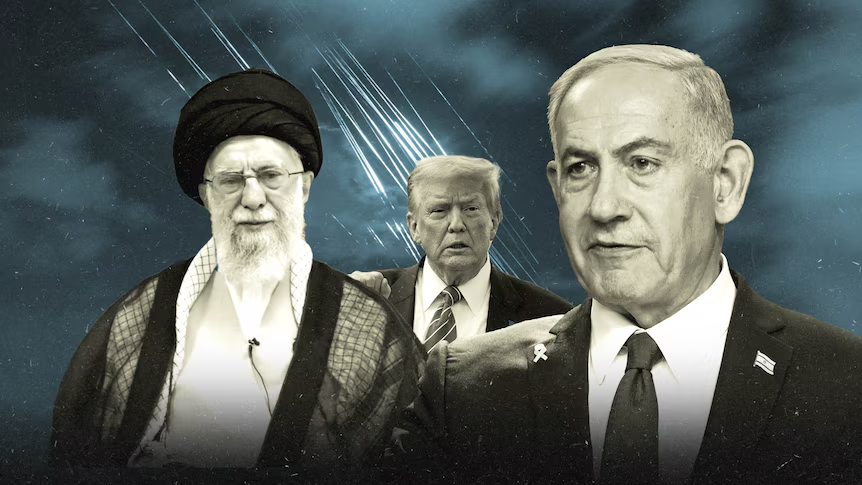
A security and crime management expert, Fidel Iduh, has stated that Nigeria urgently needs additional United States airstrikes as part of efforts to address the worsening security situation across the country. Iduh made this assertion during a Saturday interview on Arise Television, which was monitored by LMSINT MEDIA. According to him, foreign military intervention has become necessary due to the persistent failure to curb violent activities within Nigeria’s borders. His comments followed a recent warning issued by United States President Donald Trump, who reportedly threatened further military action against Nigeria should the continuous killing of Christians not be brought under control. Reacting to the development, Iduh described the potential execution of the U.S. president’s threat as a step forward for Nigeria’s national security framework. He noted that while it is regrettable that the situation has deteriorated to this level, the reality reflects the seriousness of the country’s internal security challenges. He emphasized that it is deeply concerning that years of complaints by citizens regarding banditry, terrorism, and violent attacks have failed to yield decisive solutions from within. According to him, if the protection of lives and property can only be strengthened through external assistance, then such intervention should be welcomed. Iduh further explained that the U.S. airstrike carried out on Christmas Day delivered a strong warning to extremist groups, including Lakurawa fighters and ISIS-linked insurgents, operating in affected regions. He said the strike demonstrated that international forces are willing to act when insecurity reaches alarming levels. The security expert concluded that decisive action, whether local or international, is necessary to restore safety, discourage insurgent operations, and reassure citizens who have lived under constant fear due to recurring attacks.

How Rivers Women Laid Their Wrappers to Welcome Wike in Port Harcourt

The Minister of the Federal Capital Territory (FCT), Nyesom Wike, paid a visit to Port Harcourt City Local Government Area on Saturday as part of his ongoing appreciation tour across Rivers State. The visit, which formed part of Wike’s “thank you” outreach to supporters, attracted a large turnout of residents, party loyalists, and women groups who gathered to welcome the former governor back to the state capital. In a symbolic show of respect and admiration, women at the venue removed and spread their wrappers on the ground, creating a path for Wike’s convoy to drive through toward the podium where he later addressed the crowd. The gesture, which holds deep cultural significance in many parts of the Niger Delta, was used to demonstrate honour, loyalty, and acceptance. As Wike’s entourage moved forward, the atmosphere turned festive. Supporters cheered loudly, danced, and waved as the minister drove over the laid wrappers. The women, alongside other attendees, expressed visible excitement, marking the moment with songs and celebration. The Port Harcourt visit is part of a broader tour of local government areas in Rivers State by the FCT Minister. According to aides and supporters, the tour is aimed at appreciating communities for the support he received over the years while also reconnecting with grassroots loyalists. During several stops on this tour, Wike has used the opportunity to speak on political developments ahead of the 2027 general elections. He has openly cautioned certain political figures within the state, stressing that a sudden show of allegiance to President Bola Tinubu would not automatically guarantee them party tickets in the next election cycle. The minister has also continued to assert his influence within the state’s political structure, making it clear that political loyalty and consistency will play a major role in future decisions. Additionally, Wike has not shied away from addressing the ongoing political tension in Rivers State. His remarks during recent visits have further highlighted the power struggle between himself and Governor Siminalayi Fubara, particularly regarding control of the political landscape and party structure within the state. The Port Harcourt event once again underscored Wike’s strong grassroots backing, especially among women groups, and reinforced his continued relevance in Rivers State politics despite his current role at the federal level.

Lagos Public Parks to Shut Down Temporarily for Maintenance – State Government Confirms

The Lagos State Government has announced a temporary shutdown of all public parks managed by the Lagos State Parks and Gardens Agency (LASPARK) to allow for scheduled maintenance and infrastructure improvements. According to an official statement issued on January 9 and shared through LASPARK’s verified communication channels in the early hours of Saturday, the agency disclosed that the closure will take effect from January 12 to January 31, 2026. LASPARK explained that the decision was influenced by the increased level of human traffic recorded across various recreational centres during the just-concluded festive period. The agency emphasized that the temporary restriction of access is necessary to restore and upgrade facilities that experienced heavy use. In its announcement, LASPARK clarified that the closure will affect all public parks under its management across Lagos State, including some of the most frequently visited recreational locations. These include Ndubisi Kanu Park, Alausa JJT Park, and Dr. Finnih Abayomi Park in Oregun, among others spread across different parts of the state. Providing further insight into the reason behind the development, the agency noted that the maintenance exercise will cover critical areas such as landscaping work, structural repairs, and general facility enhancements. These activities are aimed at improving safety standards, cleanliness, and overall user experience for residents and visitors. LASPARK also linked the temporary shutdown to its long-term responsibility of preserving green spaces within the state. The agency stated that the maintenance programme aligns with its core mandate of ensuring that parks continue to serve as healthy environments for leisure, relaxation, and community wellness, while also supporting environmental sustainability. Reassuring the public, LASPARK confirmed that the maintenance schedule is time-bound and that all affected parks will be reopened immediately after the completion of the exercise. Residents were encouraged to plan their outdoor activities accordingly during the closure period.

Lagos Deputy Governor Calls for Support for Widows of Fallen Heroes

The Lagos State Deputy Governor, Dr. Obafemi Hamzat, has called for stronger institutional support for widows of fallen Nigerian armed forces personnel, stressing that their welfare must remain a top priority in honour of the sacrifices made by their late spouses in service to the nation. Dr. Hamzat made this appeal during a special Jumat Service organised to mark the 2026 Armed Forces Celebration and Remembrance Day, which is observed annually on January 15 to recognise the bravery and commitment of Nigeria’s military personnel. According to the deputy governor, sustained welfare programmes, structured financial assistance, and empowerment initiatives are essential in ensuring that widows of deceased service members are not left vulnerable after the loss of their breadwinners. He described these efforts as a moral obligation and a meaningful way of appreciating the ultimate sacrifices made by members of the armed forces who gave their lives in defence of the country. In his address, Dr. Hamzat specifically urged the Lagos State Ministry of Women Affairs and Poverty Alleviation to deepen its engagement in providing long-term support systems for these widows, noting that government intervention can significantly improve their living conditions and social stability. Beyond welfare matters, the deputy governor also addressed broader societal concerns, particularly the persistent mischaracterisation of Muslims as terrorists in international narratives. He firmly stated that Islam is fundamentally a religion of peace, rejecting any attempt to associate the faith with violence. Dr. Hamzat explained that Islamic teachings strictly prohibit harming others, referencing Qur’anic principles that equate the injury of one person to the injury of the entire community. He maintained that any act of violence contradicts the core values of Islam and should not be attributed to the religion or its adherents. He further encouraged Muslim leaders and scholars to take an active role in reshaping public perception by promoting positive narratives about Islam. According to him, educational initiatives, public enlightenment programmes, and community engagement are crucial tools in countering widespread misconceptions about the faith. Earlier during the service, Imam Saheed Ahmad, who led the Jumat prayers, reminded worshippers that maintaining national security is a collective responsibility that extends beyond the duties of security agencies alone. The Imam noted that individual conduct plays a significant role in ensuring societal safety, stressing that responsible behaviour, mindful communication, and peaceful interaction within communities can ease the pressure on security forces. He stated that every law-abiding citizen contributes to national stability by acting responsibly in daily life. Imam Ahmad also paid tribute to the fallen men and women of the Nigerian armed forces, acknowledging their dedication and sacrifice in protecting the country. He emphasized that their service deserves continuous prayers and divine reward. Additionally, he cautioned against the spread of rumours and unverified information, warning that such actions can endanger public safety and undermine national security efforts.

Buni Revalidates APC Membership as Party Leadership Meets Yobe Lawmakers on Grassroots Mobilisation

Yobe State Governor, Mai Mala Buni, has officially revalidated his membership of the All Progressives Congress (APC) as the party continues its nationwide electronic revalidation and fresh membership registration exercise. The governor carried out the revalidation process under the supervision of the Yobe State APC Chairman, Alhaji Mohammed Gadaka, alongside other party officials. The development was made public through a statement issued by the governor’s Media Aide, Mamman Mohammed. Governor Buni described the exercise as a vital step toward strengthening the party’s internal structure and ensuring proper documentation of its growing membership base. He urged all APC members across the state to take the process seriously and ensure their participation. According to the governor, no member of the party should be left out of the exercise, stressing that registration and revalidation remain critical for inclusiveness and effective party administration. “Every member of the party should either be registered or have their membership revalidated. No one should be disenfranchised in this process,” Buni said. He further emphasized that as a dominant political party in Yobe State and Nigeria at large, the APC must support its numerical strength with accurate and verifiable membership records. “As the leading political party in the state and the country, we must justify our strength through proper documentation of our members,” the governor added. Meanwhile, the APC Chairman in Yobe State, Alhaji Mohammed Gadaka, has intensified calls for active participation in the ongoing APC e-membership registration and revalidation exercise, highlighting the importance of grassroots mobilisation and public awareness. Gadaka also appealed to residents of the state to participate fully in the Continuous Voter Registration (CVR) exercise currently being conducted by the Independent National Electoral Commission (INEC). He noted that civic engagement and voter registration are essential pillars of democratic growth, especially as the country prepares for the 2027 general elections. The state party chairman made these remarks during a strategic meeting with members of the Yobe State House of Assembly at the Assembly Complex in Damaturu. During the meeting, he briefed lawmakers on the progress recorded so far in the APC e-membership registration exercise. “I want to encourage party leaders and stakeholders not only to participate actively in the ongoing e-registration exercise but also to intensify mobilisation and awareness creation at the grassroots,” Gadaka stated.“At the same time, I urge the people of Yobe State to turn out in large numbers for the Continuous INEC Voter Registration exercise.” In response, the Speaker of the Yobe State House of Assembly, Rt. Hon. Chiroma Buba Mashio, commended both the APC leadership and Governor Mai Mala Buni for demonstrating commitment by leading the process firsthand. The lawmakers unanimously expressed their readiness to mobilise strong grassroots support to ensure the overall success of the APC e-membership registration and revalidation exercise across the state.