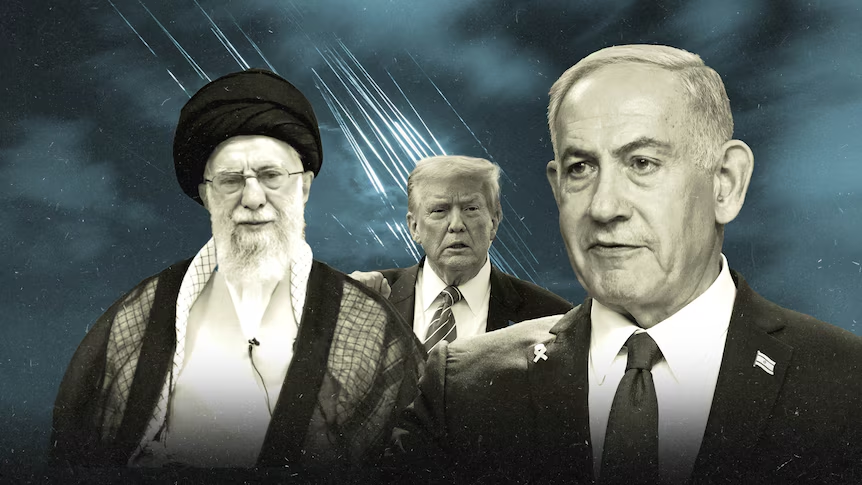
U.S. President Donald Trump has publicly stated his belief that the conflict with Iran will conclude in the near future. However, Israel shows no signs of slowing its aggressive campaign even on the 10th day of fighting. According to multiple sources, including Al Jazeera, Israel carried out intense aerial bombardments over Tehran and other regions on the afternoon of the 10th local time, highlighting a continued escalation that contradicts Trump’s optimistic assertions.
Observers have pointed out what appears to be a divergence in objectives between Washington and Jerusalem. Israel’s leadership reportedly remains focused on dismantling Iran’s military power, crippling its economic infrastructure, and asserting regional dominance in the Middle East. Meanwhile, Trump has emphasized what he has described as a plan to “Make Iran Great Again” by fostering a new government in Tehran that would be allied with the United States and rejuvenate the nation’s economy. Tensions even rose when U.S. officials expressed strong regret over Israel’s strikes on Tehran’s major oil facilities, warning of broader ramifications.
Senior Israeli security officials have openly suggested that the downfall of Iran’s regime may not occur quickly. According to local reports, military planners believe the collapse of the current Iranian government could take up to a year, and have indicated that operations will continue “until the regime cannot govern.”
Conflicting Timelines and Strategy
News outlets like Israel’s public broadcaster Kan reported government ministers stating that although the joint U.S.–Israel military operation might end earlier than expected, the complete destruction of the Iranian regime is likely to take much longer. They emphasized that once military activities cease, it would be up to the people of Iran to finalize the change in power.
Security analysts within Israel also acknowledge uncertainty over Trump’s exact intentions because of inconsistent messaging on the duration and goals of the conflict. Officials noted that despite heavy bombardment and significant losses, there is no clear sign that ordinary Iranians have risen en masse against their government.
Given this uncertainty, both U.S. and Israeli military forces are expected to maintain operational pressure into the coming weeks. Reporters from Channel 13 in Israel quoted strategic planners as saying there is “no guarantee” that Tehran’s government will fall, and no definitive timeline from President Trump on when combat operations might conclude.
Israel’s Continued Offensive
Israel’s military doctrine, as outlined by government sources, aims to sustain continuous attacks with the intention of forcing a popular uprising within Iran. One defense official told Channel 13 that the objective is to “keep striking Iran’s oppressive institutions until the Iranian populace is eTrump predicts swift Iran war end, Israel plans year-long offensive
Prime Minister Benjamin Netanyahu has echoed this perspective, stressing that the ultimate responsibility for overthrowing the Iranian regime lies with its own citizens. As reported by reputable outlets such as The Times of Israel, he reiterated that joint military action is meant to remove what Israel considers an existential threat and to create conditions where Iranians can determine their own future.
During a recent visit to the National Health Emergency Operations Center, Netanyahu insisted the ongoing offensive aims to neutralize the existential risk Iran poses to Israel and global stability. He declared, “We are breaking the regime’s structural power, and we will persist in this effort.” His comments signal a continued commitment to offensive operations despite global calls for diplomacy and peace.
Kindly Share:

Discover more from LMSINT STORE
Subscribe to get the latest posts sent to your email.