
Imagine turning a neglected corner behind your house, a shaded alleyway, or an old metal drum into a thriving patch of edible mushrooms. That’s the essence of guerrilla mushroom farming in small spaces — an unorthodox yet deeply rewarding approach to growing edible fungi in forgotten or under-utilised locations. It combines creativity, resourcefulness and fungal biology to unlock a food-production potential lurking in urban and suburban crevices.
In this detailed, step-by-step article I’ll walk you through everything: why this works, where you can do it, what materials you’ll need, how to select species and substrates, how to maintain your mini-farm, and how to harvest and maybe even scale it. You’ll also find best-practice tips, caveats, and some real-life inspiration. Let’s dig in.
1. Why Guerrilla Mushroom Farming Makes Sense
1.1 Space Efficiency & Low Footprint
Mushrooms don’t need hectares of land or bright sunshine. Many edible fungi thrive in dark, cool, humid spaces and feed on organic material rather than photosynthesis. For example, an urban agricultural factsheet from Cornell University explains that mushrooms “can consume organic wastes often abundant in urban areas such as coffee, sawdust, woodchips, compost” and can grow in small, indoor/outdoor niches.
So, converting a forgotten space — under stairs, a shaded corner of a compound, even a repurposed barrel — becomes realistic.
1.2 Utilising Waste Materials & Forgotten Resources
Many substrates suitable for edible fungi are by-products or waste materials: coffee grounds, straw, sawdust, woodchips, old logs. Urban mushroom-farm case studies highlight this: one city farm used spent coffee grounds from cafés and turned them into oyster mushrooms in containers.
By tapping into these overlooked resources you reduce cost, reuse materials, and create a circular system in your micro-space.
1.3 Rapid Cycles & High Yield in Small Area
Mushrooms often fruit quickly if conditions are right. Some species can be ready to harvest in just a few weeks after colonisation. For urban growers this means you can get edible yield without waiting months for seasonal crops.
1.4 Market & Food Security Benefits
Especially in a place like Nigeria: fresh produce, local supply, lower transport cost, value add. You could grow mushrooms for yourself (improving nutrition) or for micro-selling (extra income). With your background in online selling, lighting products etc, you might find fungi farming a complementary side-business.
1.5 Hidden Potential in Forgotten Spaces
Think of basement corners, under stair‐cases, abandoned sheds, backyards with Shade, garages, unused containers: These “forgotten spaces” often have the consistent humidity and darkness mushrooms love. With minimal conversion you can turn them into productive growing zones.
2. Key Considerations Before You Start
2.1 Selecting the Right Space
- Choose somewhere shaded or dark (light not critical), not direct sunlight for most species.
- Aim for good humidity retention – high humidity (80-95 %) is common for fruiting.
- Ensure there’s some airflow (mushrooms need fresh air vs stagnant sterile rooms).
- Check that the substrate source (logs, grounds, woodchips) is clean / low contamination risk — in urban zones contamination or pollutants matter.
- Make sure the location won’t be disturbed or exposed to extreme heat/cold swings.
2.2 Choosing Fungi Species
For guerrilla / small-space set-ups choose species that are: easy to grow, tolerant of simple conditions, high demand. Some good ones:
- Pleurotus ostreatus (oyster mushrooms) — among the easiest, versatile substrate options.
- Lentinula edodes (shiitake) — requires hardwood log or sawdust, slightly more advanced.
- Flammulina filiformis (enoki) — good for indoor, controlled environment.
2.3 Substrates / Materials
Choose what’s locally available: coffee grounds, straw, bagasse, woodchips, logs, sawdust.
- Coffee grounds: excellent nutrient substrate; used in urban mushroom farms.
- Logs or wood: good for fungal species like shiitake; more startup time required.
- Grow bags or plastic containers: for small spaces, bags are efficient.
2.4 Setup & Hygiene
Mushrooms are sensitive to contamination (moulds, bacteria). Even in guerrilla settings you need basic cleanliness: disinfect tools, use fresh spawn, avoid contaminated substrate. Maintain good humidity, monitor for mold or unwanted growth.
2.5 Legal / Environmental / Safety Considerations
- Check local rules re: humidity, indoor setups, disposal of spent substrate.
- Ensure substrate material is safe (no heavy metal contamination if sourced in urban/industrial area).
- Use food-safe containers, protect from pests.
- Always identify mushrooms carefully before eating; though you’re cultivating, any wild contamination must be avoided.
3. Step-by-Step Guide to Guerrilla Mushroom Farming
3.1 Preparation & Planning
Step A: Choose your spot.
E.g., a shaded backyard corner, an old wooden shed with roof, under stairs in a compound, a stack of wood in shade. Make sure you can maintain moisture and access it.
Step B: Source substrate & spawn.
- Obtain spawn (mycelium starter) for your chosen species — may need to purchase online or locally.
- Collect substrate: e.g., coffee waste, straw, woodchips, logs. Make sure substrate is fresh, preferably uncontaminated.
Step C: Clean & set up space.
- Clean the area of debris, pests, ensure airflow.
- Lay shelving or pallets to raise substrate off ground (avoid flooding).
- Set up misting or watering system to maintain humidity.
3.2 Inoculation / Colonisation
If using logs:
- Drill holes in the log, insert plugs of spawn, seal with wax or tape. (See one urban log method)
- Place logs in shade, keep moist. Wait until mycelium spreads (months in some cases).
If using bags or buckets (for small spaces):
- Fill bags/buckets 2/3 with substrate (coffee grounds + chopped straw, or sawdust mix).
- Mix spawn into substrate, seal bag with filter patch or loosened cover. Keep in dark, warm (~20-24 °C) until fully colonised (white mycelium).
- Monitor daily for contamination or drying out.
3.3 Fruiting & Maintenance
Once colonised:
- Move to fruiting zone: a cooler (for some species) more humid environment (~15-18 °C is often good for many) and with some indirect light or fresh air.
- Maintain humidity at ~85-95 %. Mist if needed.
- Provide fresh air exchange: many bags will benefit from holes or filtering.
- Monitor for pinning (small mushroom clusters start). This is the exciting stage: growth accelerates.
3.4 Harvesting
- When mushrooms reach typical size for the species, harvest by gently twisting or cutting at the base.
- For bags: often you’ll get first flush, then maybe a second flush after resting substrate.
- Ensure cleanliness of harvested product (washed if needed), store appropriately.
3.5 Post-Harvest & Substrate Reuse
- After 2-3 flushes (depending on setup), substrate is “spent”. You can compost it, feed to plants, or discard responsibly.
- Clean the space, sterilize or prepare for next batch.
4. Real-Life Examples & Inspiration
Here are some inspiring real cases of this concept in action:

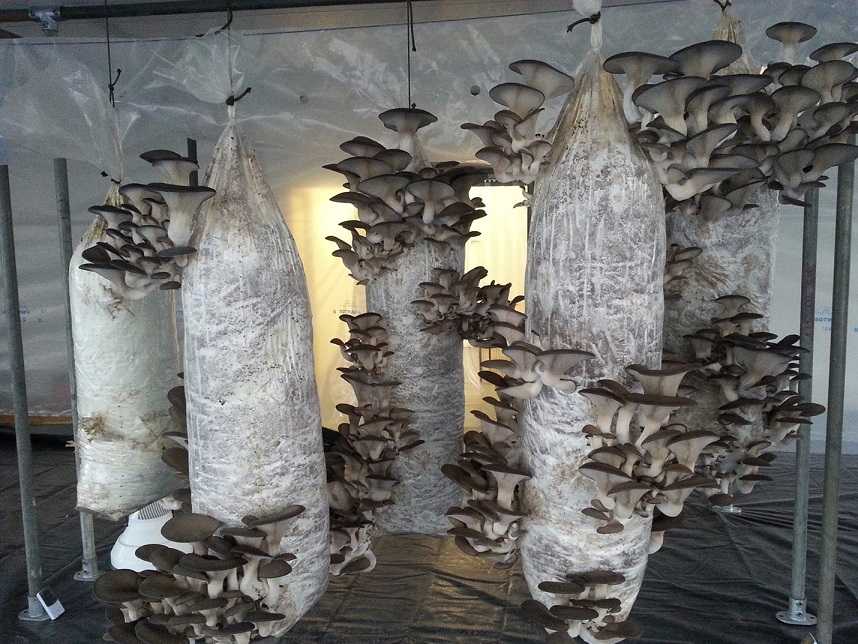
6
- An urban outfit used spent coffee grounds from cafés to grow oyster mushrooms in a basement.
- A “small-space” mushroom cultivation article shows grow bags being used in apartments or sheds.
- A backyard log inoculation method demonstrates how logs can be converted into mushroom-producing devices in under-used space.
These examples reinforce that you don’t need large farmland — just creativity, good materials and consistent effort.
5. Troubleshooting & Tips for Success
Common Mistakes & How to Fix
- Over-drying substrate → keep moisture consistent, mist regularly.
- Poor air exchange → ensure bags/containers have some venting; mushrooms need fresh air during fruiting.
- Contamination (moulds, bacteria) → work clean, sterilise or pasteurise substrate if possible, discard contaminated batches.
- Wrong temperature/humidity → adjust to species: warmer during colonisation, cooler during fruiting.
- Poor substrate quality → use fresh, clean material; avoid heavy chemical contamination – mushrooms absorb materials.
Key Tips
- Start small: one bag or one log to learn before scaling.
- Keep records: note species, substrate mix, timing, yield — helps optimise next rounds.
- Use local waste material: e.g., sawdust from local wood-shops, coffee grounds from cafés, straw from farms — reduces cost and links to circular economy.
- Consider marketing: If selling, pack mushrooms attractively, keep them fresh (cool, shaded), highlight “grown in reclaimed urban space” as a story.
- Combine with your online business savvy: Use your blog/website (lmsint.com.ng) to document the process, show day-by-day photos/videos, build social media interest — this builds an audience and possible customers.
6. Specifics for Nigeria / West Africa Context
Given you’re based in Lagos, Nigeria — here are tailored considerations:
- Climate: Your ambient temperature may be high; you’ll need to find naturally cooler, shaded spaces (perhaps under stairwells, inside shaded compound storerooms) or use simple cooling strategies.
- Substrate materials: Coffee grounds from cafés (Lagos has many cafés), sawdust from timber yards, palm-kernel fibre, rice-husk, bagasse from sugar-cane mills. These could be locally sourced cheap substrates.
- Urban space: A side room of your house, under stairs, shaded veranda, or a rented small warehouse corner could be your “forgotten space”.
- Marketing: Fresh mushrooms are a novelty in many Nigeria markets; you could target restaurants, hotels, health-food stores, or sell online via your website. Show “grown locally in Lagos under sustainable conditions” as value.
- Local conditions: ensure electricity for fans/misters is reliable (since you already sell lighting products you’ll know about power setups). Consider simple solar backup or low-cost automatic misting to maintain humidity.
- Education: Use your blog to write about the process, build trust, show your facility — this helps position you as expert and differentiate from imported mushrooms.
7. Why This Can Be a Smart Side-Business or Add-on
Given your profile: you already sell products online in Nigeria, you have a blog, you know how to run Facebook/Instagram ads for other businesses — mushroom farming in a small scale could be another product line with low land cost, potentially high yield, niche value.
- Minimal land cost (you repurpose space).
- Low-cost substrate (waste materials).
- You can scale gradually.
- Use your marketing channels (blog, social media) to build a brand (“Lagos urban mushrooms”, “Neglected-space fungi farm”)
- You can offer fresh mushrooms locally (fast turnover) or possibly dried mushrooms or kits later.
8. Recap: Step-by-Step Checklist
- Choose the “forgotten space” (shaded, humid, safe).
- Select your mushroom species (start easy: oyster).
- Source spawn & substrate (coffee grounds, straw, sawdust).
- Clean and prepare the space (shelving, misting, airflow).
- Inoculate substrate (in bags/logs) and allow colonisation.
- Shift to fruiting environment (cooler, humid, airflow).
- Harvest when ready, store properly.
- Compost or reuse spent substrate, clean up.
- Record results, adjust next round.
- If selling: package, brand, market via online channels.
9. Final Thoughts
Guerrilla mushroom farming in small and forgotten spaces is not only a smart way to grow food in minimal footprint, but also an exciting, almost rebellious slice of urban agriculture. It taps into wasted spaces, reused materials, and the invisible potential of fungi to transform matter. For someone with your digital presence and entrepreneurial drive, this project could be both personally rewarding and commercially fruitful.
Start small, learn, document each step on your blog (which also helps with SEO and building your authority in this niche). Over time, you may scale up into larger operations, or carve out a new business line around fresh local mushrooms.
Kindly Share:

Discover more from LMSINT STORE
Subscribe to get the latest posts sent to your email.


