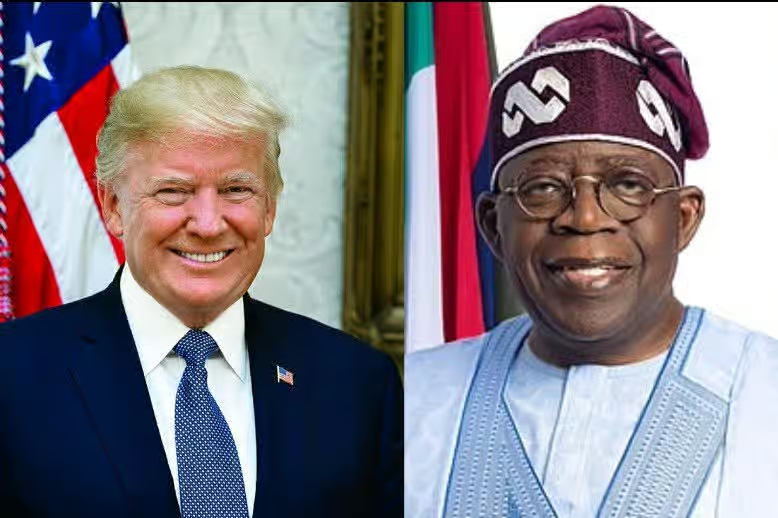
The recent U.S. military operations targeting alleged terrorist strongholds in Sokoto have propelled Nigeria into a sensitive stage of its counter-terrorism efforts. The strikes have sparked a robust debate on the balance between national sovereignty, governance gaps, and the appropriateness of foreign intervention in domestic security matters.
Economic Repercussions and Government Response
Support from Pan-Yoruba Coalition
The Alliance for Yoruba Democratic Movements (AYDM), a coalition of approximately 130 pan-Yoruba organizations, praised the intervention as a necessary initiative to curtail the escalating threat of violent extremism. In a statement signed by General Secretary Popoola Ajayi and Rasaq Arogundade, the coalition encouraged Nigerian authorities to maintain intelligence-led cooperation with international allies, noting that combating terrorism effectively requires global partnerships.
“We commend the actions against terrorists attempting to dominate Nigerian territories,” AYDM stated. “These measures highlight Nigeria’s progress in establishing impactful international partnerships. Yet, airstrikes alone will not resolve the crisis.”
Calls for Arrest of Ideological Leaders
“Sheikh Gumi should face justice. He presents himself as an Islamic scholar but propagates terrorist ideology,” the group added, highlighting the urgency of holding ideological leaders accountable.
Security Alert for South-West States
The coalition issued warnings to governors in the South-West, emphasizing that retaliatory attacks from terrorist factions could shift toward the region. Lagos, as Nigeria’s commercial hub and President Bola Ahmed Tinubu’s political stronghold, was particularly highlighted as a potential target.
Calls for Structural Reforms
AYDM framed the rising Islamic extremism as a “violent clash of civilizations,” advocating for extensive constitutional reforms. The group proposed decentralization and restructuring of Nigeria to enable ethnic self-determination, allowing groups with differing governance philosophies—democratic versus theocratic—to coexist within their own sovereign regions.
“It is time to restructure Nigeria so that communities valuing democracy and those favoring a theocratic framework can exist independently within their own sovereign republics,” the statement urged.
Expanding Security Partnerships
The coalition further recommended that Nigeria diversify its international security collaborations. Beyond the U.S., nations such as Russia and Israel—known for their counter-terrorism expertise—should be engaged to strengthen Nigeria’s security framework.
“Nigeria requires all possible allies to combat terrorism effectively. Engaging Russia, given its counter-terrorism operations in the Sahel, is essential if Nigeria aims to confront these threats decisively,” AYDM emphasized.
Criticism from Political Activists
Contrastingly, Gbenga Hashim, a former presidential candidate and political activist, characterized the U.S. strikes as a damning critique of Nigeria’s security architecture. Hashim highlighted that the airstrikes reflect global concern over Nigeria’s deteriorating security environment, particularly in the North-West, where terrorist groups are allegedly expanding territorial influence.
“The intervention by the United States is a stark indictment of our national security framework and the failures of the APC-led administration,” Hashim remarked, urging the government to strengthen domestic security operations to regain public and international confidence.
Kindly Share:

Discover more from LMSINT STORE
Subscribe to get the latest posts sent to your email.


