UK Passport Fees to Rise in April 2025 – What Applicants Need to Know

The UK government has confirmed an upcoming increase in passport application fees, set to take effect on April 10, 2025. These fee adjustments, awaiting parliamentary approval, will impact both domestic and overseas applicants, covering online and paper applications for adults and children alike. Updated Passport Application Costs in the UK and Overseas According to the UK Home Office, the revised fees aim to maintain a self-sustaining passport service without depending on taxpayer funding. The department clarified that these charges do not generate government profits but are essential for operational efficiency. Higher Fees for Domestic Passport Applications From April 10, 2025, standard online passport applications submitted from within the UK will see price increases: Paper applications, which generally cost more than online submissions, will also become more expensive: Premium Service Price Hikes For those requiring expedited passport issuance, the Premium One-Day Service will also experience fee increases: This service remains available for urgent passport needs within the UK. Increased Fees for Overseas Applications Individuals applying from outside the UK will also face price adjustments: Paper-based applications from abroad will also become costlier: Reasoning Behind the Price Adjustments The UK Home Office justified these increases as a necessary measure to ensure the sustainability of the passport system. The fees contribute to several essential services, including: In 2024, 99.7% of standard UK passport applications were processed within three weeks, provided that no further documentation was required. The government continues to recommend early application submissions to avoid potential travel disruptions. Government Regulations on Passport Fees These pricing adjustments align with HM Treasury guidelines, which regularly assess passport fees to ensure they accurately reflect operational costs and service demands. For official details and updates, visit the UK Home Office’s official website here. For additional insights, refer to the BBC’s report on UK government policy. For further details, check the UK Parliament’s official publication on government policies here. READ ALSO: Follow the LMSINT MEDIA channel on WhatsApp: Join Our WhatsApp Group Hear: Chat on WhatsApp Join our Telegram Chanel.

Top 5 Industries Producing the Most Billionaires in 2024

Wealth and economic power shape global influence, and billionaires stand as key figures in the financial landscape. The world’s wealthiest individuals often derive their fortunes from dominant industries that drive economic growth and innovation. As of November 2024, Forbes has identified the top five industries that have produced the highest number of billionaires. These sectors continue to serve as wealth-building powerhouses, shaping the financial elite. 1. Finance & Investments (15% of Billionaires) The finance and investment sector leads as the most lucrative industry, contributing to the rise of 427 billionaires, making up 15% of the total list. This sector includes hedge fund managers, banking moguls, and investment tycoons who leverage financial markets for wealth accumulation. Warren Buffett, the chairman and CEO of Berkshire Hathaway, stands as the wealthiest in this industry, boasting a net worth of $147.6 billion. His wealth surged by $27 billion due to rising Berkshire Hathaway stock prices and his unparalleled expertise in value investing. Other notable figures in this sector include newcomers like Ben Navarro of Sherman Financial Group and Cristina Junqueira of Nubank. Collectively, billionaires in this sector control a staggering $2.17 trillion in wealth. Related External Source: Forbes Billionaires List 2024 2. Technology (12% of Billionaires) The technology industry follows closely, accounting for 342 billionaires, or 12% of the total. This sector is home to the wealthiest individuals, with a combined net worth of $2.6 trillion. Tech entrepreneurs have amassed vast fortunes through innovations in software, artificial intelligence, internet services, and cloud computing. Amazon founder Jeff Bezos remains one of the top billionaires in this category, alongside Mark Zuckerberg, whose net worth saw a significant $116.2 billion increase in just one year. Meanwhile, Oracle co-founder Larry Ellison, valued at $231.3 billion, remains the richest in the tech industry. 3. Manufacturing (12% of Billionaires) Manufacturing remains a wealth-generating powerhouse, producing 328 billionaires, also representing 12% of the total. This sector has seen a surge in new billionaires, including the Chao family of Westlake Corporation and Don Levin of D.R.L. Enterprises. From industrial machinery to consumer goods, manufacturing continues to fuel economic growth. Reinhold Wuerth, chairman of the Wuerth Group, dominates this category with a net worth of $35.9 billion. 4. Fashion & Retail (10% of Billionaires) The fashion and retail industry secures the fourth spot, with 285 billionaires, making up 10% of the total list. This sector thrives on luxury brands, global retail chains, and high-end fashion houses. Bernard Arnault, chairman and CEO of LVMH, leads the industry with a staggering $157.6 billion fortune. LVMH controls some of the world’s most prestigious brands, including Louis Vuitton, Christian Dior, and Moët & Chandon. Other notable figures include designer Christian Louboutin, known for his signature red-soled shoes. 5. Food & Beverage (8% of Billionaires) The food and beverage sector ranks fifth, producing 210 billionaires, representing 8% of the list. This industry encompasses food production, packaged goods, and beverages. Zhong Shanshan, chairman of Nongfu Spring, leads the sector with a net worth of $51.2 billion. His company dominates China’s bottled water market while also expanding into pharmaceuticals. Additionally, the industry features billionaires like Todd Graves, founder of Raising Cane’s, and Africa’s wealthiest man, Aliko Dangote, who built his empire through sugar, flour, and cement production. Conclusion The financial and investment sector continues to dominate as the primary billionaire-producing industry, while technology and manufacturing closely follow. Fashion and food-related industries also remain significant wealth generators, proving that strategic entrepreneurship and innovation drive financial success. For aspiring entrepreneurs, these industries represent opportunities for substantial wealth creation. Whether in finance, tech, or retail, the right business strategy and market positioning can pave the way for economic success. Forbes Billionaires List 2024 READ ALSO: Follow the LMSINT MEDIA channel on WhatsApp: Join Our WhatsApp Group Hear: Chat on WhatsApp Join our Telegram Chanel.

Nigerian Court Dismisses NNPC’s Objection in Dangote Refinery Fuel Import Lawsuit

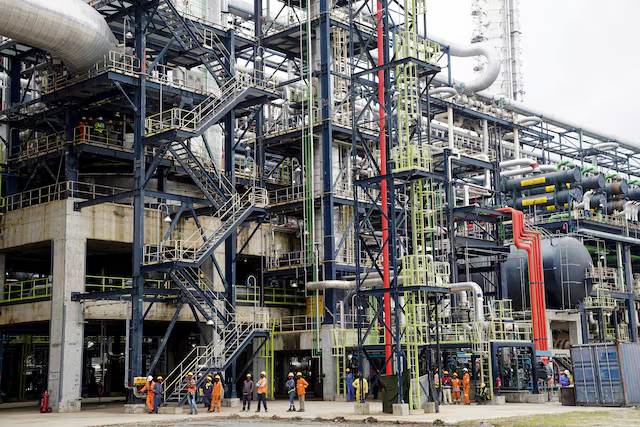
Dangote Refinery Seeks to Halt Fuel Imports Amid Legal Dispute A Nigerian Federal High Court has dismissed an objection from state-owned NNPC Ltd regarding its inclusion in a lawsuit filed by Dangote Oil Refinery. The case, initiated by Africa’s largest refinery, seeks to prevent fuel imports into Nigeria, arguing that its production capacity is sufficient to meet the nation’s gasoline demand. Background: Dangote Refinery’s Push for Energy Independence The 650,000-barrel-per-day Dangote Refinery, commissioned in Lagos, aims to reduce Nigeria’s dependence on imported refined petroleum. Despite being an oil-producing nation, Nigeria has historically relied on fuel imports due to limited refining capacity. The refinery, owned by billionaire Aliko Dangote, has positioned itself as a solution to the country’s energy crisis. Lawsuit Challenges Fuel Importation In its legal filing, Dangote Refinery contends that the Nigerian Midstream and Downstream Petroleum Regulatory Agency (NMDPRA) is breaching the law by continuing to issue fuel import permits. The lawsuit demands ₦100 billion ($65 million) in damages from NMDPRA, NNPC, and several smaller fuel marketers, citing that imports should only be allowed if there’s a supply shortfall. The refinery argues that it began producing gasoline in September last year and is capable of supplying the country’s needs. NNPC’s Argument and Court’s Ruling NNPC opposed the lawsuit, asserting that domestic fuel consumption still surpasses Dangote’s production capacity, necessitating imports. It also pointed out that the lawsuit erroneously named Nigeria National Petroleum Corporation, a non-existent entity, as the company had been rebranded as Nigeria National Petroleum Company Limited (NNPC Ltd) in 2022. However, presiding Judge Inyang Ekwo dismissed NNPC’s objections, allowing the case to proceed. A final ruling is expected on May 6, when the court will evaluate NNPC and NMDPRA’s motion to dismiss the case on grounds of insufficient merit. Fuel Market Implications & Government Response Nigeria, home to one of Africa’s largest gasoline markets, spent ₦15.42 trillion ($10 billion) on fuel imports in 2023, according to the National Bureau of Statistics. This lawsuit marks yet another confrontation between Dangote Group and Nigerian regulators, with the refinery previously accusing NMDPRA of permitting substandard fuel imports and failing to enforce domestic crude supply laws. Regulatory bodies have denied these claims. What’s Next? As the legal battle continues, stakeholders within Nigeria’s petroleum industry are closely watching how the decision will impact the country’s fuel supply policies. With the government’s push for economic diversification and self-sufficiency in oil refining, the outcome of this lawsuit could set a precedent for fuel regulation and refinery operations in Nigeria. Read more about Nigeria’s fuel importation policies on Reuters. READ ALSO: Follow the LMSINT MEDIA channel on WhatsApp: Join Our WhatsApp Group Hear: Chat on WhatsApp Join our Telegram Channel

The Rise of Eco-Friendly Travel: A Sustainable Future for Tourism

Introduction Eco-friendly travel, also known as sustainable tourism, is rapidly gaining popularity as travelers become more conscious of their environmental impact. With climate change and environmental degradation becoming pressing global issues, the travel industry is shifting towards greener, more responsible practices. In this post, we will explore the rise of eco-friendly travel, its benefits, and how you can adopt sustainable travel habits. Why Eco-Friendly Travel is on the Rise The demand for sustainable tourism has surged due to increasing awareness about the negative effects of traditional travel. Factors contributing to the rise of eco-friendly travel include: Sustainable Travel Practices To travel sustainably, consider these practical steps: Top Eco-Tourism Destinations in 2025 If you’re planning an eco-friendly vacation, consider these sustainable destinations: The Role of Technology in Eco-Friendly Travel Technological advancements are making sustainable travel easier. From carbon footprint calculators to eco-friendly booking platforms, travelers now have access to tools that help them make responsible decisions. Airlines are also investing in sustainable aviation fuel (SAF) to reduce emissions. For more insights on sustainable tourism, check out UNWTO’s Guide to Sustainable Travel. Conclusion Eco-friendly travel is more than just a trend—it’s a movement towards a better planet. By adopting sustainable travel habits, you can contribute to preserving the environment while enjoying enriching experiences. Start making conscious travel choices today for a greener tomorrow! READ ALSO: Follow the LMSINT MEDIA channel on WhatsApp: Join Our WhatsApp Group Hear: Chat on WhatsApp Join our Telegram Chanel.

Five Key Factors to Shape the Success of Nigerian SMEs in 2025

Discover the five critical factors shaping the success of Nigerian SMEs in 2025, including access to finance, digital transformation, and sustainable practices. Nigerian small and medium enterprises (SMEs) encountered a tough economic landscape in 2024. Challenges such as high inflation, a depreciated naira, and rising costs in energy and transportation took a toll, disproportionately affecting smaller businesses. Additionally, the Central Bank of Nigeria’s (CBN) restrictive monetary policies, which led to elevated borrowing costs, further squeezed profitability. According to PwC’s MSME Survey 2024, 67% of SMEs reported reduced demand for their products and services. This decline was fueled by surging retail prices and diminished purchasing power among consumers. Despite these hurdles, 2025 offers signs of economic stabilization. For SMEs, survival is no longer enough; sustainability and growth are essential. Here are five critical factors that will drive SME success in 2025: 1. Access to Finance Securing adequate funding remains a critical challenge for Nigerian SMEs. The PwC MSME Survey 2024 estimated a $32.2 billion funding gap within the sector. The CBN’s policies, such as a 27.5% monetary policy rate and a 50% cash reserve ratio for banks, further constrained lending capacity in 2024. Consequently, SMEs turned to alternative financing options like fintechs and non-bank financial institutions, often at higher interest rates. To thrive in 2025, SMEs must embrace innovative financing solutions, including: Additionally, the federal government’s planned launch of a national credit guarantee company in 2025 aims to reduce lending risks for financial institutions. This initiative is expected to boost SME funding, particularly in agriculture, technology, and manufacturing sectors. 2. Digital Transformation In today’s fast-evolving digital economy, adopting technology is essential for SME growth. Digitization offers businesses improved efficiency, scalability, and competitiveness. Key areas for SMEs to focus on in 2025 include: By investing in digital tools and practices, SMEs can lower operational costs, broaden their customer base, and build resilience against market fluctuations. 3. Government Policies and Economic Stability Government actions and a stable macroeconomic environment are crucial for SME success. The federal government’s plan to lower inflation to 15% and stabilize the naira through increased oil production and targeted economic measures is a promising step. Key policy priorities for SME growth in 2025 include: A supportive policy environment will empower SMEs, enabling them to grow sustainably in 2025. 4. Capacity Building Developing a skilled workforce is critical for SMEs to remain competitive. In 2025, businesses must prioritize training and upskilling in areas such as: Collaboration between government agencies and private organizations can make training programs more accessible and affordable, helping SMEs adapt to evolving market demands. 5. Resilience and Sustainability Practices The challenges of 2024 underscore the need for SMEs to prioritize resilience and sustainability. To build a robust business model in 2025, SMEs should: Resilient businesses are better positioned to withstand economic challenges and attract eco-conscious consumers and investors. Conclusion The future of Nigerian SMEs in 2025 depends on their ability to adapt to changing economic conditions, embrace technology, and build sustainable business practices. By addressing critical factors such as access to finance, digital transformation, government policy support, capacity building, and resilience, SMEs can achieve long-term growth and competitiveness. With strategic planning and consistent government support, SMEs have the potential to thrive and play a pivotal role in Nigeria’s economic development. READ ALSO: Follow the LMSINT MEDIA channel on WhatsApp: Join Our WhatsApp Group Hear: Chat on WhatsApp Join our Telegram Chanel.

The Transformative Impact of Technology and AI on Residential and Commercial Projects in Nigeria

Discover how AL DI LÀ LUX is transforming Nigeria’s real estate sector through AI-powered innovations and smart home technologies. Introduction As technology and Artificial Intelligence (AI) continue to evolve, their impact on residential and commercial projects in Nigeria is undeniable. We had an enlightening conversation with Allen Akinbobola, founder of AL DI LÀ LUX, to explore how these innovations are reshaping the real estate industry. Who is Allen Akinbobola? Allen Akinbobola is an audiophile, system designer, and integrator who leads AL DI LÀ LUX, a company specializing in luxury home and commercial automation. Their services integrate cutting-edge technologies such as tunable lighting, motorized shades, AV systems, HVAC, and smart security systems. They aim to enhance spaces with elegance, convenience, and efficiency, offering a seamless lifestyle for clients. What is AI, and How Does AL DI LÀ LUX Use It? Artificial Intelligence (AI) refers to systems that mimic human intelligence in tasks such as decision-making, learning, and pattern recognition. At AL DI LÀ LUX, AI is applied in two key ways: Allen emphasizes that AI acts as a powerful productivity tool, enabling clients to focus on what matters most Building the Foundation: Networking Infrastructure For AI and smart technologies to thrive, robust networking infrastructure is essential. AL DI LÀ LUX uses both wired and wireless systems: To strike a balance, they adopt hybrid systems that ensure optimal connectivity and seamless integration of smart solutions. AI in Real Estate Development From site selection and design to project management and customer engagement, AI is reshaping the Nigerian real estate industry. At AL DI LÀ LUX, AI is central to: The result is functional, sustainable, and cost-effective spaces that meet modern demands. The Rise of Smart Homes and IoT in Nigeria The demand for smart home technologies is growing in Nigeria. AL DI LÀ LUX incorporates professional-grade solutions that are: Allen recalls the evolution of smart technologies, noting how they’ve become more accessible and appreciated for their convenience, elegance, and value. Commercial Projects: Enhancing Efficiency with AI AI-powered systems are revolutionizing commercial property management by: The company collaborates with architects and developers early in projects to integrate these technologies effectively, ensuring they become assets rather than complications. The Role of Digital Twin Technology Digital twins create virtual replicas of physical assets, enhancing urban planning and building management. While relatively new in Nigeria, their potential in large-scale developments is immense. AL DI LÀ LUX integrates existing technologies to create these systems, opening up new possibilities in monitoring and optimization. Overcoming Challenges in Technology Adoption The biggest hurdle for cutting-edge technology in Nigeria’s real estate is knowledge gaps. Allen emphasizes that technology requires education and proper implementation. AL DI LÀ LUX actively bridges this gap by: Contact AL DI LÀ LUX Potential clients and partners can connect with AL DI LÀ LUX via their website or social media platforms. The team is always open to collaborations that advance innovation in Nigeria’s real estate sector. Conclusion From smart homes to commercial projects, AL DI LÀ LUX is at the forefront of leveraging technology and AI to transform real estate in Nigeria. By combining expertise, innovation, and collaboration, they’re redefining what’s possible in modern living and property management. READ ALSO: Follow the LMSINT MEDIA channel on WhatsApp: Join Our WhatsApp Group Hear: Chat on WhatsApp Join our Telegram Chanel.

What Is Sustainable Fashion and Why It Matters

Discover what sustainable fashion is, why it matters, and how it helps the planet and people. Learn practical tips for embracing ethical and eco-friendly clothing. In recent years, the buzz around sustainable fashion has grown louder—and for good reason. Whether you’re a dedicated fashionista or someone who just wants a reliable pair of jeans, the way we consume clothing has a bigger impact than we often realize. But what exactly is sustainable fashion, and why does it matter? Let’s break it down in simple terms. What Is Sustainable Fashion? Sustainable fashion is about creating clothes, accessories, and shoes in ways that minimize harm to people and the planet. It focuses on ethical practices like fair wages, safe working conditions, and eco-friendly materials. Instead of the wasteful “fast fashion” model that churns out cheap, trendy clothes only to be discarded after a few wears, sustainable fashion aims for durability, quality, and responsible production. Think of it this way: sustainable fashion is the slow-cooked meal to fast fashion’s drive-thru. It may take a little more effort upfront, but the payoff—for the planet and your wardrobe—is worth it. Why Does Sustainable Fashion Matter? Here’s the deal: the fashion industry is one of the biggest polluters in the world. Here’s how it impacts our environment and society: How to Embrace Sustainable Fashion You don’t have to overhaul your entire wardrobe overnight. Small changes can add up: The Bigger Picture Sustainable fashion is more than a trend; it’s a movement toward a healthier planet and fairer treatment of people. It’s about slowing down and considering the story behind what we wear. The next time you’re tempted by a $5 t-shirt, ask yourself: What’s the real cost? Making sustainable fashion choices isn’t always easy, but it’s a step toward a better future—for everyone. And the best part? You don’t have to sacrifice style for sustainability. By aligning your wardrobe choices with sustainable practices, you’re not just making a fashion statement—you’re making a difference. So, what’s your next step toward a greener closet? Let me know in the comments! ? READ ALSO: Follow the LMSINT MEDIA channel on WhatsApp: Join Our WhatsApp Group Hear: Chat on WhatsApp Join our Telegram Chanel.