
Scenes of heartbreak and uncertainty unfolded at the Kahrizak Forensic Medical Center, located south of Tehran, as grieving Iranians gathered around rows of bodies wrapped in black bags. Families cried out in despair, struggling to identify loved ones amid overwhelming confusion. Inside makeshift morgue spaces and outside on bare ground, bodies lay in numbers that far exceeded the facility’s capacity.
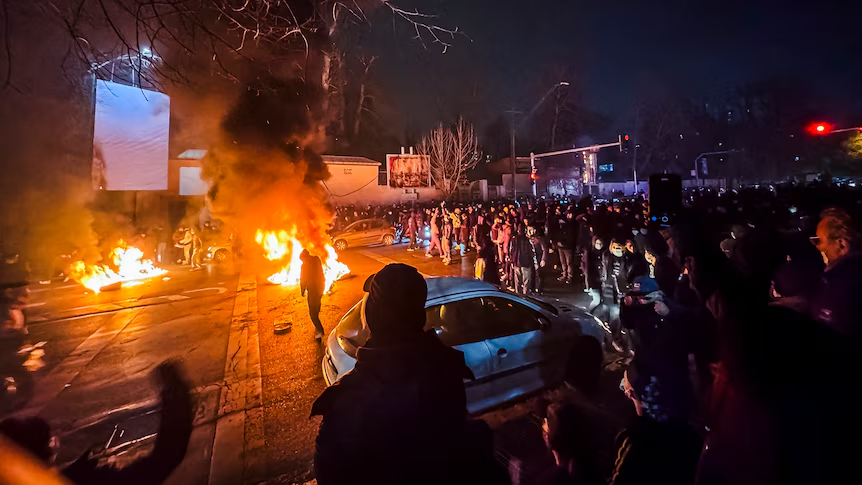
The unrest erupted following worsening economic conditions, triggering widespread demonstrations across the country. These protests now represent one of the most serious challenges to Iran’s leadership in recent years. According to visual evidence reviewed by the US-based Human Rights Activists News Agency (HRANA), an estimated 250 bodies are believed to be held at the Kahrizak facility alone.
Footage from the scene shows body bags lined along walkways and spread across unpaved areas near parked vehicles. Some bodies were placed just outside the forensic building due to lack of space. The activist organization Mamlekate reported that the sheer number of deceased individuals forced authorities to use the courtyard as an extension of the morgue.
Another recording, captured inside a nearby warehouse, shows a room converted into a temporary morgue. Bodies wrapped in black coverings were arranged on floors and metal tables, forming long rows that underscored the scale of the fatalities linked to the unrest.
Competing Narratives and Government Messaging
State-affiliated outlets, including Tasnim News Agency and Student News Agency, released their own footage from the vicinity of the forensic center. In these videos, reporters interviewed mourning families who stated that their relatives were not involved in demonstrations and had no intention of protesting.
One grieving man, seated beside a body bag, told a state reporter that his loved one was struck in the head by an object thrown from a building. He emphasized that the deceased supported the government. The reporter later addressed the camera, suggesting that some individuals among the dead may have attempted to confront security forces or seize military facilities.
However, the overall message emphasized that most victims were everyday citizens from non-political families. Observers say this narrative reflects a broader attempt by authorities to discourage further protests by shifting responsibility for the violence away from state forces.
Use of Force and Human Rights Concerns
Iranian leaders have repeatedly warned citizens against joining what they label as foreign-backed agitators and violent elements. President Masoud Pezeshkian has publicly differentiated between peaceful demonstrators and those he described as disruptors of public order. The country’s attorney general has pledged severe legal consequences for the latter, including capital punishment.
Despite these statements, rights groups argue that Iranian authorities have historically failed to distinguish between peaceful protesters and violent actors. Large gatherings are often treated as existential threats, leading to aggressive responses from security forces.
The Interior Minister, Eskandar Momeni, claimed on state television that security personnel exercise restraint to avoid civilian harm. Yet eyewitness accounts and independent testimonies suggest otherwise. Protest participants and observers reported seeing security forces using military-grade weapons against crowds. In Tehran, witnesses described multiple fatalities after armed forces intervened during demonstrations. An Iranian social worker also recounted seeing a young girl incapacitated after being struck with a Taser.
As Iran enters its sixth day of restricted internet access, fragmented videos from places like Kahrizak provide rare insight into the true human toll of the unrest. These images suggest a crisis far deeper than official statements acknowledge, leaving families with grief, unanswered questions, and little hope for accountability.
Kindly Share:

Discover more from LMSINT STORE
Subscribe to get the latest posts sent to your email.


